

African giant rats trained to sniff out disease

Magawa, the most famous African giant rat

Occasionally small rats entered our kitchen to sniff out for leftover foods. If they are not lucky, they are caught by my cats, Salina  Boy or Charlie. Instead of being considered a pest, a species of rat, the African giant pouched rat, is being trained to detect a disease that is devastating livestock and threatening the livelihoods of farmers in the world’s poorest countries, as quoted by the Times of London on January 29th, 2021.

Brucellosis is a highly contagious bacterial infection that causes infertility and low milk yields in cows, sheep, goats and pigs. Detection is hard and expensive.

Glasgow University is working with researchers at Sokoine University in Tanzania on using sniffer rats to tackle the problem. The African giant pouched rats, which can grow to 91 cm in length, have already been trained to detect landmines and tuberculosis.

Dan Haydon, director of the institute of biodiversity, animal health and comparative medicine at Glasgow University, said that the idea developed after he discovered how sniffer dogs were being used to detect brucellosis in Yellowstone National Park, in the United States, where there is a brucella problem with elk, bison and cattle. “Professor Rudovick Kazwala, who is lead researcher at Sokoine, said, ‘Aha, well, we already have this facility where rats are being specially trained to sniff landmines and tuberculosis’”, Professor Haydon said.“So, we figured if they can smell landmines and smell TB then surely we can get them to smell brucellosis. It turns out you can.”

The scientists received a grant to conduct the research through the British Foreign, Commonwealth and Development Office. Testing has delivered encouraging results so far.

The African giant pouched rat is used rather than the standard lab rat because they are easier to source in sub-Saharan Africa and live longer.

It takes nine months and costs about £5,000 to train a rat, which can then speed through 100 samples in 20 minutes.

Magawa, the most famous African pouched rat

Magawa has been awarded a prestigious gold medal for his work deteting land mine, according to the website, www.bbc.com on September 24th, 2020. Magawa has sniffed out 39 landmines and 28 unexploded munitions in his career. The UK veterinary charity PDSA has presented him with its Gold Medal for “life -saving devotion to duty, in the location and clearance of deadly landmines in Cambodia”.

PDSA’s Gold Medal is inscribed with the words “For animal gallantry or devotion to duty”. Of the 30 animals recipients of the award,  Magawa is the first rat. The seven-year-old Magawa was trained by the Belgium-registered charity Apopo (www.apopo.org),  which is based in Tanzania and has been raising the animals,-known as HeroRats-to detect landmines and tuberculosis since 1990s. The animals are certified after a year of training.  

According to Apopo, Magawa was born and raised in  Tanzania-weighs 1.2 kg and is 70 cm long. While that is far larger than many other socies, Magawa is still small enough and light enough that he does not trigger mines if he walks over them.

The rats are trained to detect a chemical compound  within the explosives,  meaning they ignore scrap metal and can search for mines more quickly. Once they find an explosive, they scratch the top to alert their human co-workers.

Magawa is capable of searching a field the size of a  tennis court in just 20 minutes-something Apopo says would take a person with a metal detector between one and four days. Magawa works for just an hour a day in the mornings and is nearing retirement age, but PDSA director, Jan McLoughlin, said his work with Apopo was “truly unique and outstanding”. “Magawa’s work directly saves and changes the lives of men, women and children who are impacted by these landmines, says PDSA. “Every discovery he makes reduces the risk of injury or death for local Cambodians.”

The training of African giant pouched rat

African giant pouched rats can live between 6 to 8 years. This long lifespan for  a rat makes training a worthwhile  investment. They are food motivated and willing to work with just about any handler for a proper reward.  

From now on, I will tell my cats not to kill the rats around our house as their species are saving human lives in countries which have the problem of landmines and  unexploded munitions.      

Sir, here is your mealworms in curry sauce

Tenebrio molitor’s larvae is popular as insect-food

When I was small, living in a village with many rivers and natural ponds, a favourite hobby was fishing for fresh water fish. We would find larvae of beetles in fallen sago palms and used it as a fish bait. In remote parts of Sarawak in East Malaysia, locals eat these live larvae as delicacies as they are considered nutritious and as aphrodisiacs. Fallen sago palms are favourite places to find the  larvae.

The larvae of beetles is no longer only for locals in remote regions of Asia. It was reported in the Guardian, dated January 13th, 2021, these larvae could soon be mass produced across Europe after the insect became the first to be found safe for human consumption by the European Union (EU) Food Safety Agency. The larvae of the beetle Tenebrio molitor could be eaten in powder form as part of a recipe or as crunchy smacks.  

The conclusion of scientists at the EU Food Safety Agency, following application by the French insect-for-food production company, Agronutris, is expected to lead to EU-wide approval within months of yellow mealworm as a product fit for supermarket shelves and kitchen pantries across the continent.

Mealworms are the larval stage of the beetle, Tenebrio molitor, a species of darkling beetle. Like all holometabolic insects, they go through four life stages: eggs, larvae, pupa, and adult. Larvae typically measures about 2,5 cm or more, whereas adults are generally between 1.25 and 1.8 cm in length.

A bunch of mealworms

Interesting Facts

According to Wikipedia.org, the mealworm beetle breeds prolifically. Mating is a three-step process: the male chasing the female, mounting her and inserting his aedeagus, and injecting a sperm packet. Within a few days the female burrows into soft ground and lays eggs. Over a lifespan, a female, on average, lay about 500 eggs.

After four to 19 days the eggs hatch. Many predators  target the eggs, including reptiles. During the larval stage, the mealworm feeds on vegetation and dead insects  and molts between each larval stage., or instar (9 to 20 instar). After the final molt it becomes a pupa. The new pupa is whitish, and it turns brown over time. After 3 to 30 days, depending on environmental conditions such as temperature, it emerges as an adult beetle.

Mealworms have historically been consumed in many Asian countries, particularly in Southeast Asia. They are commonly  found in food markets, and sold as street food alongside other edible insects. Baked or fried mealworms have been marketed as a healthy snack food in recent history, though the consumption of mealworms goes back centuries. They may be easily reared on fresh oats, wheat  bran, with slices of potato, carrot, or apple as a moisture source. The small amount of space required to raise mealworms has made them popular in many parts of Southeast Asia.

The insect’s main components are protein, fat and fibre, offering a potentially sustainable and low carbon-emission source of food for the future. When dried, larvae is said to taste a lot like peanuts.

Insects-for-food Industry

The leading players in the insects-as-food industry have been held-back by a lack of EU-wide approval. The products are prohibited from sale in France, Germany, Italy and Spain, among other European countries. Without approval from the Food Safety Agency, they faced being banned  elsewhere on the continent too. The UK, Netherlands, Belgium, Denmark and Finland, have previously take a permissive approach to an EU law that requires food not eaten before 1997 to obtain novel food authorisation from Brussels. British, Dutch, Belgian and Finnish regulators had decided the EU directive did not pertain to animals products used for food. But in 2018 a new EU law sought to bring some clarity. It stipulated that insect-based dishes would require novel food authorisation, putting the nascent insect-food industry on a weak footing.

Cricket is a popular insect-food

The products have remained available in those countries as a result of a transition period to allow companies already producing food from insects to operate until they receive the final judgement.   

Insect-based food has long been seen as a part of the solution to cutting the emission of greenhouse gases in food production. Guardian quoted Mario Mazzocchi, professor at the University of Bologna: “ There are clean environmental and economic benefits if you substitute traditional sources of proteins with those that require less feed, produce less waste and result in fewer greenhouse gas  emission. Lower costs and prices could enhance food security and new demand will open economic opportunities too, but these could also affect existing sectors.”   

Giovanai Sogari, a social and consumer researcher at the University of Parma, said the squearmishness of many consumers towards insect-originated food product may eventually fall away. “There are cognitive reasons derived from our social and cultural experiences-the so-called ‘yuck factor’ – that make the thought of eating insects repellent to many Europeans,” he said. “With time and exposure, such attitudes can change.”

Insect-As- Food Companies

Our research shows there are a number of insect-as-food companies based in Europe and in other countries. They include:

No.CompanyCountryInsectProducts
1MicronutrisFranceYellow mealworms and cricketsSnacks
2AgronutrisFranceCrickets, yellow mealworms and black soldier flyAnimal feeds
3ProtifarmNetherlandsBuffalo beetlesFood ingredients
4EssentoSwitzerlandYellow mealworms, grasshoppers and cricketsSnacks and protein bars
5EntogourmetSpainCricketsPower, dried and frozen
6AgriproteinUKBlack soldier flyAnimal feeds

A long list of insect-as-food companies and entrepreneurs is found on www.bugburger.se. Thailand has the most established insect-as-food industry. It covers insect farms, insect processing  companies, and substantial market of insect-eating consumers. In my country Malaysia, the insect-as-food industry has a small potential due to a large population of Muslims in the country. Insects are considered as non-permissible foods.  

Innovators who own start-ups can now go public via SPACs

Virgin Galactic, owned by Sir Richard Branson, merged with SPAC Social Capital Hesdosophia

We begin 2021 with an article on a new alternative source of capital for innovators.    

The first topic of the new year is on SPAC, special-vehicle acquisition company. In the US innovators have taken their companies public by merging with SPACs.

Through SPAC owners of start-ups have a different, perfectly legal approach to promoting their companies to investors. The approach includes interviews with obscure YouTube channels which are frequented by individual traders, appearance on cable news, and projections that call for billions of revenue.

Publicity and forecasts of rapid growth have become routine  of an Initial Public Offering (IPO) of  going public through SPACs. The use of what are called blank-cheque companies, which go public with assets and then merge with private companies increased in 2020. SPACs have raised a record  US$62.1 billion as compared to US$$13.5 billion in 2019, according to Wall Street Journal on January 3rd, 2021.

Companies that went public through SPACs, including many nascent firms  with no revenue, have said that they were attracted to the relative speed and certainty of the process, which can be completed months faster than some traditional IPOs.

In the case of IPOs, the US Securities and Exchange Commission (SEC) requires company executives  to stay in a quiet period during weeks  around public listing. Regulators don’t want companies to be marketing their stocks to unsophisticated investors outside of a regimented process. Similarly, companies don’t include projections in the IPO documents because of regulations that put them at high risk for litigation if they miss these plans.

Companies that go public through SPACs face fewer constraints because the deals are considered  mergers. The Wall Street Journal article quoted an example, Fisker Inc. The company, an electric-vehicle start-up in July 2020 announced to go public by merging with a SPAC. Fisker has ambitious plans  but little in terms of product or revenue to show investors.  While it had about 50 employees, it disclosed projections to investors that called for it to hit US$13 billion in revenue in 2025, up from zero in 2020. The founder, Henrik Fisker, went on cable television repeatedly and remained prolific on social media. After the deal’s announcement-but before the merger was completed in late October 2020- Mr Fisker wrote on twitter about how the company was sold out of reservations  for the SUV it plans to build in 2022 and hinted about coming news before  a deal with a manufacturer was announced.

The Fisker spokesman  said that Mr Fisker was not marketing to individuals investors and that his interviews were included in regulatory filings to investors.  

SPACs offer a new avenue for start-ups to promote themselves as well as raise money in the US.. A SPAC’s most valuable asset, besides all the cash from investors, is arguably is its stock market listing. The company it invests in instantaneously becomes a public one, without many hassles that go along with a traditional IPO.

SPACs offer businesses and start-ups a surer deal-just take this money that had been raised by the sponsor of SPAC. In a world of low interest rate and high valuation on other stocks in the US, investors see SPACs as a reasonable place to park money for a while. A SPAC in the US  is typically structured so that an investor can get his/her money out if he/she doesn’t like the  deal a SPAC makes, and there us the chance that he/she will be getting early in next hot, growth company.

SPACs in the US have a time limit of 18 to 24 months to acquire businesses. According to BTIC.com, an investment advisory company, there are more than 210 SPACs seeking acquisition in the US.   Stockmarket.com provides a list more than 200 SPACs on its website. The major SPACs include :

  1. Draft Holdings
  2. Fisker Inc.
  3. Virgin Galactic
  4. Workhorse Group, and
  5. Repay Holdings

Note: Readers should be aware that the article is not a recommendation to buy a particular SPAC. It only highlights a new avenue for businesses to raise capital by merging with a SPAC.

Let us have “roti canai” at the electric car forecourt

Gridserve’s electric car forecourt

The first bespoke electric car forecourt was opened on December 7th, 2020, by Gridserve at Braintree, Essex, England. The capital of the county is Southend On Sea at which I studied at a local college in the 1970s. Designed by its CEO, Toddington Harper, the forecourt (which is categorically not a service station) is spacious and simple to negotiate both inside and out. There are 36 individual charge points, ranging in output from 7kW to 350 kW, which can  all be used simultaneously with no drop in output.

Electricity is generated by solar panels-mounted on the forecourt roof and a array of partners  solar farms s-and stored in a 6 mWh (6,000 kWh, or roughly enough for 26,000 miles EV range) on-site battery, which can balance the grid in peak hours, helping to keep  charging costs down.

Users just pay just 24p per kWh to charge at the site, making it cheaper than any other “ultra-high-speed” charging provider in England. In term of market competitors,  Gridserve’s  charging facilities essentially sit in  class one-for now, at least. Other energy providers  operate banks of chargers at busy locations but usually as part of a larger service or fuel station designed for ICE cars.

The forecourt offers super-fast wifi, and stands alongside of a range of retail outlets including  WH Smith, and Booths, as well as Costa Coffee, and the Post office. Future forecourts will offer business meeting pods, a children’s play centre and a “wellbeing area” with exercise bikes that generate electricity. .

The standard rate of 24p per kWh, which beats the current lowest ultra-high charging rates in England. This mean a typical charge for an average electric vehicle-from 20 per cent charged to 80 per cent-would costs £10.

If the concept of the forecourt is copied in  Malaysia, Malaysians will charge their electric vehicles while having “roti canai”, a favourite pancake, or “nasi lemak” , a meal of rice with other condiments. The combinations of meals and coffee are many. And no more smell of nauseating gasoline.

As a new chemical engineer, I joined ESSO (now EXXON MOBIL) because the oil industry  was the largest industry in the 1980s, and ESSO was the largest company in the world.  Today, these oil companies are laggards as compared to the FAANG. Who could predict this in the 1980s when I joined the oil industry.

Visit gridserve.com for more information.

Toyota Prius owners beware: Exhaust system attracts thieves

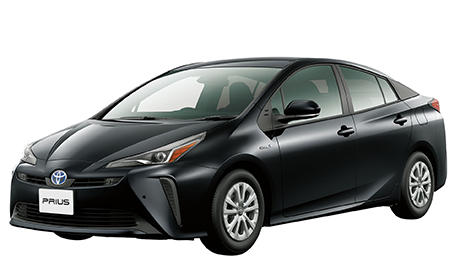
Catalytic converter of Toyota Prius is popular with UK thieves

The London Time s article on 21st November 2020 reported that the thefts of catalytic converters  have increased significantly  recently. The police had logged in 14,690 incidents  across Britain this  year, a rise from 2,484 a year earlier and 985 the year before. The rise is believed t have ben driven by  a steep rise in the use of precious metals  in catalytic converters. It has also been linked  to the  growth in popularity of hybrid cars, which tend to contain higher concentration of the precious of the precious metals, and 4 x 4s, whose higher chassis make is make easier for thieves. Criminals can remove the catalytic converter of car in less than a minute using an electric saw.  

Precious metals in catalytic converters

A catalytic converter is a device used to convert toxic vehicle emissions to less toxic harmful substances by way of catalyzed, or accelerated chemical reactions. Most present-day vehicles that run on gasoline, including automobiles,  trucks, trains, motorcycles and planes, have exhaust systems employing catalytic converters. The catalyst component of a catalytic converter is usually  platinum (Pt), along with palladium (Pd), and rhodium (Rh). All the three platinum group metal or PMG are extremely rare but  have a broad range of applications. In addition, to catalytic converter Platinum, for example, is used in laboratory and dental equipment, electrical contacts and electrodes, and jewellery, while Palladium plays a key role in fuel cell technology. With numerous applications, and limited supply these valuable metals are an attractive target for recovery and reuse from spent catalytic converters.

The amounts and proportions of PGMs depends on the age and type of vehicles.

  • Car, light trucks, and motorcycles average total 2-6 grammes.
  • Larger -engine SUVs and trucks average total can range anywhere from 6 -30 grammes.

Gasoline-powered -vehicle catalytic converters use all three of the rare-earth metals. Diesel-powered -vehicle catalytic converters use only platinum and rhodium.

The average concentration of and the ratio of Pt and Rh were more or less constant 20 years ago, so a simple weighting was sufficient to arrive at a good estimation of the precious metals content. However, the price of these three precious metals has fluctuated strongly over the last twenty years, depending on the supply, demand and speculation.

The Times London article noted that scrap metal dealers  can pay up to BP200 per catalytic converter. The table below the value of the precious metals compared to other metals such as gold and gold.

MetalBP in grammeBP in kilogramme
Gold45.4445,440
Silver0.50500
Platinum23.3626,360
Palladium56.9456,940
Rhodium363363,000
Note: BP means British Pound

Source: beleyerbullion.co.uk.

The supply and demand for PMGs

Johnson Matthey, which produces a third of all catalytic converters  in the world publishes the Pmg report annually. The latest report published in February 2020 shows the supply and demand situation in 2017, 2018 and 2919, respectively. 

Platinum in thousand oz

Supply201720182019
South Africa4,4504,4674,411
Russia720687667
Other969956942
Total supply6,1396,1106,020
Gross demand
Autocatalyst                3,2082,9672,913
Jewellery2,3872,2612,082
Industrial2,0382,4932,358
Investment361671,131
Total gross demand7,9947,7888,484
Recycling-2,049-2,098-2,261
Total net demand5,9455,6906,223
Movements in stocks194420-203

Palladium in thousand oz

Supply201720182019
South Africa2,5472,5432,648
Russia2,4522,9762,802
Other1,4521,4871,442
Total supply6,4517,0066,894
Gross demand
Autocatalyst                8,4628,7829,677
Jewellery167148140
Industrial1,8201,8481,742
Investment-386-574-57
Total gross demand10,06310,20411,502
Recycling-751-77-1,192
Total net demand7,2027,0838,086
Movements in stocks-751-77-1,192

Rhodium in thousand doz

Supply201720182019
South Africa611618621
Russia786959
Other707066
Total supply759757746
Gross demand
Autocatalyst                8348771,003
Other207165141
Total gross demand1,0411,0421,144
Recycling-310-335-372
Total net demand731707772
Movements in stocks2850-26

Conclusion

The prices of precious metals used in catalytic converters are likely to increase with the popularity of hybrid cars and newer efficient gasoline-cars. Their owners would have to be aware that the exhaust systems would be an open invitation to thieves, as their scrap values are high with every  increase in the price of platinum, palladium and rhodium.

In the electric-car era, nickel is worth more than a dime

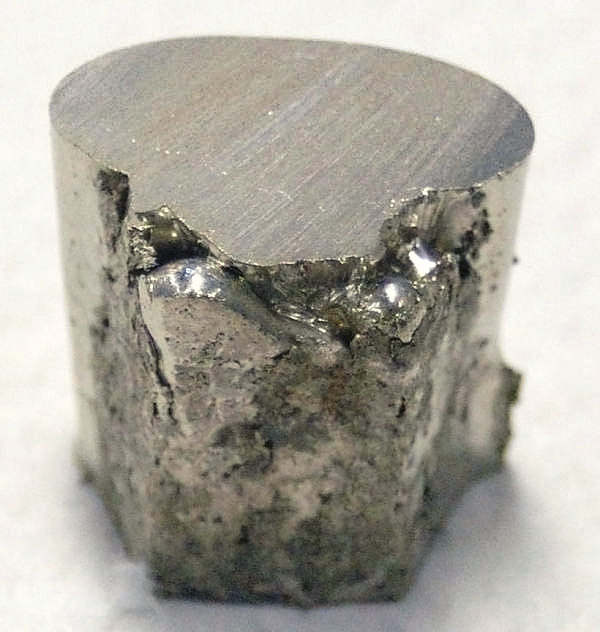
A chunk of nickel

In the history of marketing, in 1940, Pepsi was credited with an advertising campaign called “twice as Much for a Nickel”. It was based on the fact that Coca Cola was sold in 6-ounce bottles and the new Pepsi bottles were 12 ounces.

 An article in Wall Street Journal, online edition, on October 27th, 2020, noted that nickel is becoming important to the production of electric-cars. Most of the raw materials required are the same as those used in conventional ones, but the metals that make up lithium-ion batteries are exceptions. Until recently, procurement worries and market speculation in the metal market tended to focus on lithium and cobalt. Now nickel has attracted the attention of senior executives of mining companies and Mr. Elon Musk, the CEO of the largest electric-car company.

Nickel is used to improve vehicle range. As a result, Nickel has become crucial in the chemistry of cathodes. One standard form of cathode – the most valuable part of an automotive –grade lithium-ion battery – used to contain equal parts of nickel, cobalt and manganese. Now, it has eight parts of nickel to each one of the two metals. This trend, together with the growth of electric-car sales, promises to increase nickel demand.  

However, the article noted that investors should not rush to pile up on nickel stocks yet.

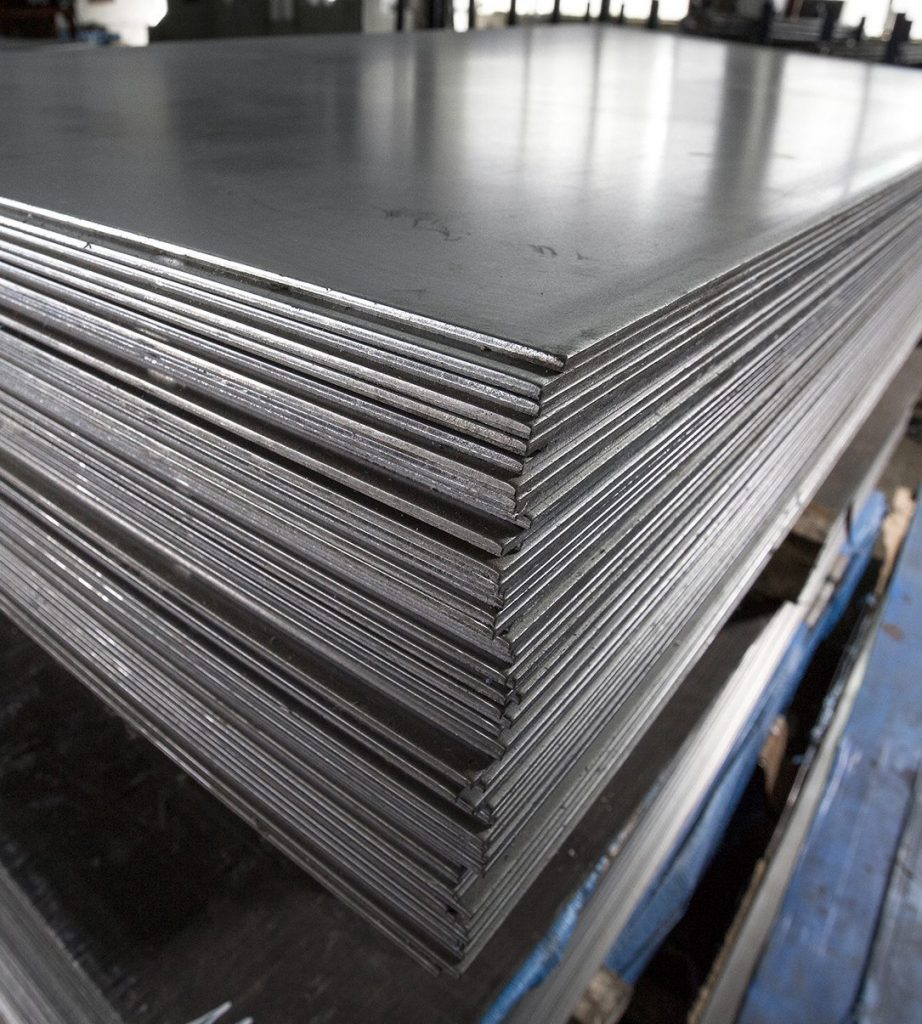
Batteries still do not consume a lot of nickel. It is mostly used in the making of stainless steel.  Depending on the future sales of electric-cars, a step-change in the demand of nickel will likely occur in the late 2020s. Until then, the kind of supply constraint once expected in the much smaller markets for cobalt and lithium—which don’t have major alternative uses-is hard to imagine.

Meanwhile, the nickel market has become oversupplied as growth in China, the big stainless steel market, has slowed.  The experiences of cobalt and lithium offer warnings too. Speculation about demand from electric-cars pushed their prices in 2017. However, the prices of these two metals have collapsed.  

Stainless steel uses a lot of nickel

The article noted that nickel will be harder for battery chemists to work around than cobalt if they need to, but perhaps not impossible. Battery technology is still developing. Tesla is turning to lithium iron phosphates, which don’t contain nickel, as a solution for cheaper electric cars in China.

According to evergen.com.au, lithium-ion has a higher energy density at 150/200 Wh/kg versus lithium iron phosphates at 90/120 Wh/kg. So, lithium-ion is normally the go-to-source for power hungry electronics that drain batteries at a high rate. On the other hand, the discharge rate for lithium iron phosphates outmatches lithium-ion.

An eventual nickel shortage can’t be rule out. Once batteries are cheaper than engines-UBS, the investment bank, expects the turning point in 2024—demand for electric vehicles could accelerate fast. Producing the kind of high-purity nickel required for batteries to high environmental standards is complex and projects take years to take off the ground.

Then, nickel would be worth more than a dime, US 10 cents.

What innovators should know about modern monetary theory

The Covid-19 pandemic is changing the way Governments in many countries, especially developed countries, run their economies. They have adopted the so-called modern monetary theory or MMT. A clear explanation on MMT has been written by David Smith in the Times London on August 14th, 2020. The following  is the extract of the article.   

Today, something is slightly different. This is in the nature of an economic version of a request show. I have had many requests to write about what is known as modern monetary theory (MMT) and this is my response. MMT has been around for some time — decades, or even centuries, according to its advocates — but it is relevant now.

My reluctance to write about it has been in part because its true believers can get very exercised when faced with criticism, even if it is constructive.

The reason for writing about MMT now is the book by Stephanie Kelton, professor of economics and public policy at America’s Stony Brook University, and one of MMT’s leading advocates. She advised Bernie Sanders, who ran Joe Biden close for the nomination as Democratic challenger for the US presidency. Her book, The Deficit Myth: Modern Monetary Theory and How To Build a Better Economy, is published by John Murray.

Professor Kelton is a leading advocate of MMT

It is proving popular, for good reason. Not only are plenty of people interested in MMT, but it is written in a non-technical, accessible, even folksy style. It is being read by non-economists, as all the emails I have received urging me to write about it attest, as well as being on the summer reading lists for many economics students. Last time I looked, it was Amazon’s bestseller in macroeconomics and inside the online retailer’s top 1,000 among all titles.

It is arranged as a series of myth-busting chapters, although people who are aware of conventional economics do not believe many of these myths. The first “myth” is that the government’s budget is not the same as a household budget; something I thought had been buried many years ago. The same goes for most of the other myths.

The central idea of MMT is simple. It distinguishes between currency issuers and currency users. The only currency issuer in America is the US Treasury, with the Federal Reserve acting as its agent. Everybody else is a currency user.

As a currency issuer, the government has the ability to print as much money as it needs. The budget deficit itself is not a constraint, and neither is government debt. Some claim — wrongly, I think — that MMT has already been adopted in response to the Covid-19 crisis in the form of quantitative easing (QE).

In the world of MMT, the government can print enough money to cover a deficit of any size and, in extremis, to pay off all the accumulated debt of the past. The only tests of whether a budget deficit is too large or too small are inflation and unemployment. If inflation is low, the budget deficit cannot be too high, and if there is unemployment, the budget deficit must be too low.

Many people will catch their breath at this point, not least because Kelton claims that this is not just a theory but an explanation of how the world works. However, that requires us to be taken down a rabbit hole of implausibility.

If deficits can be costlessly funded and managed by the simple device of issuing currency, why do governments need to levy taxes? In perhaps the least plausible explanation of how incentives work, people apparently need to work to meet their tax obligations. If they did not have to pay tax, they would not need to work. I rather think they would, to satisfy their wants. Another reason for taxing — to redistribute wealth and income — does not wash either: you can redistribute wealth and income within the tax system without raising any net revenues by taking from the rich and giving it to the poor in tax credits.

Taxation exists in the real world to raise revenue. And borrowing by governments also plainly exists. Kelton says this is not to raise money, because governments don’t need to, but “to offer people a different kind of government money, one that pays a bit of interest”. Try telling that to US and British governments in the past, which have paid a lot of interest to fund borrowing and sometimes struggled to do so.

There is plenty more in the book. Some of it, like the policy of a job guarantee for everybody, is not so much part of MMT but an add-on to it, although at a time of high unemployment possibly a popular one.

MMT is misnamed because it is not monetary at all but almost entirely fiscal. As Kelton puts it: “MMT requires us to demote monetary policy and elevate fiscal policy as the primary tool for macroeconomic stabilisation.”

So what should we think of this? MMT has drawn robust criticism from some eminent economists. Kenneth Rogoff, a former chief economist at the International Monetary Fund, writing last year under the headline “Modern Monetary Nonsense”, described its central idea as “just nuts”. An exasperated Paul Krugman, the Nobel Prize-winning economist, described debating with MMT advocates as like playing Calvinball, a game where players make up the rules as they go along.

Larry Summers, economist and former US treasury secretary, attacked “ludicrous claims” by “fringe economists . . . offering the proverbial free lunch: the ability of the government to spend more without imposing any burden on anyone”.

I am going to be polite. We always need new, fresh thinking and nobody wants to kill off ideas clearly in a state of gestation and in no way workable in their present form. Some, like the economists above, might say it is necessary to kill off MMT because it is dangerous. There is, however, little chance of it being adopted as real-world policy. Not even Jeremy Corbyn and John McDonnell embraced MMT, despite being urged to by some supporters.

They were wise not to do so, because there are fundamental problems with MMT. It would take another book to address them fully. Kelton has fun with Margaret Thatcher’s “backward dictum” because Thatcher described a government’s finances in the way you would describe a household’s finances.

However, Kelton has more in common with Thatcher than she thinks. In the early 1980s, when the Tories launched their monetarist experiment, Thatcher thought the key driver of inflation was the budget deficit. The deficit had to be cut to reduce money supply growth and inflation. It is why people associated monetarism with “cuts”. Kelton looks at it from the other end of the telescope but applying the same principle.

The causes of inflation are many and varied, particularly when you do not use the simplifying assumption of a closed economy. Dylan Grice, whose review of Kelton’s book was republished by Albert Edwards of Société Générale, is not unsympathetic but points to the “preposterous” idea that getting the Congressional Budget Office in America, or equivalents elsewhere, to predict inflation will take care of the inflation risk from large budget deficits. Given the forecasting record on inflation, it plainly will not. As Grice puts it: “In short, MMT is a recommendation that policymakers press harcelerator without knowing where the brake is.”

He is right and, while advocates of MMT see it as a two-way street in which spending would be reined in if inflation took off, politicians may see it differently. Would it be a recipe for huge instability in the provision of public services, with public spending cut in response to rising inflation in a way that would make George Osborne’s austerity look like a tea party? Or would the government decide it could live with a lot more inflation? Either way, it would not be pretty.

Southeast Asian Oil Palms Owe their High Productivity to a Weevil from Cameroon

The oil palm industry in Malaysia used to hire thousands of female workers to just manually gather pollen grains from male flowers of oil palms to pollinate female flowers. On average, a group of three workers are required for a every hectare of oil palm plantation.

The oil palm flowers, courtesy of etawau.com

Teams of workers patrolled the oil palm estate daily, searching for male flowers to collect pollen grains. The pollen grains were distributed to other teams who went around pollinating receptive female flowers with hand puffers. I would imagine the oil palm plantation would be full of chatting noises of these women. Today, these chatting noises are gone. The task of pollinating the oil palm flowers is done in silence by a weevil imported from Cameroon of Central Africa.

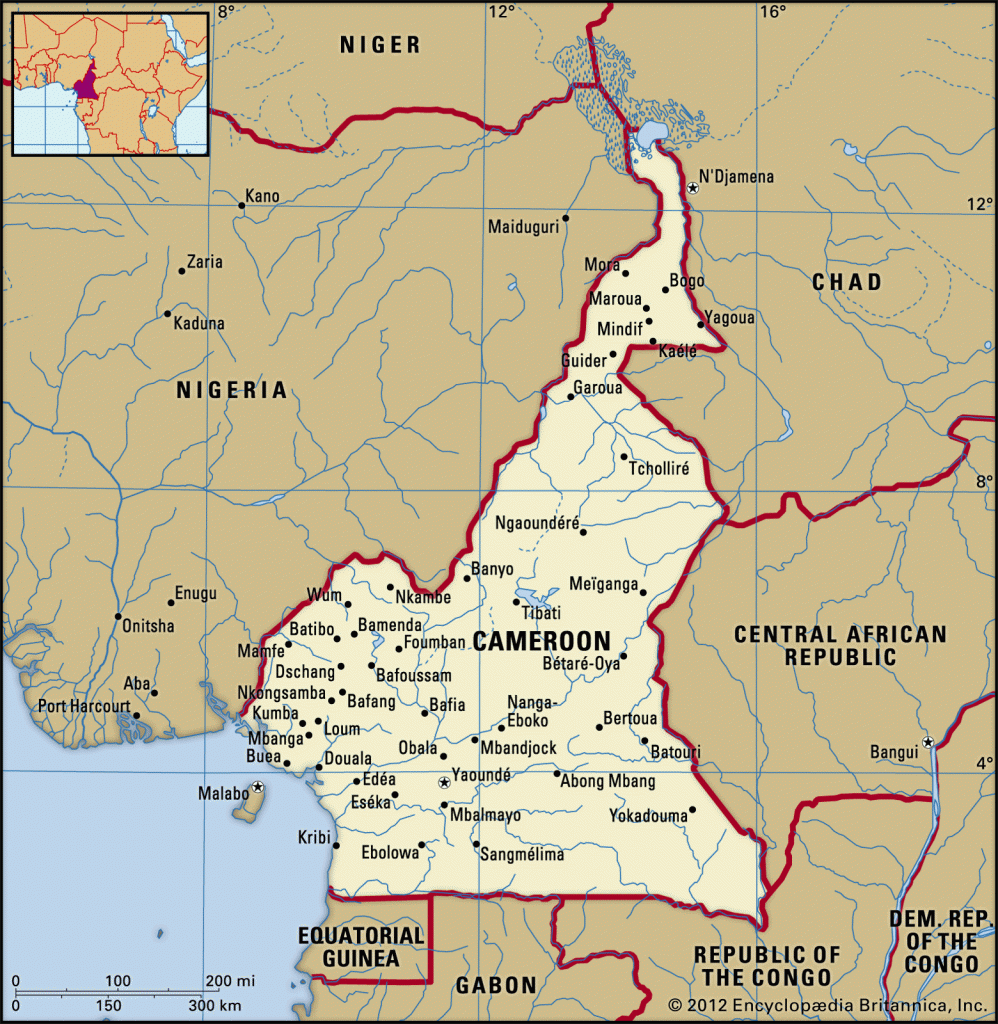
Cameroon where E kamerunicus oringates

The weevil is known by its scientific name, Elaeidobious kamerunicus (E kamerunicus). The technique of pollinating the flowers by weevil was discovered by Datuk Leslie Davidson, a Scottish planter who worked for Unilever’s oil palm plantation in Sabah, Malaysia. The weevils were officially released into Malaysia on February 21st, 1981.

E kamerunicus is about 5 mm from the horn to the tail

Datuk Leslie Davidson , undeterred and unconvinced by textbook knowledge which claimed that oil palm fruits were wind-pollinated and that heavy rains washed pollen grains away, arranged for more research to prove that that pollination of oil palms in West and Central Africa was largely due to weevils which were not found in Malaysia.

Datuk Leslie Davidson and the scientists who brought in E kamerunicus into Malaysia

Under Davidson’s instruction, a group of four Malaysian scientists and experts, namely Dr Kang Siew Ming, Zam Karim, Dr Tay Eong Beok and Mahbo Abdullah, went to Cameroon to assess the work of Dr Rahman Anwar Syed, the entomologist who was assigned to study oil palm pollination by insects in Africa, especially the E kamerunicus specie.

Dr Rahman Anwar Syed proved, in a series of experiments, that the oil palm in its natural habitat was pollinated by different insects, the most important of which the weevil named E kamerunicus. It was also found out that the weevils had evolved with the oil palms and developed a very synergistic relationship with them.

Dr Rahman Anwar Syed started research on pollination by African weevils

Subsequently, the Malaysian government issued an import permit to introduce the weevils into Malaysia. In June 1980, Dr Rahman Anwar Syed arrived in Malaysia from Cameroon with 1,044 weevil pupae individually packed in plastic vials. Only 400 vigorous weevils were selected whilst the rest were destroyed. After six months of testing, the Malaysian government was finally satisfied that the weevils would bring no harm. The results of the tests were presented at a meeting of experts from various Malaysian research agencies. The final authorization was granted to release the weevils for commercial use at Unilever’s oil palm estate in Kluang, Johor, Malaysia. Since then, the weevils had been released in Indonesia, Thailand, Papua New Guinea, Solomon Island and India.

Unilever had sold its oil palm estates in Malaysia to a Malaysian palm oil conglomerate. 

When you tuck in to enjoy your fried KFC chickens, please remember E kamerunicus from Cameroon.

Note: This article is extracted from my book, The Palm Oil Multinationals from Malaysia, published by Lap Publishing. The book is available from Amazon.com.

Another 140-year old tree: The oldest rubber tree in Malaysia

The motor industry in Europe and the US in the early 1900s led to the mad rush for plantation rubber in British Malaya (Malaysia now). There was not enough supply of rubber gathered from the Amazon rainforest of Brazil.

A large part of British Malaya was cleared of its forests and planted with rubber trees. Roads and railway lines were laid out to transport smoked rubber sheets to make tyres to ports and exported to UK and the US.

Financiers in London formed financial syndicates to open-up rubber plantations in British Malaya. Many financial syndicates listed their vehicle on the London Stock Exchange. Thus, more lands were cleared to plant rubber trees in British Malaya. Many young Scottish men went to British Malaya to seek their fortunes by becoming rubber planters.

Before the 1900s, many British farmers were involved with coffee plants and reluctant to switch to rubber, which had unknown market. However, Sir Henry Ridley, a government official, believed in the potential the plantation rubber industry. A few British Advisors to the Malay States in British Malaya worked hard to convince British farmers and local Chinese businessmen to consider rubber trees. One British Advisor to the Malay State of Perak, Sir Hugh Low, planted a rubber tree near a polo club at the royal town of Kuala Kangsar, Perak.

The 140-year old rubber tree in Kuala Kangsar, Perak, Malaysia
Hand-operated rubber sheet rolling machine

I visited the huge rubber tree two weeks ago. A plaque near the rubber tree noted the rubber tree was planted in the 1880s by Sir Hugh Low to convince the locals to plant rubber trees in a big scale.

The trunk is huge

Then, the rubber tree could only be tapped for rubber latex after 7 to 10 years.  Today, the rubber tree can be tapped after 3 to 4 years. As seen in the photos, the oldest rubber tree has a huge trunk as compared to a smaller trunk of today’s rubber trees.

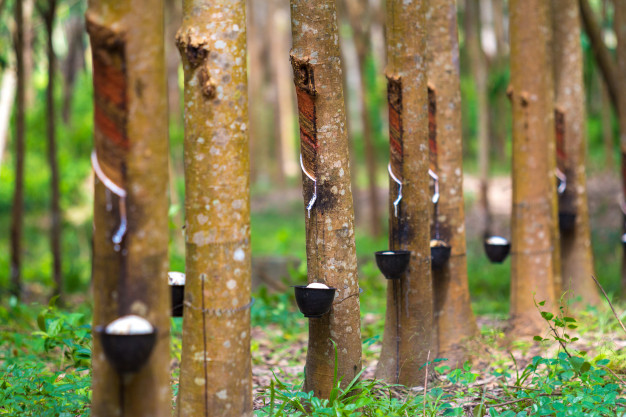
Today’s rubber tree with smaller trunks
Rubber sheet hung to dry

I used to walk passed the oldest rubber tree in Malaysia as a student at the nearby famous Malay College in the 1970s. The rubber tree is still thriving after 140 years.

140-year old rain trees at Lake Garden, Taiping, Malaysia

Last weekend, we visited a few relatives in the Malaysian northern state of Perak. We also admired about 20 140-year old rain trees at the Lake Garden, Taiping. The rain trees were planted by British botanists in 1880s. We were sure that the rain trees were maintained by Malay gardeners. The rain trees are like magnets for locals, enjoying a picnic under them. Newly weds use the rain trees as the background for their photo sessions.

We hope the rain trees can live another 140 years. Please enjoy the rain trees.