Every month, a meter reader, wearing light blue shirt, will be entering our house compound to read the electricity meter at our house. Then, he will drop the electric bill into our mailbox. This October’s bill reads RM294.
We dream of a day that we will receive a cheque from the meter reader instead of the monthly electricity bill. That day will be coming soon. On October 23rd, 2018, it was reported that an electric car Nissan Leaf, manufactured by Nissan, became the first electric vehicle (EV) to secure regulatory approval as an energy backstop for Germany’s electricity grid.
So-called vehicle-to-grid (V2G) technology is a connection between the EV and the electricity grid through which power (electricity) can flow from the grid to the vehicle and vice versa. That potentially enables car owners to sell electricity to the electricity network supplier. In addition, electricity network supplier companies could use EVs as a backstop if electricity demand rises.
The International Energy Agency estimates that there would be 280 million EVs by 2040 compared with more than 3 million in 2017.
V2G system
Nissan is relying on the CHAdeMO charging standard, which had been jointly developed by several Japanese companies as a competitor to Tesla’s supercharger system and the European-backed combined charging system (CCS). That places Nissan at odds with European carmakers such as BMW and Volkswagen, which are promoting to have the CCS, which is capable of V2G services.
Nissan is ahead of its other competing technologies although Tesla’s supercharger can theoretically offer V2G services according to an industry expert.
Nissan has so far sold about 370,000 EVs and, along with top shareholder Renault, has been very active in exploring how car batteries can be integrated into the electricity supply system.
How Does V2G Technology Benefit Us?
According to ovoenergy.com, we are moving towards a situation where “two-way” chargers can enable homeowners with EVs to sell their power (electricity) back to the electricity network. It is a smart idea when over 90 per cent of cars are parked at any one time—which is a lot of energy just sitting there doing nothing.
Battery Degradation
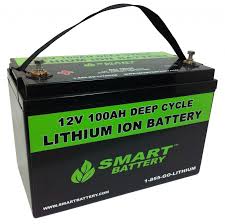
Lithium ion battery used in EV
Batteries have a finite number of charging cycles, as well as a shelf-life. Therefore, using an EV as grid storage can impact battery longevity. However, studies have shown that battery capacity is a complex function of factors, such as battery chemistry, charging and discharging rate, temperature, state of charge and age.
Most studies with slower discharge rates show only a few per cent of additional degradation.
Conclusion
We believe, with rapid progress in EV and V2G technology, our wish to have the meter reader drops a cheque into my mailbox for supplying power to the national electricity grid would be realized soon. First, we need to book a Nissan Leaf from our local Nissan dealer.
The World Trade Report 2018 (The Report), published by World Trade Organization, examines how digital technologies are transforming global commerce. The Report describes four digital technologies, namely artificial intelligence, the Internet of Things , additive manufacturing (3D printing) and blockchain, which have been achievable by the exponential rise in computing power, bandwidth and digital information.
The key findings of The Report are:
Digital technologies are reshaping consumer habits by shifting purchases online through the widespread use of internet-enabled devices which provide consumers with direct access to online markets.
It is estimated that, in 2016, the value of e-commerce transactions totaled US$27.7 trillion, of which US$23.9 trillion was business-to-business e-commerce transactions.
Digital technologies allow for easier entry and increased product diversity, making it easier for firms to produce, promote and distribute their products at a lower cost.
Digital technologies give rise to opportunities and challenges that may require the consideration of governments and international community in areas as diverse as investment in digital infrastructure, human capital, trade policy and regulation.
The Report also highlights that new technologies are likely to change established trade patterns as the importance of traditional sources of comparative advantages changes and new sources emerge.
Internet of Things where all devices are connected
Digital economies are likely to reinforce the importance of skills and capital endowment, as they are capital-intensive and skill-intensive. Artificial intelligence, 3D printing and advanced robotics could reduce the role of labour as sources of comparative advantages.
Artificial intelligence where robots would replace workers in repetitive jobs
In contrast, physical infrastructure, border processes and geographical factors might become less relevant, which would benefit remote or landlocked economies, as well as economies with less-developed physical infrastructure and custom procedures.
Energy infrastructure will also become an important factor in defining comparative advantage in digital-intensive sectors, because the services that support digital technologies depend on storage devices, power supplies and cooling systems that consume vast amounts of energy.
3D printing would change manufacturing methods
Another factor that could become more important for trade patterns in the digital age is market size. Digital technologies benefit from access to large amounts of information, which may be advantageous to large developing countries like India, Indonesia and Nigeria.
With regard to institutions, the digitalization of trade may magnify their importance for comparative advantage, given that data privacy and intellectual property rights regulation rely on credible enforcement. However, new technologies may reduce the role of institutions for comparative advantage.
Blockchain will enable building of trust among participants
In addition, to these traditional sources of comparative advantage, new services will arise for trade digital-intensive products. The regulation of intellectual property rights, data flows and privacy are likely to be of particular importance, as well as the quality of digital infrastructure, since reliable and fast network access is becoming a necessity for conducting businesses.
Advantages and Opportunities
The advantages of digital technologies bring about opportunities and challenges for developing and developed countries alike. For instance, as digitalization increases the complexity of tasks performed by workers, developed economies may strengthen their competitive advantage in skill-intensive sectors. However, as new technologies diminish the importance of physical infrastructure, developing countries may also gain competitive advantage in the sectors most affected by the shift from physical to digitalization of trade.
Malaysian assembly workers would lose their relevance in 3D pervasive environment
For a country like Malaysia, which depends on labour-intensive export manufacturing sectors, 3D printing, in the long run, may substitute for traditional manufacturing methods, such as assembly of products. It would reduce the need for outsourced production and assembly, the number of production steps, and the need for inventory, warehousing, distribution, retail centres and packaging.
Value chain in a world of pervasive 3D printing may not only become shorter—with the emergence of production centres near every large customer base or near centre of innovation—but they might also look very different, being mostly based on cross-border exchange of data, in the forms of designs, blueprints and software, rather than on exchange of cross-border of materials services.
The Report is a must-read for business leaders and officials of government. The Report is enclosed below.
In early 2000, my son was accepted to study at Rhode Island School of Design (RISD) in the US. Being my wife’s boy, she wanted to talk to him regularly on the phone. We would call the local telephone operator and she got him connected to us. Then the magic word, do you accept reverse call? My wife’s conversation was short as it was expensive to have long distance call conversation. Telephone companies were making huge profits from long-distance calls.
Later, with the internet, making long distance call was a bit less expensive. However, we needed to go to a telecommunication shop called “wartel” to use internet telephony to make long-distance calls. The “wartel” was always full with Indonesians, Filipinos, Bangladeshis and locals who would talk to their friends for hours for a fixed hourly charge. Gradually, the “wartel” closed down for lack of business due to the introduction of Skype. People could make long distance call on their computers and notebooks for free.
My wife was one of the happiest mothers as she could talk regularly and freely with our daughter, who was studying at the Australian National University in Canberra, Australia.
Thank You Niklas Zennstrom and Janus Friis for Skype
Niklas Zennstrom
Janus Friis-Co-Founder
Swedish Niklas Zenntrom and co-founder Dane Janus Friis are now billionaires who sold Skype to eBay Inc. for US$2.6 billion in 2005. Skype is a telecommunications application software product that specializes in providing video chat and voice calls between computers, tablets, mobile devices and others via the internet. Skype implements a freemium business model. Much of the service is free. Now Skype, part of Microsoft Corporation, has millions of users. Skype was first released in August 2003.
Quotes by Niklas Zennstrom:
“The telephone is a 100-year-old technology. It’s time for a change. Charging for phone calls is something you did last century
If you could utilize the resources of the end users’ computers, you could do things much more efficiently.”
In an interview with The Times of London on September 30th, 2018, Niklas Zennstrom outlined his current activities. Skype was considered as one of the most successful technology businesses that emerged from Europe. Since starting Skype in 2003, Niklas Zennstrom has been in a mission to prove world –beating technologies can be started in Europe.
In 2017, his venture fund, Atomico (atomico.com), raised a US$765 million technology fund. The technology fund’s successful investments include Rovio, the creator of the Angry Birds games franchise from Finland, Clash of Clans Supercell and The Climate Corporation.
We hope Niklas Zennstrom will invest in new technologies that would have similar benefits and simplify the lives of parents like Skype did for us.
Our consulting company, bison consulting, are entering into a partnership with Blockon Group, blockon.biz, a global Blockchain services company, to offer:
Advisory, consulting and compliance for blockchain
Initial coin offerings (ICOs)
Cryptocurrencies
Blockchain
Token
Training in DLT (Distributed Ledger Technology) and its applications in organizations
Certification in DLT (MBA focusing in DLT) with Asia e University
Please call us at 6016 3220 952 or mail us at datodranuar@gmail.com if you are interested for a briefing on applications of DLT in your organization.
Book your place in our DLT class in November 2018, to be held at Asia e University, Subang Jaya, Selangor, Malaysia.
Previously, we wrote an article on the development of cochlear implant. This article will cover the business of cochlear implantation.
Market research company, Grand View Research, estimated that the cochlear implantation market was worth US$1.1 billion in 2015. As a medical device, with cochlear implant, a person can achieve better sentence understanding as compared to hearing aids. At present, cochlear implants are the only effective means of allowing the social interactions of individuals suffering from hearing loss. The first cochlear implant was approved by FDA of the US in 1984, which was made by 3M Corporation, the then market leader.
Increasing incidence of neonates (new born child) born with hearing defects is driving the market for cochlear implant systems. According to World Health Organization (WHO) hearing loss statistics, each year, approximately, 134 million children are born, out of which approximately 1 to 3 newly- born per 1,000 are with learning loss, which is treatable only with cochlear implant. Thus, there is a need for a minimum of 134,000 cochlear implants annually. The number of cochlear implants is likely to increase to approximately 160,000 per year if the hearing loss is considered for both ears.
Apart from the rising number of patients suffering from hearing loss, technological advancements, strategic initiatives by industry players, and favourable government regulations are driving the growth of the global cochlear implant systems market in 2016. For instance, in 1979, the University of Melbourne and Nucleus Limited got approval from the Australian Department of Productivity to manufacture and market 22 cochlear implants. In another event, the National Institutes of Health (NIH) of the US, funded the first consensus conference to speed up the acceptance of multi-electrode cochlear implants. Market players are focused on the development of devices with reduced noise, quickly chargeable, long battery life, and waterproof. According to the World Health Organization (WHO), the current production of hearing loss aids is only 10 per cent of the actual need. Thus, there is a lucrative opportunity for new companies to enter the global cochlear implant systems market.
The global cochlear implant systems market has been segmented based on type of fitting, end-user, and region. Based on type of fitting, the market is segmented into unilateral implantation and bilateral implantation. The unilateral implantation segment dominates the global cochlear implant systems market owing to low cost. Unilateral implantation is common in adults. The bilateral implantation segment is expected to expand at a fast growth in future owing to rising demand for cochlear implants by pediatric patients suffering from hearing loss. Moreover, several countries are offering reimbursement only for bilateral implantation contributing to the growth of the segment. In terms of end-user, the market is segmented into hospitals, ENT clinics, and other end-users. The ENT clinics segment dominates the global cochlear implant systems market in 2016, owing to increasing patient population suffering from hearing loss, and growing patient preference towards treatment in ENT clinics in emerging countries. According to WHO estimates in 2012, out of the total worldwide population with hearing impairment, 91 per cent were adults and 9 per cent were children.
Geographically, the global cochlear implant systems market is distributed over North America, Europe, Latin America, Asia Pacific, and Middle East and Africa. Asia Pacific region is expected to dominate the global cochlear implant systems market owing to the high prevalence of hearing defects in the region. Middle East and Africa region is expected to account for the second largest share in 2016. This is attributable to the highest incidence of otitis media, ear infections owing to lack of proper hygiene practices, and increasing pregnancy and genetic complications leading to hearing loss in neonates. Europe is the next largest market for cochlear implants owing to increasing geriatric population.
Competitive Market Share
Cochlear implant systems industry is consolidated with presence of few players such as Cochlear Limited (Nucleus), Sonova, William Demant and MED-EL. According to market research company, Global Market Insights, Inc., the manufacturers are engaged in rigorous research and development activities aimed at improving hearing outcomes and expanding indications for these solutions. The industry participants employ strategies such as collaboration, acquisition, new product development and expansion of manufacturing capacity for increasing their market presence.
Cochlear Limited, the market leader
Early pioneer in implantsA key participant in cochlear implants
Business Performance of Key Participants
We have analysed the annual report of Cochlear Limited, which is the global leader in implantable hearing solutions with products including cochlear implant, bone conduction implants and acoustic implants. Cochlear Limited commenced its operation in 1981 as the Nucleus Group and in 1995 listed on the Australian Stock Exchange (ASX). It is based on the campus of Macquarie University in Melbourne, Australia. The company estimates that more than 450,000 recipients have been implanted with one of its implants.
The company invested more than A$150 million each year in research and development activities and currently participated in more than 100 collaborative research activities. Its 2017 financial performance is highlighted below:
Cochlear implants
32,552
Sales revenue
A$ million
Cochlear implants
767.781
Services (sound processor, upgrades and accessories)