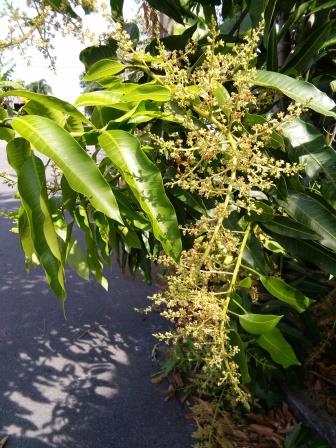
We had a short trip to Perlis last weekend. During this period, the mango trees, named sweet and fragrant mango (harum manis in Malay) are flowering profusely now. The sweet and fragrant mango fruits will be ready to be plucked by May, 2019. Be sure to visit Perlis during that time.
The big flower of mango of Perlis
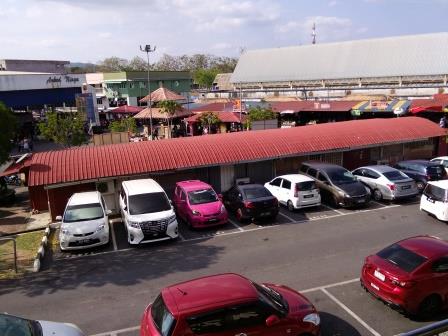
Perlis shares its border with Thailand. The border town of Padang Besar is popular with locals to buy various types of Thai’s fruits, other products and clothes at reasonable .
The border town of Padang Besar. Thailand is in the distance
Bougainvillea in Perlis as well
Also enjoy the beauty of my wife’s orchids flowering side by side.
Nasi dagang, “trader’s dish” is a dish of rice and curry. Ubiquitous in the east coast of Peninsular Malaysia, it is a popular meal for breakfast as “nasi lemak” is in the west coast. It can even be found in the Southern Thai provinces of Narathiwat, Yala and Pattani. Nasi dagang or “trader’s rice” in Malay could have originated from the dish concocted by the early traders for their packed provision while plying their trades at the time, hence the name of the dish that has stuck until today.
An indigenous dish of the region, it makes use of abundant natural resources readily available – rice, herbs and spices from the land and ikan tongkol (tuna fish) from the sea for the curry. Unique to the east coast, nasi dagang has two main versions, Nasi dagang Kelantan and Nasi dagang Terengganu. The Nasi Dagang Kekantan is made from long grain reddish brown rice.The Terengganu version of nasi dagang is a mixture of white fragrant rice and white glutinous rice. Visually, Nasi dagang Kelantan is generally reddish brown while Nasi dagang Terengganu is generally white and glossy. As for its accompanying curry, the Kelantan version uses normal curry powder while nasi dagang Terengganu uses specially concocted herbs and species
About Nasi
Dagang Terengganu
In Terengganu, nasi dagang is considered its traditional rice specialty. Simple, delicious, and wholesome are among the common descriptions given to this food. True that it is a very simple dish consisting of just rice, fish curry, pickles and chilly sauce. And yet it can be very gastronomically fulfilling – a complete meal by itself that has most of the nutritional value that matters. Visually appealing to some due to the white glossy color of the rice, it is also a versatile dish for any meal of the day, be it breakfast, lunch or dinner. And it is fitting enough for those special occasions like hari raya, thanksgivings and similar events. It is available from various outlets and settings – posh hotels, restaurants & eating shops, hawkers, kiosks, and even night markets
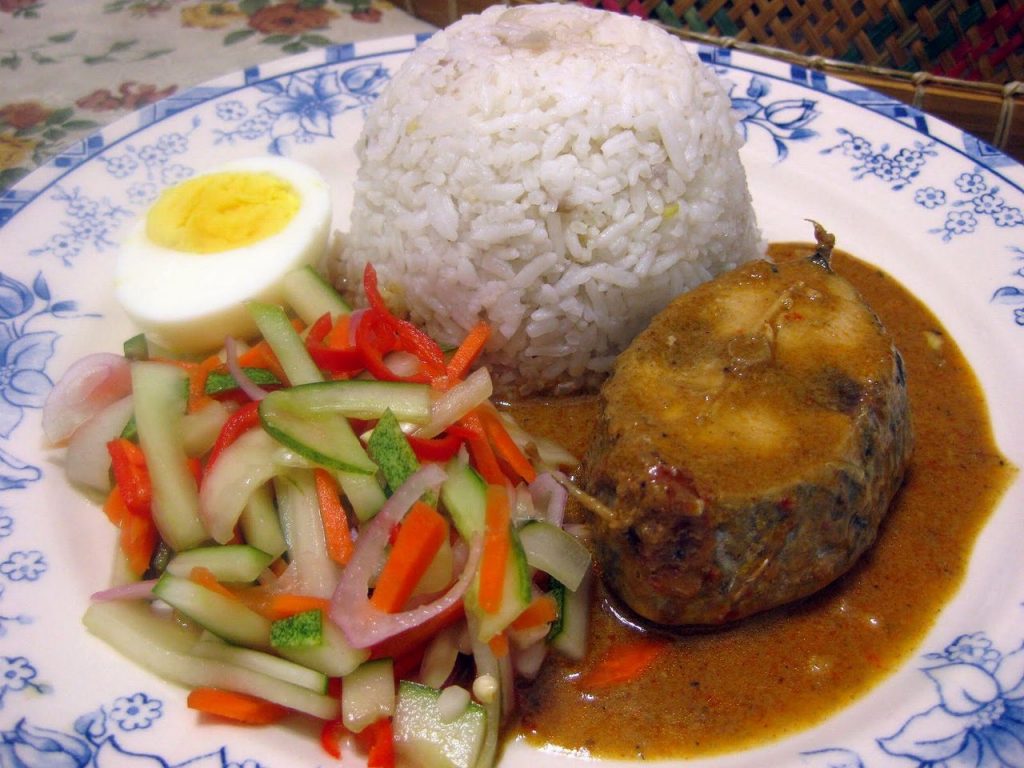
At its most basic, the nasi dagang Terengganu comprises of a rice dish with a side dish of ikan tongkol (tuna fish) curry and mixed pickles of cucumber, carrots and onions together with chilly sauce. Hard boiled eggs whether separate or put together into the curry with the fish can be an added option. If preferable, the tuna fish can be substituted with mackerel or other types of fish. The dish is prepared by steaming a mixture of fragrant rice and glutinous rice infused with coconut milk over low heat. The result is a white glossy rice dish that is both fragrant and creamy. Preparation of the dish will take 8 hours as the rice need to be soaked overnight (or at leas 8 hours) while the cooking itself will take about 2 hours.
The nasi dagang Terengganu has not been commercialised. Hardly any cafes or restaurants promote this delicacy in Kuala Lumpur lamented a writer in a column of an online news portal recently. That aptly describes the sad truth concerning this delicacy outside its state of origin, Terengganu. It has the potential to expand its market reach, not just confined to Terengganu but there are no takers.
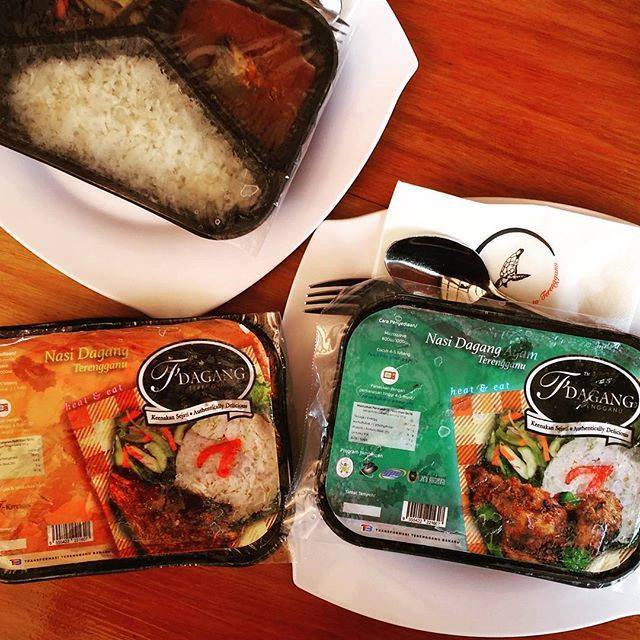
Well, that is about to change as a company owned by the state of Terengganu has ventured into the making of Terengganu traditional foods. And the company has produced a line of frozen foods that includes nasi dagang Terengganu. The frozen foods in packs form are not just for the domestic market but for the overseas markets as well. The company’s frozen nasi dagang Terengganu in packets are currently available in several selected T Mart convenient stores and Shell petrol stations in the Klang Valley and other parts of the country.
Frozen nasi dagang
For the overseas markets, a trial shipment of 20,000 packs of nasi dagang Terengganu and keropok lekor Terengganu (fish sausage) made recently to the British capital was reported to be well received. The news report also said that the foods are marketed by a UK fast food chain Chicken Cottage, which is also owned by the state of Terengganu. The frozen packs of keropok lekor and nasi dagang Terengganu are available in selected supermarkets selling frozen Asian foods.
Now that is certainly good news for all the diehard fans of nasi dagang Terengganu outside the state. Now, one can easily get this delicacy when that cravings start to act.
However, the frozen nasi dagang packs do not have the real taste of freshly prepared version. You have to be in Terengganu.
About the guest contributor:
Mr Ahmad Rozi Daud is a stingless bee farmer in Kuala Terenganu, Malaysia. He resides near Rantau Abang, Terengganu . He also provides training for those who are interested to be a stingless beekeeper or apiarist. Please contact us at 6016 3220 952 for assessment of suitability of your location for stingless bee farming.
The US Plant Based Food Association (PBFA) reported growing consumer interest in vegan alternatives to traditional foods. Plant-based meat had reached sales of US$670 million in 2017, showing that plant-based food industry has gone from a relatively niche market to fully mainstream.
PBFA also adds that plant-based meat and dairy
alternatives are not just for vegetarians or vegans anymore; now even
mainstream consumers are enjoying delicious plant-based foods.
In the UK, sales of meat alternatives are also
gaining acceptance. Major supermarkets like Tesco and Sainbury’s are offering a
wider range of vegan products.
A website, www.plantbasednews.org, predicted that the global meat alternative market is set to grow over the coming years, with a market forecast predicting it will reach US$6.3 billion by 2023. It is currently valued at US$4.63 billion.
The report puts the growth down to the “increased preference for vegetarians and vegan foods” as well as changing trends toward healthy diet.
Vegetarianism by country
A posting on Wikipedia lists countries with large population of vegetarians. Some countries have strong or cultural or religious traditions that promote vegetarianism, such as in India, while in other countries secular ethical concerns dominate, including animal rights and environmental protection along with health concerns. In many countries, food labeling laws have made it easier for vegetarians to identify foods which are compatible with their diets. . A study from 2010 by ESPRI, www.espri.ie/pubs/WP340.pdf, estimated that there are 1.45 billion vegetarians of necessity and another 75 million of choice. They represent approximately 22 per cent of the world’s population. The table shows the number of vegetarians in selected countries.
Country
Approximate number of individuals
India
375,000,000 to 500,000,000
China
54,428,000 to 68,035,000
Brazil
29,260,000
Japan
18,370,000
Mexico
23,370,000
US
12,646,000 to 20,233,000
Germany
8,000,000
Russia
4,380,000 to 5,480,000
Italy
4,246,000
UK
3,250,000
France
3,300,000
Taiwan
3,297,011
Poland
3,072,000
Thailand
2,300,000
Israel
1,046,000
Switzerland
1,176,156
Sweden
969,000
Source: Wikipedia
Malaysian vegetarian restaurant need
improvement in taste
Last week we took the opportunity to sample vegetarian
dishes at a restaurant in Johor Bahru, the capital of Malaysia’s southern state,
Johor. We glanced through the menu and settled for a mushroom steak, together
with a bowl of rice and mashed potato. When the food came, it was not visually appetising.
The mushroom steak was three pieces of fried battered mushroom, which was not tasteful
at all.
The restaurant was well designed as a modern café as compared to the traditional vegetarian restaurants found throughout Malaysia. Nevertheless, there is a long way to go before Malaysian vegetarian restaurants can entice typical customers to taste vegetarian foods occasionally. In the meantime, we opt for fish burger in a McDonald.
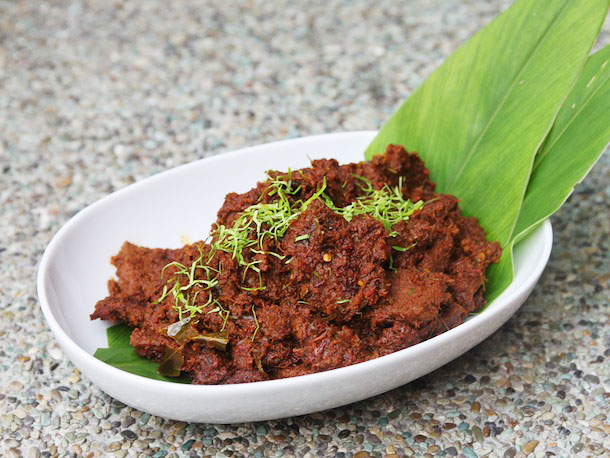
In Malaysia, the mainly Muslim Malays are still devouring meat, such as beef and chicken. In a typical Malay function, such as wedding, meat alternative is yet being served. The beef “rendang” is always the main dish, supplemented by tomato chicken.
Still no plant-based meat alternative to beef rendang