

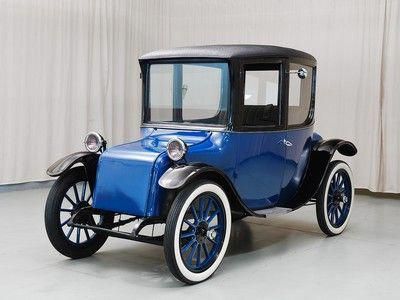
On February 13th, 2021, the headline of the Times London online was “Britons are at the back of a year-long queue for new Tesla model. Another headline in the Barron’s online reads “Electric vehicles were a non-starter until Tesla comes along.
There were a few starts for electric vehicles in the last 100 years. The Barron’s article highlighted several interesting facts. In 1959 there were a half-dozen companies racing to bring out the first electric automobile in a half-century. Leading the way was the Nu-Klea Starlite, a new electric model being billed as an “economy car”. At that point pint, Barron’s noted: “Simply by plugging the car into an electric outlet each night, thereby recharging the batteries, the owner can drive about 80 miles the next day at a cost of about US20 cents.”
The Nu-Klea Starlite failed and no other successful EVs emerged from this period. It continued for the rest of the 20th century-high hopes dashed by lack of vision, willpower, and funding. It took an new century, the 21st century, for EVs to be embraced by car-buying consumers.
Short history of the EV
The first exciting age of the EVs happened in the first decade of the 20th century. According to Barron’s the stately, battery-powered sedans of the pre-World Wat 1 era were purchased by well-to-do urbanites. President Woodrow Wilson drove around the White House in his Milburn Electric. Unlike gasoline-powered cars, EVs rode clean and silent, with little effort or maintenance needed. But they lacked speed (about 40 km per hour) and range of about 97 to 112 km per charge, largely because the batteries were so heavy.
The first electric age effectively ended in 1915, after Henry Ford and Thomas Edison teamed up to take a crack at EVs. The EVs produced were too slow, too heavy and too costly. The EV project was dropped by the two “giant men” of the period.
That was pretty much where things still stood in 1959, when Klea Starlite made its disappointing debut. EVs were not abandoned. They were produced as golf carts, and “British milk floats”.
Fast-forward to 1968, when Barron’s reported that GM. Ford and Chrysler were boasting about their research on smogless vehicles. The big hope this time was a Union Carbide electric motorcycle, which achieved 40 km per hour . The motorcycle was “strictly experimental”, and the big the American automobile companies has nothing of their own to offer except vague promises of electric passenger vehicles that might be ready for commercial production in 10 to 15 years.
Barron’s wrote another decade passed. Then, on June 13th, 1977, Barron’s cited “renewed interest in EVs,” this time because of concerns about the oil embargo and air pollution. Yet the only producer of EVs was Sebring-Vanguard, whose Citicar two-seater “boast a top speed of 61 km per hour and can go about 60 km per charge. “The Citicar was flimsy, Barron’s wrote, “it is not allowed on major highways.”
Some 13 years later, in 1990, then GM CEO Roger Smith, “desperate for a piece of good news on which to end his career,“ as Barron’s puts, introduced a new EV programme with great fanfare. But the effort didn’t yield a car until 1996—the General Motors EV1, a two-seater with an initial range of just about 97 km. GM pulled the plug on production in 1999., sparking controversy in the documentary, Who Killed the Electric Car?
By 2002, the big car makers knew that the gasoline engine was “rumbling into end of its product cycle,” with Ford, GM and the then DaimlerChrysler “well spending over US$1 billion a year on new-engine technologies, “ including hybrids, Barron’s wrote. Led by Toyota’s Prius, there were 50,000 hybrids on US roads.
Enter Tesla
The modern EV era begins with Tesla and CEO Elon Musk, a visionary like Ford or Edison. Musk’s goal was is “an electric-car revolution,“ and instead of building another niche economy EV, Musk shot for the moon with a high-end sports car, the Tesla Roadster. Barron’s admitted that it underestimated the power of Musk’s revolution. A 2013 cover story panned the stock, Tesla Inc., suggesting that Tesla’s fans “are viewing its prospects through 3-D glasses.” Today, the company is worth more than US$800 million, producing about 500,00 vehicles per year.
Planned Entry of Apple Inc.
Many traditional car companies and new EV start-ups have joined Tesla to produce EVs in the US, Europe, China and Japan. New eco-system of EV has emerged including large battery production and sophirtai9cted software to provide various features which are not available in today’s gasoline-powered cars.
More interesting is the planned entry of Apple Inc. into the automobile industry. The Times on London Times on February 16th, 2021, noted this development. Apple, which has overhauled the personal, music and mobiles market, has remained silent over its plans for vehicles. Its car plan, known internally as Project Titan, have been in the works for some years. It was reported that the company intended to produce a passenger vehicle in 2024. An analyst at Morgan Stanley, Katy Huberty, noted the smartphone market is worth US$500 billion each year. “The mobility market is worth US$10 trillion, so Apple would only need a 2 per cent market share of this market to be the size of their phone business,” she told clients.
In smartphones Apple uses a major contract manufacturer, Foxconn Technology Group, to produce all its smart phones. Apple its efforts on designing, software development and marketing. Major car companies have been making announcements that they are interested to partner Apple to produce tis vehicle.
The Times London quoted the CEO of Volkswagen, the largest car company in the world, that it was not afraid of Apple’s plan to enter the automotive industry. He said the global car market would not be transformed overnight. He has to be careful!
Apple has led to the failure of Nokia, then the market leader of mobile phone. We believe the business model of the mobility industry is ripe for major disruption after 100 years. CEOs of major car companies have to take note that Apple has a cash in hand of US$191.83 billion, meaning they has substantial ammunition to compete in the new autonomous electric vehicle industry.