
More impacts of AI in 2024

Since last semester, I have asked my MBA students to write essays on a certain management topic using the ChatGPT. Several essays were excellent while most others were not interesting readings. Many students were able to submit excellent essays, despite their lack of proficiency in English.  ChatGPT was obviously helping students to write business reports and analysis despite English being a second language.

I have met many entrepreneurs in 2023 who would apply AI models in various business applications for sales and marketing, and stock investment decisions.

Many articles and analysis are predicting that AI will have more impacts in many areas and would upend specific sectors in developed economies and developing countries in Asia and Africa.  

The London Telegraph on December 28th, 2023, in an article written by James Titcomb, noted that employees at OpenAI did not expect much on November 30 2022 when the company unveiled a “low-key research preview” called ChatGPT.

Greg Brockman, OpenAI’s president, told staff that it wouldn’t have much of an impact on day-to-day business, confidently forecasting that it would only get noticed in a few nerdy corners of Twitter.

It quickly became obvious that this was a wild underestimate. Millions of users signed up within days and ChatGPT was dubbed the most important technology in a decade, leading to a worldwide fervor about artificial intelligence.

Employees could be forgiven for failing to predict its popularity, though. ChatGPT, with its ability to conjure up essays and arguments, may have astonished its early users, but to its developers, it was positively medieval. 

The underlying AI system it was based on, known as GPT-3.5, was almost a year old. The company had already developed its successor, GPT-4, and was preparing to release it to the public.

OpenAI described it as being 10 times more advanced, saying it could understand not only text but images; and could pass legal examinations.

Now, just over a year later, the company is taking its first steps toward a vastly more powerful system.

ChatGPT founder Sam Altman has warned over AI’s existential risk to humanity. Those who worry that AI is an existential risk to humanity fret that new systems are being developed before we have got our heads around the existing ones.

Either way, the release of GPT-5 is expected to be the AI event of 2024.

Developing computer software is typically a case of tweaking previous versions to eke out small improvements.

Creating new AI systems – known as large language models – is often a case of starting again. An unprecedentedly vast amount of data is thrown at an unprecedentedly powerful system of next generation microchips, resulting in a model several times more powerful than what came before.

GPT-1, the primordial model created in 2018, was trained on 117 million data points known as parameters. GPT-3 required more than one thousand times that, at 175 billion, and GPT-4 was another 10-fold increase, at 1.7 trillion.

The computing requirements have increased too. GPT-4 reportedly required 16,000 high-end Nvidia A100 chips, against 1,024 for the previous generation. Little is known about the next wave of models, but they are certain to be trained on Nvidia’s new H100 chips, a vastly more powerful successor that is the first to be specifically designed for training AI models.

“The history of computer science and AI has been that increased scale results in substantial improvements,” says Oren Etzioni, the former chief executive of the Allen Institute for AI.

“The step up from GPT-3 to GPT-4 was so dramatic, that you would be a fool not to try it again.”

Google, which unveiled its new model Gemini in December, is preparing to release the more powerful Gemini Ultra in the new year. Anthropic, the Amazon-backed AI lab, may also launch a new system.

Scientists are divided, though, on exactly what more powerful will mean. Today’s large language models are approaching the upper limits on certain tasks. Google’s Gemini already outperforms humans on a widely used language comprehension test and on computer programming exams.  

That does not make it any less prone to common criticisms of today’s AI models: that they lack creativity, only regurgitating what they have been fed; and that they have a poor understanding of truth, making them prone to “hallucinating” facts.

Experts such as Nathan Benaich, the founder of investment firm Air Street Capital and the co-author of the annual State of AI report, says the next generation of systems will be “multimodal” – capable of understanding text, images, videos and audio. That, he says, will bring them closer to understanding the world.

Demis Hassabis, the head of Google’s Deepmind lab, has said this could come to include sensations such as touch, which could lead to the systems being embedded in robots that can understand the world.

The next wave of models could display capabilities akin to reasoning and planning – qualities that we might associate with human intelligence.

AI that can switch from one task to another would be a step towards autonomous “agents” – systems that can carry out tasks on people’s behalf, such as booking a holiday or reading and answering emails.

The consequences of that could be profound. While today’s AI systems have threatened to take jobs in areas like copywriting and design, they must typically be chaperoned through the writing or illustrating process. Those that can turn their words into action – a customer service bot that can book flights, for example – would be more threatening.

These predictions are largely guesses, however. And even today’s AI models are too complex to completely understand.

This is one of the reasons the next wave of models will face increasing government scrutiny. Nine companies – Amazon, Anthropic, Google, Inflection, Meta, Microsoft, Mistral, OpenAI and Elon Musk’s x.ai – have agreed to have their systems tested by the UK government’s AI Safety Institute before they are released.

Companies have signed up to similar commitments with the White House in the US.  The most advanced version of Google’s Gemini model is believed to be going through screening by officials before its upcoming release.

Equally, the next wave of AI systems could prove to be a bust. Sceptics believe that most of the low-hanging fruits have already picked, and that improvements from this point will be marginal no matter how much computer power is deployed.

But if the capabilities of next year’s models remain unknown for now, it seems certain that existing AI technologies will become more widely used.

In 2023, AI may have captured the popular imagination, but it might not be until 2024 that its impact really starts to be felt.

Ai models are likely to provide  solutions to problems that typically small- and medium-sized companies face every day: high staff turnover, lack of skills and available manpower, sales staff, accounting, and compliance.  

In 2024, my company, Bison Consulting, will be working with AI partners to offer services using AI models.

We could learn from my wife’s “steno moment”. In 1980’s many young girls in small town learned short-hand writing to become stenographer. When the Wang word-processor was introduced, the demand for stenographers disappeared, and many short-hand writing schools closed. Today, there is no position called stenographer in firms.   

Are you at risk of being replaced by artificial intelligence?

The rise of advanced AI tools such as ChatGPT and Stable Diffusion, which generates images based on text prompts, has generated fears that jobs would be substituted by the technology.

One of first studies into the impact of AI on the jobs market in the UK, carried out by the Department for Education (DfE), has concluded that consultants, accountants and psychologists are most exposed to the rise of AI.

Sports players, roofers and construction workers were among those least likely to be affected by the technology.

People with higher levels of education are more likely to be impacted than those with lower level qualifications.

The research refers to “exposure” to AI systems, meaning jobs may be aided or replaced by AI. However, careers that are aided by AI may also generate fewer jobs if it means technology can accomplish key tasks.

Official statistics divide professions in the UK into 365 categories, such as solicitors, librarians and nurses, although some jobs are categorised more widely, such as financial managers.

The DfE’s provided an “AI occupational exposure (AIOE) ” score to each job based on AI’s ability to replicate the skills required.

The scores range from around -2 to 1.5, with a higher score indicating a profession is more likely to be affected.

The DfE said it was generally believed that between 10pc and 30pc of existing jobs will be affected by AI, although new jobs will also be created to take advantage of the technology.

A study from US researchers earlier this year found that AI tools like ChatGPT were already taking freelance work away from copywriters and graphic designers.

The DfE said: “The report illustrates how the education system and employers will need to adapt to ensure the workforce has the skills necessary to benefit from this emerging technology.”

Men of the cloth have persevered for millennia, surviving the separation of church and state, the industrial revolution and multiple world wars.

Yet vicars and priests are now under threat from a very modern scourge: chatbots.

Jobs in the clergy are among the most exposed to the rise of artificial intelligence (AI), according to a government report.

Clergy members were ranked as the 13th most exposed to “large language model” systems out of the 365 categories of occupation studied.

They were deemed slightly less likely to be affected than local government administrators, but slightly more vulnerable than university lecturers.

The figures were based on what key skills are used in each profession, such as written comprehension and inductive reasoning, and how easily they could be replicated by AI.

The study may have missed unique aspects of individual professions and the research does not speculate how precisely the technology could influence each job.

Concerns about AI’s impact have increased in the last year as a result of advances in systems such as ChatGPT, which is already being widely used in the workplace.

Generative AI systems, which are capable of rapidly processing and generating text and images, are already disrupting the job market by leading to fewer opportunities for freelance copywriters and illustrators.

The DfE said its report showed that the education system and employers alike would have to adapt to provide more training as existing jobs are disrupted.

The report said it did not distinguish between jobs that were likely to be aided by AI and those that were likely to be replaced, and that it was based on a “number of uncertain assumptions”.

Economists had expected educated, white-collar workers to be the least exposed to the rise of AI before the arrival of ChatGPT, which has reversed assumptions about what jobs are vulnerable.

AIOE (AI Occupational Exposure and AI applications)

Felten et al (2021) have developed the AIOE measure based on Ai applications of AI that are likely to have implications for the workforce that cover the most likely andmost common uses of AI. Below is the list of AI applications.

Ai applicationDefinition
Abstract strategy gameThe ability to play abstract games involving sometimes complex  strategy and reasoning ability, such as chess, go or checkers, at a high level
Real-time video gamesThe ability to play a variety of real-time video games of increasing complexity at a high level.
Image recognitionThe determination of what objects  are present in a  still image.
Visual question answeringThe recognition of events, relationships , and context from a  still image
Image generationThe creation of complex images.
Reading comprehensionThe ability to answer  simple reasoning questions based on an understanding of text.
Language modellingThe ability to model, predict , or mimic human language.
TranslationThe translation of words  or text from one language into another.
Speech recognitionThe recognition of spoken language into text
Instrumental track recognitionThe recognition of instrumental musical tracks

Readers who are interested on the AIOE measure should read the following:

  1. Occupational, industry and geographic exposure to artificial intelligence: A novel dataset and its potential use. Strategic Management Journal, 42 (12).
  • E. Felten, M. Raj, and R. Seamans (2023). How will Language Modeller like ChatGPT  affect occupations  and industries?
  • DfE. The impact of AI on UK jobs and training. November 2023.

McKinsey: Women more likely to be replaced by AI than men

Can AI and robot make this mushroom haircut?

12 million jobs to be automated in the US alone over next seven years, McKinsey says

Women are 50pc more likely than men to lose their jobs in the artificial intelligence (AI) race, according to a new study that predicts millions more roles will be automated by 2030.

McKinsey said around 12 million jobs will be replaced by AI in the US alone over the next seven years.

The management consultancy said women will be more affected by companies replacing staff with chatbots because they are more likely to hold “lower-wage jobs”.

Other jobs heavily represented by women, including customer service roles and secretaries are also in the firing line, according to McKinsey.

McKinsey’s study, published this week, said women are “heavily represented” in those two sectors, with potentially 5.7m jobs being lost in those areas alone by 2030.

McKinsey said: “Workers in lower-wage jobs are up to 14 times more likely to need to change occupations than those in highest-wage positions, and most will need additional skills to do so successfully.”

Women are 1.5 times more likely overall to be forced to change jobs as a result of AI-powered automation changing how companies recruit and use human workers.

Those without university degrees, as well as the youngest and oldest workers are also at higher risk of losing their jobs to technology such as AI-powered chatbots.

Others in professional roles such as management, healthcare and the legal profession are least likely to be impacted, McKinsey said.

Not all professional roles are immune. Figures from jobs board Adzuna suggest that graphic designers, software engineers and advertising specialists are at greatest risk from AI.

Traditionally, technological advancements result in jobs being created in other sectors instead of being destroyed altogether.

Public availability of AI tools such as ChatGPT have accelerated the trend for job automation, with McKinsey revising its job loss predictions upwards by a quarter from estimates it made in 2021.

My MBA students also have pointed out that their companies are also applying AI to replace humans in many activities. One example is the automation of travel plans. However, their bosses still have the luxuries of secretaries and personal assistants to plan their travels!!!

Some jobs will be safe like a barber, unless you want to have the hairstyles of Lauren and Hardy, a mushroom cut.

Robots and the Japanese mind

In Japan, robots are perceived positively

My youth was filled with Japanese robots such as Ultra Man while my children were occupied with Transformers. We note an interesting article by Gillian Tett in Financial Times on June 12th, 2019. The article touched on the positive acceptance of robots in Japan as compared to other countries, mainly the UK and US.

She wrote that a survey by Pew last year suggested 83 per cent of Japanese people think that automation raises inequality. But they are less concerned that using automation will make it hard for them to find a job, and an unusually high proportion think that a robot-filled economy would be far more efficient.

Meanwhile, the Japanese tend to view robots as a source of pride, not terror, since they highlight the country’s ability to innovate, with 300-plus robots per 10,000 employees, Japan has the highest take-ups of robots in the world.

One reason for that phenomenon is that robotics is an industry where Japanese business is ahead of international competitors, creating a sense of national optimism. Another subtle factor is that popular culture has tended to present robots as being friendly. Think of Astro Boy series, a manga and anime creation  that most adult Japanese watched on TV in their youth: its robotic protagonist presents  an appealing and helpful face that is easy to embrace.

In Britain, however, today’s adults grew up watching TV series such as Doctor Who, which offered a more ambivalent take on robots, with mechanized adversaries such as Daleks and Cybermen that truly terrifying for young viewers. So too in the US, where Hollywood’s robots were at least as likely to harm as to help –to be a relentless Terminator, say, as to be a cute R2 D2.

Then there is a third more tangible-issue that affects Japanese attitudes towards robots: demography. Japan’s birth rate is so low (1.43 births per woman) that its working-age population is shrinking at an alarming rate. Companies in Japan have responded by recruiting more women. Indeed, one little-noticed detail about modern Japan is that the population of women between 15 and 64 years old who now work is about 68.5 per cent, higher than in the US. The country has also started to hire a few more workers from countries such as China, Vietnam and India to fill positions ranging from elderly care to the development of AI.

Miss Tett says that these cannot entirely plug the labour shortage and there is a considerable hostility towards immigration. That makes automation seem less terrifying by default.

Then, there is a fourth issue: the social safety net. Last year’s Pew r survey revealed that 63 per cent of people in Japan think that it is up to the government—not  the individual— to help the population to adopt to automation. Perhaps that is not so surprising: Japan publicly-funded social safety net remains pretty robust, and there is still a high sense of social cohesion, common purpose and sacrifice.

In the US, however, only about 30 per cent of the public expect the government to help with automation, while more than double that number expect the burden to fall on the individual. That may sound more empowering, but Miss Tett suspected it is also a recipe for anxiety.

Miss Tett noted that our views on robots will change in the coming years. It would be interesting to see what happens, for example, in places such as Italy, where birth rate is also falling sharply. It would be more interesting to see whether political protest eventually forces the US government to take measures to strengthen the social safety net in the face of automation.

The key point is this: when it comes to robots, Japan may yet have an edge over other nations, not just in term of its technology but in its attitude too, or, at least, its recognition that robots may yet  enable the county to keep growing even its population shrinks. Call this the unexpected upside of Astro Boy –or maybe a sign that it is time for Hollywood to embrace robots more whole-heatedly.

The Situation in Malaysia

As a nation, Malaysia has a population of about 30 million The Malaysian government has been encouraging its citizens to have more children so as to reach a targeted population of 60 million for sustaining economic growth.

We noted a number of observations in our previous job as Adviser, Tabung Warisan Anak Selangor (TAWAS), a foundation that monitors and records the birth of new-borns in the state of Selangor. First, the number of children among a typical Chinese parent is two. Second, the number of children in a typical Malay family is five. It is projected that the percentage of Chinese in the Malaysian population will significantly decline due to this small number of children in the long run.

The increasing population will mean that the country must find jobs for its young adults. Recently it was revealed that a significant number of graduates are unemployed. This was worrying to the nation’s planners. Robots and automation may not be perceived to be friendly to Malaysians as robots would lead to less job opportunities.    

The Skills Needed to Secure Future Jobs: Part II

Complex decision-making skills are important in future job

Changing Roles 

The report highlighted examples of stable, new and redundant roles in all industries as shown below:

Stable roles

Managing Directors and Chief Executives

General and Operation Managers

Software and Applications Development and Analysts

Data Analysts and Scientists

Sales and Marketing Professionals

Sales Representatives

Human Resource Specialists

Financial and Investment Advisers

Database and Network Professionals

Supply Chain and Logistics Specialists

Risk Management Specialists

Information Security Analysts

Management and Organization Analysts

Electrotechnology Engineers

Organizational Development Specialists

Chemical Processing Plant Operators

University and Higher  Education Teachers

Compliance Officers

Energy and Petroleum Engineers

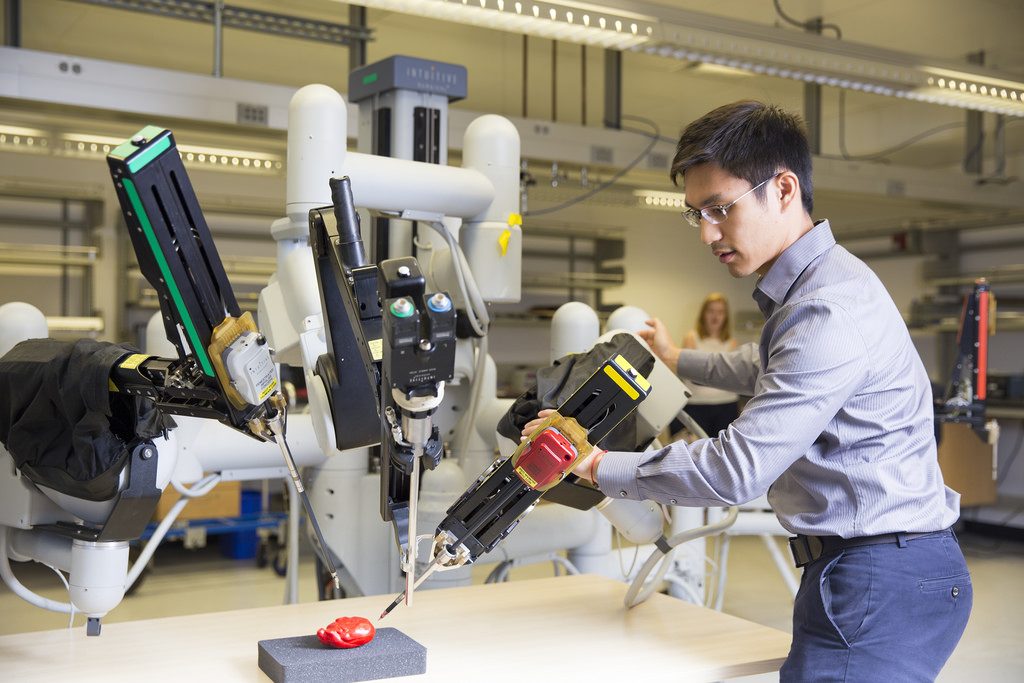
Robotic Specialists and Engineers

Petroleum and Natural Gas Plant Operators

New Roles

 Data Analysts and Scientists

  AI and Machine Learning Specialists

  General Operations Managers

  Big Data Specialists

  Digital Transformation Specialists

  Sales and Marketing Professionals

  New Technology Specialists

  Organizational Development Specialists

 Software and Application Developers and Specialists

 Information and Technology Services

 Process Automation Specialists

 Innovation Professionals

  Information Security Specialists

 Ecommerce and Social Media Specialists

User Experience and Human-Machine Interaction Designers

Training and Development Specialists

Robotic Specialists and Engineers

People and Culture Specialists

Client Information and Customer Service Workers

Service and Solution Engineers

Digital Marketing and Strategy Specialists

Redundant Roles

Data Entry Clerks

Accounting Bookkeeping and Payroll Clerks

Administration and Executive Secretaries

Assembly and Factory Workers

Client Information and Customer Service Workers

Business Services and Administration Managers

Accountants and Auditors

Material-Recording and Stock-Keeping Clerks

General and Operations Managers

Postal Service Clerks

Financial Analysts

Cashers and Ticket Clerks

Mechanic and Machinery Repairers

Telemarketers

Electronic and Telecommunication Installers

Bank Tellers and Related Clerks

Car, Van and Motorcycle Drivers

Sales and Purchasing Agents and Brokers

Door-To-Door Sales Workers, News and Street Vendors, and Related Workers

Statistical, Finance and Insurance Clerks

Lawyers

Note: Jobs which appear across multiple columns reflect the fact that they might be seeing stable or declining demand across industry but be in demand in another.

Comparing Skill Demands

The report also highlights the trend in skill demand, 2018 versus 2022, top ten as follows:

Today, 2018

Analytical thinking and innovation

Complex problem-solving

Critical thinking and analysis

Active learning and learning strategies

Creativity, originality and initiative

Attention to detail and trustworthiness

Emotional intelligence

Reasoning, problem-solving and ideation

Leadership and social influence

Coordination and time management

Leadership is important for organizational development

Trending, 2022

Analytical thinking and innovation

Active learning and learning strategies

Creativity, originality and initiative

Technology design and programming

Critical thinking and analysis

Complex problem-solving

Leadership and social influence

Emotional intelligence

Reasoning, problem-solving and ideation

Manual skill is declining in future job

Declining, 2022     

Manual dexterity, endurance and precision

Memory, verbal, auditory and spatial abilities

Management of financial, material resources

Technology installation and maintenance

Reading, writing, math and active listening

Management of personnel

Quality control and safety awareness

Coordination and time management

Visual, auditory and speech abilities

Technology use, monitoring and control            

Conclusion

Skills such as analytical thinking and active learning will continue to grow in prominence by 2022. Companies will need to pursue a range of organizational strategies in order to stay competitive in the face of rapidly changing workforce requirements. To do this, the skills of executive leadership and the human resources function will also need to evolve to successfully lead the transformation.

Please click the report below.


The Skills Needed to Secure Future Jobs: Part I

Introduction

In 2019 and beyond, many people are concerned whether they will continue to hold on to their existing (well-paying) jobs. They have both good and bad news.

Many organizations and governments have issued research papers and reports on the impacts of automation and artificial intelligence (AI) on future jobs. One such interesting report is published by the World Economic Forum, the international organization for public-private cooperation based in Geneva, Switzerland. The report, Future of Job Report 2018, follows up an earlier report, The Future of Jobs: Employment, skills and workforce strategy for the fourth industrial revolution, which was issued in 2016. We have reviewed the report, Future Job Report 2018 and wish to highlight its key findings.

It noted that as technological breakthroughs shift the frontier between the work tasks performed by humans and those performed by machines and algorithms, labour markets are undergoing major transformations. Companies are seeking to harness new and emerging technologies to reach higher levels of efficiency of production and consumption.

The report’s key findings can be summarized as follows:

Drivers of change

Four specific technological advances-ubiquitous high-speed mobile internet: AI; widespread adoption of big data analytics; and cloud technologies-are drivers positively affecting business growth. 

Accelerated technology adoption

Companies surveyed in the report are likely or very likely to have expanded their adoption of user and entity big data analytics. Similarly, large proportion of companies are likely or very likely to have expanded their adoption of technologies such as the internet of things and app- and web-enabled markets, and to make extensive use of cloud computing. Machine learning and augmented and virtual reality are poised to likewise receive considerable business investment.  

Trend in robotization

While estimated use cases for humanoid robots appear to remain somewhat more limited over the 2018 -2022 period under consideration in this report, collectively, a broader range of recent robotic technologies at or near commercialization including stationary robots, non-humanoid land robots and fully automated aerial drones, in addition to machine learning and AI are attracting business interest in adoption.

Changing geography of production, distribution and value chains

By 2022, 59 per cent of employers surveyed for this report expect that they will significantly modified how they produce and distribute by changing the composition of their value chain and nearly half expect to have modified their geographical base of operations. 

Changing employment type

Nearly 50 per cent of companies expect that automation will lead to some reduction in their full-time workforce by 2022. In addition, businesses are set to expand their use of contractors doing task-specialized work, with many respondents highlighting their intention to engage workers in a more flexible manner, utilizing remote staffing beyond physical offices and de-centralization of operations.   

A new human-machine frontier within existing tasks

Companies expect a significant shift in the frontier between humans and machines when it comes to existing work tasks between 2018 and 2022. Relative to their starting points today, the expansion of machine share of work task performance is particularly marked in the reasoning and decision-making, administrating, and looking for and receiving job-related information task.

Emerging in-demand roles

There would be demand for roles as data analysts and scientists, software and application developers and ecommerce and social media specialists. These roles are significantly enhanced by the rise of technology. Also expected to grow are roles that leverage distinctly “human skills”, such as customer service workers, sales and marketing professionals, training and development, people and culture, organizational development specialists and innovation mangers. Moreover, the report noted evidence of accelerating demand for a variety of new specialist roles related to the understanding and leveraging the latest emerging technologies; AI and machine learning specialists, big data specialists, process automation experts, information security analysts, user experience and human-machine information designers, robotic engineers and blockchain specialists.

Data scientists in demand

Growing skill instability

Given the wave of new technologies and trends disrupting business models and changing division of labour between workers and machine transforming current job profiles, the skills required to perform most jobs will have shifted significantly.

Global average skill stability-the proportion of core skills required to perform a job that will remain the same- is expected to be about 58 per cent, meaning an average shift of 42 per cent in required workforce skills over 2018 -2022 period.

Robotic engineers in demand

A re-skilling requirement

By 2022, no less than 54 per cent of all employees will require significant re- and up-skilling. Of these, about 35 per cent are expected to require additional training of up to six months, 9 per cent will require re-skilling lasting six to 12 months, while 10 per cent will require additional skill training of more than a year. Proficiency in new technologies is only one part of the 2002 skills equation, however, as “human skills” such as creativity, originality and initiative, critical thinking, persuasion and negotiation will likewise retain or increase their value, as will attention to details, resilience, flexibility and complex problem solving. Emotional intelligence, leadership and social influence as well as service orientation also see an increase in demand relative to their current positions.

Digital marketing specialists

Observation

Twenty years ago, Malaysian high school students inspired to secure well-paying jobs such as doctors, engineers, government senior employees, lawyers and journalists. Some of these job roles will remain while others will be taken over by machines in the next five to 10 years. STEM students will have opportunities in new job roles such as data analysts and robotic engineers that pay well more than the traditional job roles. For non-STEM students, their new job roles will include digital marketing specialists and user experience managers. Also, we will still need our barbers and hair salon ladies to look good and beautiful.               

Robots Making Robots

Factory Runs By Robots to Make Robots

Swiss robotics company ABB has revealed that it’s spending US$150 million to build an advanced robotics factory in Shanghai — one that will use robots to build robots. The company will rely on its YuMi single-arm robots, which it once used to conduct an orchestra, for small parts assembly. It also plans to make extensive use”of its SafeMove2 software in the facility, which it says will allow its YuMi models and other automated machines to safely work in close proximity with human employees.

ABB says its goal is to make the Shanghai facility the most advanced robotics factory in the world. It will even feature a Research and Development center to accelerate the firm’s work in artificial intelligence. In addition, it will widen the types and variants of robots the company can build for Chinese companies, including automakers and electronics manufacturers. China is ABB’s second biggest market after the United States, and the new factory could greatly expand its presence in the market. The company expects to open the 75,000-square-foot facility by late 2020.

The Status of World’s Robots Population

According to the International Federation of Robotics (IFR) 2018 Report, there are three types of robots;

  1. Industrial Robots
  2. Professional service robots, and
  3. Personal/domestic services robots

The IFR 2018 reports noted key drivers for robots, and they include:

  • Shift to high mix/low volume production
  • Global competitiveness
  • Digitalization of manufacturing-Industry 4.0.
  • Growing consumer market
  • Energy efficiency-driven technology shift
  • Regionalized production

Industrial Robots

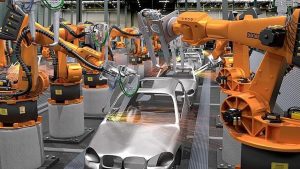
Automotive industry uses the most number of industrial robots

In 2017, China was the biggest supplier of industrial robots with 138,00 units followed by Japan at 46,000 units. The main customers of industrial robots are the automotive industry and the electrical and electronic industry. However, China was lower in the ranking in the number of installed robots per 10,000 employees in the manufacturing industry in 2017, as shown below:

  Country Installed robots
1 Korea 710
2 Singapore 658
3 Germany 322
4 Japan 308
5 Sweden 240
6 Denmark 230
7 US 200
8 Taiwan 197
9 Belgium 192
10 Italy 190
11 Netherlands 172
12 Austria 167
13 Canada 161
14 Spain 157
15 Slovakia 151
16 Slovenia 144
17 Finland 139
18 France 137
19 Switzerland 129
20 Czech Republic 119
21 China 97


In 2017, there were 2,098,00 industrial robots in world’s factories as compared to 1,632,000 in 2015.

Professional Services Robots

A professional service robot

According to IFR 2018 Report, there were sales of US$6.6 billion of professional service robots in 2017, representing 109,500 units. The main applications were in the logistics, medical, field and defence sectors. AGVs were used in factories, warehouses, logistics centres and hospitals. Medical robots are most valuable with 2,900 units representing sales of US$1.9 billion in 2017. Field robots are mainly milking robots.

Personal/Domestic Service Robots

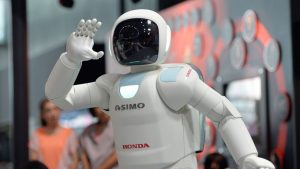
ASIMO, a leisure robot

Vacuuming and floor cleaning robots are mostly established personal/domestic robots. In 2017, there were 1,200,000 household robots and 400,000 entertainment and leisure robots.

 Please find a snapshot of the robotic industry in the report below.

WR_Presentation_Industry_and_Service_Robots_18_Oct_2018

Continued March of the Robots

Background

Like it or not, robots are steadily marching forward replacing humans in their stride.

Many human jobs are being replaced by robots or robots are collaborating with humans, which were reported as follows:

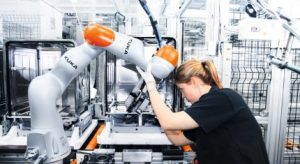
Working robots: collaborative robots or “cobots” are being installed in factories to work alongside with humans. In Britain, cobots are being used to address the shortage of workers due to Brexit. A study from Massachusetts of Technology (MIT) indicates that cooperation between humans and robots is more productive than using either humans or robots alone and reduce human idle time by 85 per cent.

A cobot produced by Kuka

In addition, cobots are being utilized in restaurants. At Mofongo’s distillery and cocktail bar in the Dutch city of Groningen, a cobot climbs a 26-ft high bar to tap bottle of spirits. In a restaurant in Tokyo a cobot boxes takeaway dumplings. Trials are underway for machines to go through medical records using artificial intelligence to ensure that they get the right medical record.

(Source: Mark Bridge. Robots in restaurant to solve staff shortage. The Times, June 16, 2018)

Soft fruits robots: there goes students’ summer jobs of picking strawberries! We spent a summer during our college days in a strawberry farm in Northern England.  The pays enabled us to buy a nice bicycle. A company, Fieldwork Robotics Ltd in the UK is developing a prototype robot capable of picking raspberries. The robotic system could be adapted to pick other fruits and vegetables. Running on wheels and guided by cameras, they will have multiple arms, equipped with sensors to detect and pick ripe berries.

Soon, rambutan could be picked -up by robots without having a stiff neck

(Source: Miles Costello. March of the robots  was never so sweet. The Times, August 6, 2018.

A robot stuntman: The Walt Disney Company’s researchers initially had developed a robot stuntman by devising a lump of metal that could be flung across a space into a net. It had sensors and its centre of mass could be shifted, allowing its flight to be controlled and a precise landing would be made. It was followed by a headless, limbless automation made up of three connected shafts, and then a full humanoid robot. It was noted that robots have started to become mobile and autonomous and can begin to imitate sophisticated stuntmen or stuntwomen.

Robotic actors “employed” to do stunts in movies

(Source: Will Pavia. Disney’s next trick: a robot stuntman. The Times, August 7, 2018.

More bad news for human employees: It was reported that Citigroup, the US banking giant, had announced that it would reduce up to half of its technology and operations staff in the next five years and replace them with machines. Another  large bank, Credit Suisse, was planning to automate a large number of compliance jobs.

(Source: Miles Costello and Dominic Walsh. 10,000 workers @may be replaced by machines”. The Times, June 12, 2018.

In Malaysia, there is an urgent need to replace foreign workers in large oil palm plantations to harvest fruits and transport them to palm oil mills quickly. Foreign workers in oil palm plantations represent a major portion of immigrants in Malaysia.

Drone and LED: Firework-Less Display

             A Noisy Firework Display

Introduction

The other day an electrician came to our house to replace all the conventional fluorescent lights with LED lights. These LED lights are now offered at most DIY shops, and house owners are slowly embracing LED lights. This is also helped by lower LED prices, and many brands are competing in the marketplace.

LED lights are found in many applications, such as car daylights, Christmas decorations, street lights and toys. Many new applications are being discovered

           An LED With Multiple Colours

LED Display Using Drones 

Recently, LED lights carried by drones have been introduced by the technology company, Intel  Inc. (Intel) at an event in Las Vegas, US.  Intel’s Shooting Star drones, which fly in formation, carried LEDS capable of more than four billion colour combinations. The company is said to have created a new, sophisticated art that is cleaner than the traditional firework display.

In a first-of- its- kind display, at the Consumer Electronics Show (CES) technology show in Las Vegas, Intel deployed 100 of its palm-sized drones to fly to a sound track of electronic music inside a theater in the Monte Carlo Resort. It later showed off 250 of its drones flying in synchronization with the formation show outside the Bellagio hotel dancing in the sky to form stars and concentric circles.

The entire swarms of drone are programmed with routines and controlled by one pilot.  Intel noted that it had wanted to demonstrate the potential of its drone technology as well as offer a new form of entertainment and display.

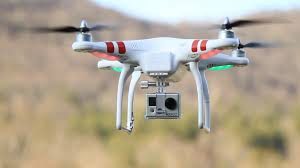
                        A Type of Drone

Drones carrying LEDs are likely to replace fireworks which have around for centuries since there were invented by the Chinese.

Although interesting and dramatic, fireworks create a lot of dust pollution and noise.  There are also dangers posed to the operators. Intel says that light shows are a way of re-defining night-sky entertainment. The new LED/drone combination offers better benefits such as the ability to create shapes and logos with a combination of colours and a vibrant mix of sounds.

Intel also notes that the positioning technology that keeps the drones close to each other without crashing could be used for other purposes, such as sweeping large areas during a search. Intel has previously demonstrated drone light shows at many events. However, those displays used larger drones that communicate with GPS. It  said that GPS could not be safely used for drones flying indoors or in semi-enclosed spaces such as sports arenas, music stadiums and concert halls. Such spaces are also off- limits to fireworks This means that the miniature drones provide a new way to bring firework-style shows in venues where that would previously have been impossible.

New Opportunities    

Unlike firework displays, which literally burn money, LED/Drone combination for display and entertainment is re-usable. This is a new business opportunity for an enterprising entrepreneur. Maybe, in the future, we may not need to have our car with headlights: LED/Drones combination would drive in front of the car to provide lighting. Not to forget the self-driving autonomous car. Bosch and other headlight manufacturers beware!

Reference: Mark Bridge Shooting Star drones could replace fireworks. The Times, January 12th, 2018.

Electric Cars and Robots: Their Negatives and Positives

Background

Nissan Leaf, Leading Electric Car in the Market

Electric cars are hogging the headlines in many countries. For example in Norway, electric cars represent about 40 per cent of new car registrations. Charging stations for electric cars are everywhere. Norwegian government is providing incentives and perks to encourage drivers to purchase electric cars.

Buyers do not pay import tax and VAT on plug-in cars, shaving thousands of US dollars of the upfront cost. Running costs are lower because electricity is cheaper than petrol and diesel, while road tax is reduced, and will drop to zero in 2018.

Electric car owners also do not pay road tolls, ferry fees and city emission charges that other drivers face Moreover, the drivers can park for free and bypass traffic by driving in bus lanes.

A consulting company, EV-Volumes, which tracks electric cars globally, estimated the sales of electric cars have exceeded 3 million units. The list of car companies intending to offer electric car models is growing as shown below:

No. Car Manufacturers Models Year
1 Daimler Smart 2009
2 Peugeot iOn 2010
3 Mitsubishi I MiEV 2010
4 Nissan Leaf 2011
5 Renault Bongo Z. E. 2011
6 Tesla Model S P90D, Model S 70D 2012
7 Bollore Bluecar 2012
8 Honda Fit EV 2012
9 Ford Fpcus 2012
10 Renault Zoe 2013
11 VW e-Up! 2013
12 BMW I3 2013
13 Chevrolet Spark EV 2013
14 Fiat 500e 2013
15 Nissan e-NV200 2014
16 Kia Soul 2014
17 VW e-Golf 2014
18 Mercedes B-Class ED 2014
19 Tesla Model  X 2015
20 Nissan Leaf 2015
21 Chevrolet Chevy Bolt 2016
22 Renault Zoe upgrade 2016
23 BMW I3 upgrade 2016
24 Mercedes Smart Fortwo 2016
25 Citroen e-Mehari 2016
26 Opel Ampera-E 2017
27 VW eGolf upgrade 2017
28 Hyundai Ioniq EV 2017
29 Mercedes Cabrio, Forfour 2017
30 Audi e-tron 2018
31 Jaguar I-Pace 2018
32 Tesla Model 3 2018
33 Daimler Generation EQ 2019
34 VW I.D. 2019
35 Lucid Motors Air 2019

Source: FTWeekend, 4 November/5 November 2017


Tesla Model 3, Electric Car with Many Advanced Features

The March of Robots

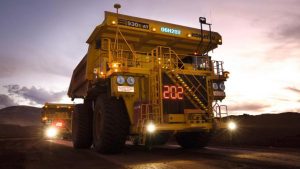
Robots are quietly changing the employment landscape.  The large mining companies such as Rio Tinto are replacing human drivers in managing the operations of the huge trucks that carry commodities such as iron ores. The drivers who drive these monster trucks are well paid but the job is dangerous. In Rio Tinto’s mines at the remote Pilbara in Western Australia, the monster trucks are now driverless. They are being controlled 1,046 kilometres away in a control room in Perth, Western Australia.  These monster trucks operate 24 hours, without tiring.

Monster Truck is Remotely Controlled

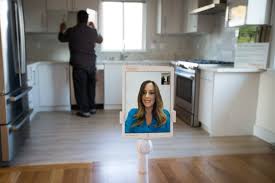
In Santa Clara, California, US, robots are being used in selling houses. These robots are operated by the high technology property management start-up, Zenplace, and are intended to take the hassle out of coordinating showing times between real estate agents and prospective renters. The robot is operated by a real estate agent to save driving time in coordinating with the client’s schedules. Now, with the robot, the real estate agent can do between 150 and 20 showings a day, which enhances his/her  commissions.

Robot Used in Selling Real Estate

The two cases show that robots can have both negative and positive impacts. Even in a developing country like Malaysia, robots and automation are chipping away many routine jobs. Fortunately, the employees, who are affected by automation, are re-assigned to other jobs.

In 2018, the employees, whose jobs are taken by robots, may not be so lucky.

Best wishes for 2018 from Dato’ Dr Anuar Md Nor, President, Bison Consulting.