
Sand: Under-The-Radar Key Global Commodity

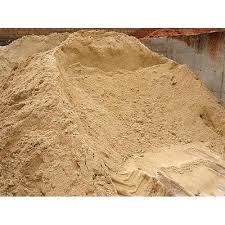
Sand is an important construction material

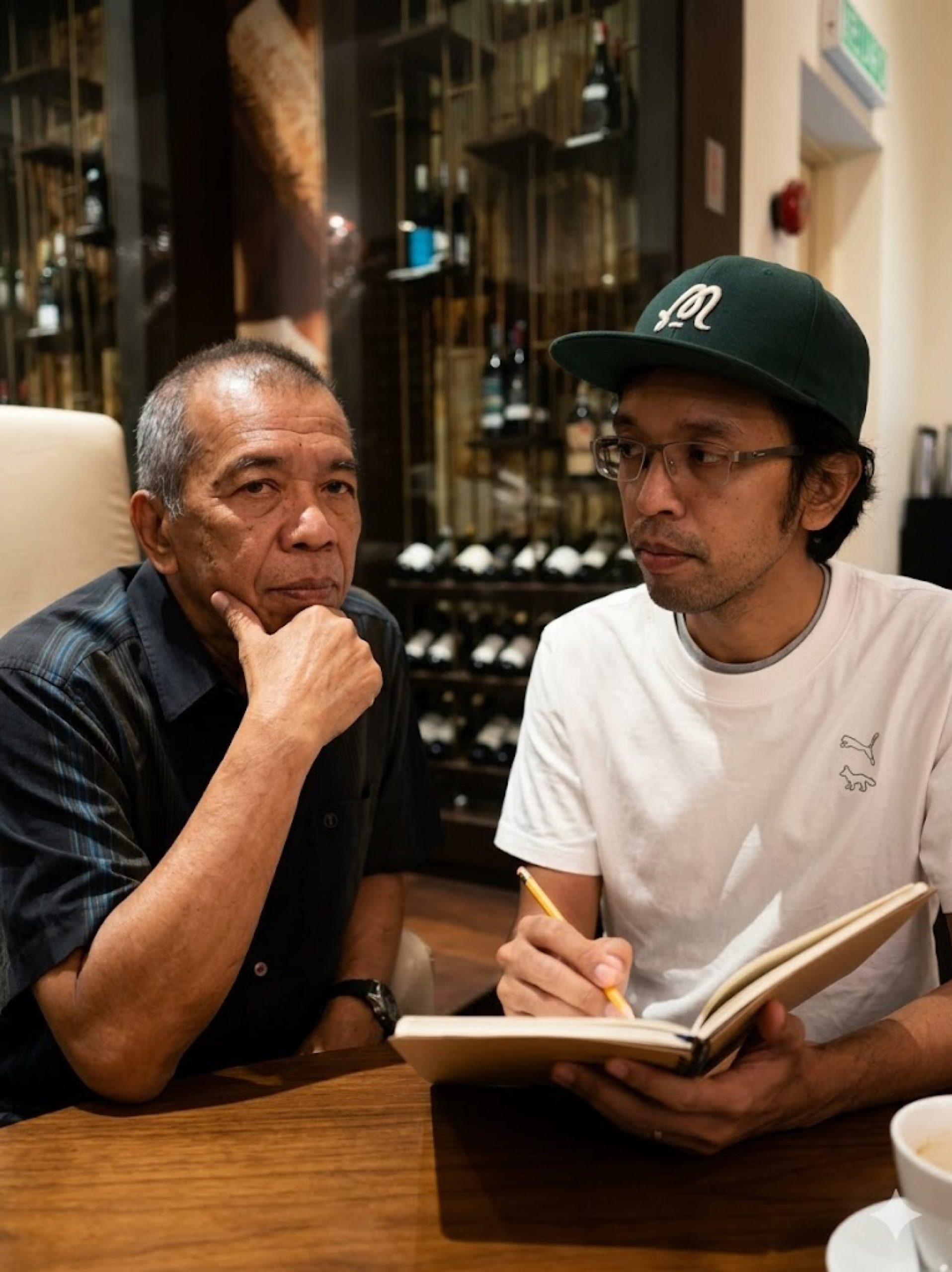
In late 2008 I was tasked by the then Chief Minister of the industrial state of Selangor of Malaysia, in which Kuala Lumpur, the capital of Malaysia is also located, to re-organize the state’s sand industry. The sand industry has been rife with illegal sand extraction and corrupt officials. The state collected only a small amount of royalty from its sand resources.  

The demand for sand was huge as it is an important material for building and road construction.  Anjana Ahuja  wrote in Financial Times on 23rd, May 2019, that, according to a UN report, sand is being mined, dredged and even stolen to satisfy the global demand for infrastructure. Strikingly, sand comes second only to water in terms  of the volume of material resources that are extracted and traded globally.

While it is being poured into much-needed urban development, particularly in China and India, sand is not a limitless gift of nature. The world has a “sand budget” and we are spending it faster than it can be replenished.

The environmental consequences of sand extraction are becoming plainer by the day. The plunder of lakes, rivers and coastal areas reduce biodiversity, destroying fishing communities, causes pollution, lowers water table and, by ferrying away natural deposits increases flood risk.

It can also threaten  tourism in countries like Morocco with illegal extraction providing half of the annual sand needs, beaches are in danger of being stripped back to rock.

“It is a challenge to the paradigm of infinite sand resources,” concludes the UN report.

We tend to think sand as the powdery stuff that slips between our toes. In fact, sand falls into two categories. The first is mineral sand, which contains such minerals as zircon and is used to make ceramics and as pigments. It comes mainly from river beds and coastal areas like beaches. In inland and non-tropical areas, sand is mostly made of silica, or silicon dioxide. The second class is aggregates, a generic term  for crushed rock, sand and gravel. This easier-to-bind coarse variety of sand is coveted by the construction industry. Up to 50 million tonnes are removed from rivers, pits, quarries, coast lines and marine areas each year.

Illegal or unregulated sand extraction flourishes in countries where, variously, rules are lacking, enforcement is lax or corruption thrives. Because transporting sand is expensive, generally the material is generally used near to its source. Tracking where infrastructure is springing up can yield clues about which ecosystems might be targeted. According to Dr Latham of the Imperial College in London, UK, the great sand drain presents a technical challenge: how to come up with alternative materials, perhaps using desert sand. “It is a huge reserve that is already on land, so removing it arguably less of an environmental  problem. The industry needs to look at this.”

An Imperial College student start-up is trying to develop a building material out of smooth –grained sand; the re-usable, biodegradable composite is currently only suitable for temporary structures.

Sand is becoming a geopolitical irritant too. Singapore’s expansion via land reclamation has been linked to the loss of 24 sand islands from neighbouring Indonesia. China’s territorial expansion in the South China Sea depends on imported sand.

My Own Experience

There is a veracious demand for sand in our state of Selangor and in Kuala Lumpur for construction of roads and infrastructure. Sand extraction from agricultural lands, ex-mining lands and river turned them into large water bodies with few alternative uses. Declining supply of sand from the state of Selangor requires sand to be transported from other states such as Perak in the north. Large trucks are used to transport sand, which often cause busy traffic on the highways. Illegal sand activities have been vastly reduced, and the income from the sand royalties for the state of Selangor had increased substantially.

But everyone must know that sand is a limited resource and may not be available where it is needed for urban development. Society needs to prepare to pay a higher price for this take-for-granted natural resource.

“The old men and the sea”: Terengganu’s coastal fishermen

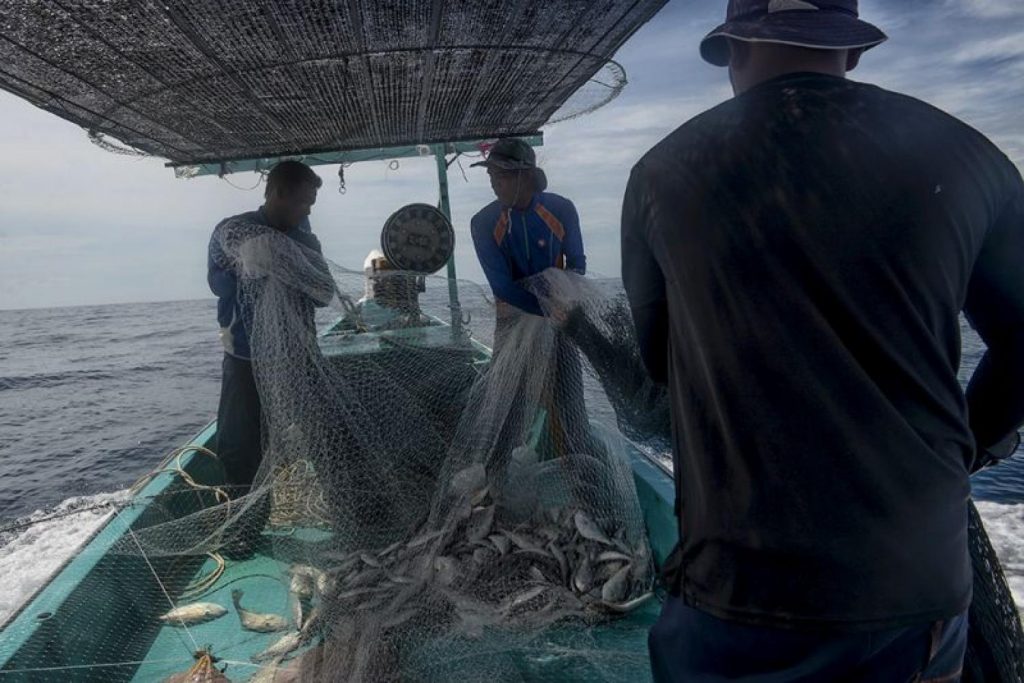
Pulling in the day’s catches on the high sea of South China Sea. Picture is captured from Malaysian Insight, taken by Nazir Sufari on 21st October, 2017.

Long coastline, largest number of fishers

The state of Terengganu in the east coast of Peninsular Malaysia has a long coastline stretching for about 244 km. Famous for its white sandy beaches, the long coastline facing the vast South China Sea is dotted with quaint fishing villages, turtle landing sites and quite a few beach hotels, resorts and chalets. The wide expense of the South China Sea is rich in natural resources of different marine life. Naturally therefore, fisheries has developed to be an important food and also income sources that contribute significantly to the livelihoods of local coastal communities for decades and through generations. About 11,000 locals are earning their living from the sea as coastal fishers or more commonly called coastal fishermen, the largest in the peninsular (fishing activities within 30 nautical miles from shore is classified as coastal fishing or inshore fishing while beyond 30 nautical miles as offshore fishing or more commonly known as deep sea fishing)

Operational zones, boats sizes & gears

The Malaysian fishing waters are divided into zones to facilitate orderly fishing, avoid unequal competition between diverse players and also to avoid conflicts.

Zone A is for fishing operation within 5 nautical miles from shore. This zone is for the traditional fishers and owner operated boats using traditional gears like hooks and lines and fish traps or bubu. An estimated 55% of Terengganu coastal fishers are from this category.

Zone B is between 5 – 12 nautical miles from shore for owner-operated commercial fishing vessels of less than 40 GRT (Gross Registered Ton) using non motorised gears as trawl nets, purse seine nets, drift nets, gill nets as well as hooks and lines. It is estimated that 35% of Terengganu coastal fishers are from this second category.

Zone C, between 12 – 30 nautical miles from shore is for commercial fishing vessels of between 40 – 70 GRT. Motorised fishing gears are allowed such as trawl nets, purse seine nets, drift nets as well as gill nets. Only an estimated 10% of Terengganu coastal fishers are engaged in this sector.

Zone C2 is for vessels of more than 70 GRT and are not included in the discussion here as these are deep sea fishing vessels operating beyond the 30 nautical miles from shore in the EEZ (Exclusive Economic Zone). These are offshore fishers and not coastal fishers.

Thus, most of Terengganu coastal fishers or about 90% of them are operating less than 12 km from shore under class A and class B categories using boats of less than 40 GRT. And when categorised according to boat sizes, 72% of Terengganu coastal fishers are using boats of 15 GRT and lower. Only 18% are operating with boats of 16 – 40 GRT while 10% with boats of 40 – 70 GRT (Only boats of 40 – 70 GRT are considered medium sized boats, while boats of under 40 GRT are considered small boats)

Seasonal and weather dependent occupation

In general, November to February is the North East Monsoon season in Terengganu. During this period wind speed can reach 40 knots or more and sea waves can reach 4 meters in height. This is too rough and dangerous for A and B class fishers with boats of under 40 GRT to go out to sea to fish. The downtime period of about 4 months leaves these fishers without incomes. Few of these fishers are able to seek other alternative incomes or jobs during this period. Most will only tend to their boats and mend their nets while waiting for the opportunity to resume fishing again – the only skill they know or posses for most. For most as well, incomes from the active fishing period from March till October will not be able to help them tide this rough period. Thus, many will be dependent upon the allowance from the government to survive.

All in a day’s work for coastal Terengganu fishers

A typical day for these traditional fishers and majority of B zone fishers of Terengganu begins with them setting out very early in the morning in their boats so as to be at their chosen fishing spots before the sun rises. Most are already old and very few young people are interested in this kind of job as it involves very hard work. For traditional fishers it is a task carried either individually or accompanied by another crew using a boat fitted with an outboard motor. For drift or gill netters with boats of under 15 GRT a four or five men crew is the norm. A purse seiner however requires a lot more crew. A 25 GRT purse seine boat for example requires a crew of 14. For these non trawlers, it is their routine to head to artificial reefs or to spots they have laid their unjangs to carry out their fishing business. Unjang or also unjam is a crude form of fish aggregating device made from palm fronds tied with tree branches that will attract marine life to feed, shelter or even for shade when submerged in the seawater – a lure of sort if it is temporary and doubled as an artificial habitats for marine life if permanent.

For traditional fishers this is the spot for them to lay, check or to retrieve their fish traps or bubus and gather the catches. Similarly to hooks and lines fishers it is the place to throw their lines and reel in the catches. For drift and gill netters as well as purse seiners they would be very busy laying their nets and after a couple of hours pulling in the catches. This process is then repeated for a couple of times but at different spots. And by mid day many of them would call it a day and would begin preparing to head to shore after way past noon. Often these fishers reach the shore and the jetties in the evening to the waiting middle men or buyers. Here they are rewarded for what they have got or caught. A good day’s catch would bring home the smiles on their face. If not they just have to put on a brave face and try their luck another day. Such is their life – unpredictable and uncertain.

Fishermen’s woes

The life as coastal fishers of Terenggganu is hard. Not only is the cost of living high, their incomes are also falling and lower than before. These fishers are bringing back much lower catches now, that even the current high fish prices are not enough to compensate them for the lower quantity of fish landed. A common argument put forward for the dwindling fish resources in coastal Terengganu waters is due to over fishing. Statistic wise, that is quite debatable as the number of coastal fishers in Terengganu is quite stable for a long time. So too are the fish gears issued. And the Fishery Department is constantly monitoring and controlling the issuance of license for fishing permits as well approvals for fishing gears.  But opinion of over fishing has its merit if one considers the issue of encroaching foreign fishing boats from Vietnam and Thailand. These illegal fishermen are using big trawlers fitted with illegal nets that sweep the sea bed and hauling everything, unjangs, fish traps, juvenile fish and more, leaving the sea bed bare and clean. As a result the sea is pretty much destroyed of its complex marine ecosystem and deprived much of its needed marine life to breed and regenerate. Some Malaysian trawlers from outside the state are reported to be doing similar thing and illegally encroaching into the areas reserved for traditional fishers at night and when there in no enforcement.  Hence, enforcement or more appropriately the lack of it is the issue here.

So what is the future for them?

These coastal fishers are important to the country and need to be protected and helped for the interest of food security of the country. We already have good system and regulation in place. It only needs fine tuning from time to time. What is important is for all parties to abide by the rules and regulation. Proper enforcement of the regulation is therefore the key to solving the problem.

About the guest contributor

Mr Ahmad Rozi is a stingless bee farmer in Terengganu, Malaysia. He writes on interesting topics about foods, places and traditional medicines in his state and region.

Beyond Meat Inc. sizzled on its NASDAQ market debut

Beyond Meat Inc., covered in our blog, went  where no company in the US had gone in more than a decade as its shares nearly tripled on their first day of listing on NASDAQ last Thursday.

The pre-IPO price of US$25 per share opened at US$46 per share, closing the day at US$67.75 per share. This closing price values the company at US$3.82 billion from its pre-IPO valuation of US$1.5 billion.

According to Bloomberg News, the 163 per cent surge was the best debut session on any US listing since at least 2008, among IPOs that raised at least US$200 million.

The spectacular listing of Beyond Meat shows that investors are keen to invest in companies that develop plant-based meat alternatives. The proceeds of US$200 million will be used by the company to expand its existing facilities and to establish new ones.

We are sure Impossible Foods Inc, Beyond Meat Inc.’s competitor, will be considering listing as well, while the stock market is sizzling hot.