

Thank you for visiting our blog in 2025, and continue to do so in 2026

We would continue to offer interesting innovation topics in 2026. At the same time, we will include photos and interludes from our urban orchard.

The rose apple trees are going to bear more fruits, as well as our rambutan trees. We also have planted several more dragon plants.

In appreciation of our blog vistitors, we are extending a free ebook, “Getting Funding for Your firm”, which we published in 2010. We believe the contents are still relevant today.

The contents of the ebook are as follows:

Title: Securing Private Equity in Malaysia: Capital for your firm without going to your bank managers.

Chapter 1: The Private Equity Industry

Chapter 2: How Malaysian Private Equity Managers Make Investment Decisions

Chapter 3: Are You Ready for Private Equity Investment?

Chapter 4: Knowing the Worth of Your Company

Chapter 5: Grant Money for the Lucky Few

Chapter 6: Angel Investors and Other Sources of Capital

Chapter 7: Post Investment Marriage

Chapter 8: Sharing Rewards Through Exits

Chapter 9: The Case Against Private Equity

Chapter 10: Private Equity and National Development

SAMPLE OF A BUSINESS VALUATION REPORT

APPENDICES- Appendix 1: The entrepreneur’s due diligence business information kit for private equity proposal. Appendix 2: Guideline for a commercialisation plan. Appendix 3: Major Malaysian Private Equity Firms. Appendix 4: Government organizations providing “grant schemes”. Appendix 5: Government development finance Institutions. The language of private equity. Bibliography. Index.

Download the ebook here.

Yours sincerely,

Dato’ Dr Anuar Md Nor,

Founder, Bison Consulting since 2000

New topic: Negotiation for innovators

Next week, a new MBA Semester will begin at Azman Hashim International Business School , UTM, Malaysia. I will be teaching a new subject, Negotiation for Decision-Making, and the old subject, Strategic Transformation of Organizations.

The topic of negotiation is a critical skill for organizations and firms. It is also applicable for our dilly activities, as we tend to negotiate with spouses, children, friends and office colleagues everyday. We also negotiate with other firms for our employers.

We will be writing a series of articles on the science of negotiations as well as recommendations for negotiation by practitioners.

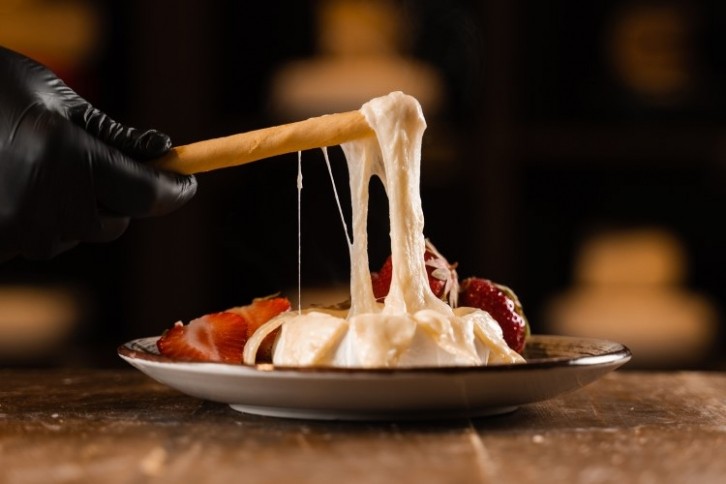
Cow-free cheese for delightful pizza

I am a regular fan of beef peperoni pizza, made by a  well-known franchisor.
 As everyone knows, pizza contains one critical ingredient, namely cheese. As pizza is a world favourite food, It is noted that the global worth of the cheese industry is world’s US$150 billion a year. In every pan of pizza, there are about 17 to 26 grams of cheese.  Some pizzas have a  weighty amount of cheese to delight eaters. According to Rocco’s Random Pizza Facts, each man, woman and child in America eats on average 652 grams of pizza per year. America has a population of more than 340 million.

Presently, most of the cheese used in pizza is derived from milk of cows.

If cows are considered a technology that created milk, they would be 3 per cent effective in converting nutrients. As a former chemical engineer, that is really inefficient technology and nowhere in the world would that technology be accepted. Typically, milk is not complex—it is just water, proteins and other nutrients. We should be able to make this in a laboratory using fermentation process.

Instead of using a 200lb cow  to produce dairy proteins, we can use GM yeast (genetically modified yeast) to produce the exact same proteins that are necessary for the production of dairy in laboratories.

One we have the proteins, we mix it with water and nutrients, viola we have milk, which can produce numerous dairy products, such as cheeses.  

Let us understand the process of milk from cows. If this process is considered a “technology”, then normal cow milk is produced by impregnating cows. Once the youngling is born. It gets taken way from the mother. The mother will be attached to a milking machine, starting the process of milking over a span that lasts to roughly a year. The milk the cows produce is not effective in converting nutrients they eat (mainly grasses and insects), with a  conversion rate of 3 per cent. Then, the cow gets impregnated again, thus, repeating the same process. It is estimated that there are more than 270 million cows  that are producing milk in the world. The popularity of pizzas and other  dairy products would require more cows and lands to breed them!

Need to have alternatives to produce cheese without cow milk

Genetically modifying yeast can make dairy protein fermentation, easy and simpler method. Bioengineers have been trying to make it the best, most sustainable type of yeast that can create the milk protein, in order to produce the milk products at the faster conversion rate possible. Two main proteins that cows produce that are vital to dairy are casein and whey.

If we can make dairy tastes good (and is the same as traditional dairy), at a  comparable price point, no one has to compromise. We would have the dairy we love, at the same availability and convenience as before, just as a much  better use of resources, which are finite.

Genetically modifying yeast-the process

The goal of genetically modifying yeast is to alter its DNA so that it has the same protein-producing genes that cows have—so they can produce the same proteins cows do.

We introduce the protein-producing genes to the yeast cells in the form of DNA. Essentially, we are giving the yeast cells an instruction manual on how to make milk proteins by genetically modifying them to include cow DNA. After we introduce the DNA, we want to cell to replicate the new gene sequence many times so that if one is destroyed, we have more copies (cloning the cells).

The genetic engineering process is done through the plasmid of a yeast cell. The plasmid is a circle of genetic material that replicates indefinitely. The role of the plasmid is to transfer genetic information to other parts of the cell. Plasmids exist in addition to the cell’s main DNA (chromosomes). When they are extracted, the yeast cell is still  able to function because it has its chromosomes.

In the process of genetic engineering, the plasmid is extracted, and gene edited. A section of the DNA inside the plasmid is cut  out, then the DNA sequence that cows use to produce milk proteins is inserted in the cell. The plasmid is then introduced to yeast. It transfers the new genetic information to the chromosomes of the yeast cells. The yeast cells then begin dividing and producing the casein and whey proteins.

In the case of genetically engineered yeast, yeast is the host cell, and the plasmids are edited to include the cow gene sequence that produce proteins. Once we create the transformed yeast cell, we can make the proteins.

Precision fermentation

For thousand of years, humans have used fermentation to produce food and beverages like bread and beer using natural micro-organisms such as yeast.

Recent years saw the rise of biomass fermentation, which use a similar process to create an edible fungal mycelium that is rich in protein and nutrients.

The next evolution is precision fermentation, a high-tech way of making foods and ingredients. Precision fermentation involves engineering a micro-organism like yeast or fungi to produce an animal protein or fat, with the same taste, texture and nutrition as the real kind. Since 1980s, precision fermentation has been used extensively to produce a range of high-value pharmaceuticals and vitamins in fortified foods.

For example, it has been sued to create an enzyme found in rennet that is critical for cheese-making to avoid reliance on animal sources. Similarly, the diabetes treatment insulin is now made within a fermentation tank, so it no longer needs to be sourced from cows or pigs.

Costs have come down in recent years enabling thi technology to be used to produce higher volume, lower value products like food.

Producing cow-free casein

Casein, the unique protein found in dairy milk, can be made without cows by using precision fermentation.  It works like a high-tech brewing technique. The aim is to create  a factory at the cellular level that continues to multiply and grow significant quantities of casein protein. This is achieved by engineering yeast cells using genetic information from cow’s milk protein, as elaborated earlier.

It is first tested in small flasks in the laboratory where the cells are fed sugar and triggered to start producing the same ingredient. Once the process is working well and casein has the right flavour, taste, and nutrition as what are found in dairy milk, it is time to scale-up. That means increasing production quantities  by ten times. Finally, a purification process is undertaken to separate the pure proteins from the GM yeast cells. This leaves just the casein and whey.

Once a product can be developed cost-effectively at this stage, a company may invest in  commercial plant where they can then grow to produce 10,000 litres or more. Casein is the essential, functional dairy protein that gives cheese its stretchy, melty properties but had previously only been found in animal milk, such as cows and goats.  

Once the cow-free casein is produced, a traditional cheese-making techniques are used, which have been perfected over thousand of years. The cow-free casein is mixed with water, plant-based fats, salt, a small dose of sugar, vitamins and minerals.   

Companies involved in cow-free casein

Several companies have been involved in the production of cow-free casein to make  cheese for pizzas. They include:

No.CompaniesCountrieswebsite
1Dairy X FoodIsraelDairyx.com
2New CultureUSNewculture.com
3Eden BrewAustraliaEdenbrew.com.au
4All G FoodsAustraliaAllgfoods.com
5Fooditive GroupNetherlandsFodditivegruop.com
6Standing OvationFranceStanding-ovation.co

Besides these companies, other startups are also making cow-free proteins (casein), with some planning market entry via branded consumer products or a b2b strategy.

 The market for cow-free dairy protein is huge. It is estimated that the global cheese  industry is worth US$150 billion, mainly in the developed countries.  

Conclusion

In a few years, we hope the production of cow-free cheese through precision fermentation is significant, thanks to the efforts of the pioneering companies like DairyX and New Culture.

For me, I am interested to pursue the production of animal-free gelatine that is considered “halal” food ingredient for both Muslim and non-Muslims consumers.

Note on milk products

The list of products that you can create from one ingredient of milk is extensive. Add some heat and bacteria, and you have yogurt. Churn it up and you have got butter. Curdle and separate the proteins and you have got cheese. In addition, milk can be drunk and applied to many foods, breakfast cereals and hot beverages.  

In milk, casein constitutes about 80 per cent of the protein whilst 20 per cent is made up of whey proteins.

More impacts of AI in 2024

Since last semester, I have asked my MBA students to write essays on a certain management topic using the ChatGPT. Several essays were excellent while most others were not interesting readings. Many students were able to submit excellent essays, despite their lack of proficiency in English.  ChatGPT was obviously helping students to write business reports and analysis despite English being a second language.

I have met many entrepreneurs in 2023 who would apply AI models in various business applications for sales and marketing, and stock investment decisions.

Many articles and analysis are predicting that AI will have more impacts in many areas and would upend specific sectors in developed economies and developing countries in Asia and Africa.  

The London Telegraph on December 28th, 2023, in an article written by James Titcomb, noted that employees at OpenAI did not expect much on November 30 2022 when the company unveiled a “low-key research preview” called ChatGPT.

Greg Brockman, OpenAI’s president, told staff that it wouldn’t have much of an impact on day-to-day business, confidently forecasting that it would only get noticed in a few nerdy corners of Twitter.

It quickly became obvious that this was a wild underestimate. Millions of users signed up within days and ChatGPT was dubbed the most important technology in a decade, leading to a worldwide fervor about artificial intelligence.

Employees could be forgiven for failing to predict its popularity, though. ChatGPT, with its ability to conjure up essays and arguments, may have astonished its early users, but to its developers, it was positively medieval. 

The underlying AI system it was based on, known as GPT-3.5, was almost a year old. The company had already developed its successor, GPT-4, and was preparing to release it to the public.

OpenAI described it as being 10 times more advanced, saying it could understand not only text but images; and could pass legal examinations.

Now, just over a year later, the company is taking its first steps toward a vastly more powerful system.

ChatGPT founder Sam Altman has warned over AI’s existential risk to humanity. Those who worry that AI is an existential risk to humanity fret that new systems are being developed before we have got our heads around the existing ones.

Either way, the release of GPT-5 is expected to be the AI event of 2024.

Developing computer software is typically a case of tweaking previous versions to eke out small improvements.

Creating new AI systems – known as large language models – is often a case of starting again. An unprecedentedly vast amount of data is thrown at an unprecedentedly powerful system of next generation microchips, resulting in a model several times more powerful than what came before.

GPT-1, the primordial model created in 2018, was trained on 117 million data points known as parameters. GPT-3 required more than one thousand times that, at 175 billion, and GPT-4 was another 10-fold increase, at 1.7 trillion.

The computing requirements have increased too. GPT-4 reportedly required 16,000 high-end Nvidia A100 chips, against 1,024 for the previous generation. Little is known about the next wave of models, but they are certain to be trained on Nvidia’s new H100 chips, a vastly more powerful successor that is the first to be specifically designed for training AI models.

“The history of computer science and AI has been that increased scale results in substantial improvements,” says Oren Etzioni, the former chief executive of the Allen Institute for AI.

“The step up from GPT-3 to GPT-4 was so dramatic, that you would be a fool not to try it again.”

Google, which unveiled its new model Gemini in December, is preparing to release the more powerful Gemini Ultra in the new year. Anthropic, the Amazon-backed AI lab, may also launch a new system.

Scientists are divided, though, on exactly what more powerful will mean. Today’s large language models are approaching the upper limits on certain tasks. Google’s Gemini already outperforms humans on a widely used language comprehension test and on computer programming exams.  

That does not make it any less prone to common criticisms of today’s AI models: that they lack creativity, only regurgitating what they have been fed; and that they have a poor understanding of truth, making them prone to “hallucinating” facts.

Experts such as Nathan Benaich, the founder of investment firm Air Street Capital and the co-author of the annual State of AI report, says the next generation of systems will be “multimodal” – capable of understanding text, images, videos and audio. That, he says, will bring them closer to understanding the world.

Demis Hassabis, the head of Google’s Deepmind lab, has said this could come to include sensations such as touch, which could lead to the systems being embedded in robots that can understand the world.

The next wave of models could display capabilities akin to reasoning and planning – qualities that we might associate with human intelligence.

AI that can switch from one task to another would be a step towards autonomous “agents” – systems that can carry out tasks on people’s behalf, such as booking a holiday or reading and answering emails.

The consequences of that could be profound. While today’s AI systems have threatened to take jobs in areas like copywriting and design, they must typically be chaperoned through the writing or illustrating process. Those that can turn their words into action – a customer service bot that can book flights, for example – would be more threatening.

These predictions are largely guesses, however. And even today’s AI models are too complex to completely understand.

This is one of the reasons the next wave of models will face increasing government scrutiny. Nine companies – Amazon, Anthropic, Google, Inflection, Meta, Microsoft, Mistral, OpenAI and Elon Musk’s x.ai – have agreed to have their systems tested by the UK government’s AI Safety Institute before they are released.

Companies have signed up to similar commitments with the White House in the US.  The most advanced version of Google’s Gemini model is believed to be going through screening by officials before its upcoming release.

Equally, the next wave of AI systems could prove to be a bust. Sceptics believe that most of the low-hanging fruits have already picked, and that improvements from this point will be marginal no matter how much computer power is deployed.

But if the capabilities of next year’s models remain unknown for now, it seems certain that existing AI technologies will become more widely used.

In 2023, AI may have captured the popular imagination, but it might not be until 2024 that its impact really starts to be felt.

Ai models are likely to provide  solutions to problems that typically small- and medium-sized companies face every day: high staff turnover, lack of skills and available manpower, sales staff, accounting, and compliance.  

In 2024, my company, Bison Consulting, will be working with AI partners to offer services using AI models.

We could learn from my wife’s “steno moment”. In 1980’s many young girls in small town learned short-hand writing to become stenographer. When the Wang word-processor was introduced, the demand for stenographers disappeared, and many short-hand writing schools closed. Today, there is no position called stenographer in firms.   

Novo Nordisk: A company that is bigger than its country’s GDP

Introduction

AI has taken the world by storm, and AI companies like OpenAI, the owner of the popular ChatGPT, attract high market valuation. A lesser-known innovation is also attracting investors, and the companies that offer the innovative products have soared in market valuation.

The innovation is the weight-loss drugs. with two companies, Novo Nordisk and Eli Lilly, are leading manufacturers, which have their drugs approved in the US and the UK. The recent market value of Novo Nordisk is US431 billion, as compared to the GDP of Denmark in 2022 of US$395 billion. At this market value, the company is the 15th most valuable company in the world and the most valuable company in Europe.  Its counterpart, Eli Lilly is worth US$525 billion, a company based in the US, a country of GDP size of more than US25 trillion. Both companies are established pharmaceutical firms..

Novo Nordisk is a unique company in a country of Denmark, which has a  population of only 5.9 million.

Ownership structure of Novo Nordisk

Novo Nordisk’s total share capital of DKK451,000,000 is divided into an A share capital of nominally DKK107,48,200 and a B share capital of nominally DKK342,512,800 (1DKK is 0.14 US$).

The company’s A shares are not listed and are held by Novo Holdings A/S, a Danish public limited liability company, which is wholly-owned by the Novo Nordisk Foundation.

The Foundation has a  dual objective; (1) to provide a stable basis for the commercial and research activities conducted by the companies within the Novo Group (of which Novo Nordisk is the largest) and (2) to support the scientific and humanitarian purposes.

Novo Nordisk’s history

Novo Nordisk’s history spans back to the 1920s, when the company began as two separate  diabetes-focused entities: Nordisk Insulinlaboratorium and Novo Therapeutisk Laboratorium.

Nordisk Insulinlabratorium was founded in 1923, by Danish couple August and Marie Krogh. August Krogh was a  professor at the University of Copenhagen and has been invited to the US by researchers at Yale University of the US  to lecture on his medical research, after receiving the Nobel Prize for physiology in 1920.

Throughout their tour of the US, August and Marie Krogh came across many reports of people with diabetes being treated with insulin. Insulin was a  hormone discovered in 1921 by two Canadian researchers, Banting and Best. Marie, as a doctor, was interested in the treatment as she herself had Type 2 diabetes.

Returning from their trip in the US with permission to produce insulin in the Nordic countries, August and Marie Krogh along with Dr Hans Christian Hagedorn, founded Nordisk Insulinlaboratorium. The pharmacist August Kongsted, owner of Leo Pharmaceuticals, provided the financial support that made it possible to establish the company.

In the same year as it was founded, the company produced the first insulin product in Scandinavia; Insulin Leo. The name was not a coincidence. In return for financial  backing, August Kongsted asked for Nordisk’s first product to be named after his company,. The company hired Herald Pedersen to build the machines for insulin production.

Herald’s brother, Thorvald Pedersen, was also hired by Nordisk to analyse the chemical processes involved in insulin production. However, the brothers did not work at Nordisk for very long. They decided to manufacture insulin themselves, succeeding by producing a stable liquid insulin product that they named  insulin novo. The brothers felt that they could not  cope with the marketing themselves . They contacted their former employer to discuss a deal. But Krogh and Hagedorn turned the offer down. The brothers decide to do it alone. Novo Therapeutisk was formed on February 16th, 1925.

Nordisk kept progressing

In 1926, the company established the Nordisk Insulin Foundation, which aimed to support the physiological and endocrinological research and people with diabetes in Scandinavia.

Nordisk also founded the Steno Memorial Hospital  in 1932. In 1946, Nordisk developed neutral insulin with prolonged action, with a brand name of isophane insulin (Neutral Protamine Hagedorn, NPH).

Novo was charting its own path

While Nordisk was building its portfolio of insulin products, the Pedersen brothers began to build up their company, Novo Therapeutisk Laboratorium. The year the company was established n 1925, they managed to market two products, Insulin Novo and the Novo Syringe. Novo then succeeded to launch its first product manufactured through fermentation, which was called Penicillin Novo.

In 1938, Novo founded the Hvidovre Diabetes Sanatorium, after buying the Hvidovre stately home (which began as the home of Denmark’s King Hans). The 1950’s signified a good year for Novo. In 1951, Novo established the Novo Foundation, which a non-for-profit organization that aims to support scientific. social and humanitarian causes  and also has the objective to provide the best protection for the company. In 1953, Novo launched a long-acting insulin-zinc suspension called Lente. For a period of time, the Lente products covered up to third  of the world’s insulin consumption. In 1973, Novo introduced Monocomponent  (MC) insulin. This was a  step for Novo because it was the purest insulin available at the time.

In the 1970s, Novo; s shares were listed on the Copenhagen Stock Exchange, followed by a listing on the New York Stock Exchange, the first Scandinavian company to achieve that feat.

By the 1980s, Novo launched Human Monocomponent insulin. The difference between this and its previously launched Monocomponent insulin is that the new version was the world’s first insulin preparation which is identical to human insulin. The extraction process this time was from the pancreases of pigs  and then converted to human insulin.

The merger between Novo and Nordisk

As the two pharmaceutical companies operated within a few kilometers of each other, pursuing the same markets, researchers and scientific personnel, rumours began to start in the 1980s about a possible merger.

It was in the late 1980s, specifically in 1989, when Novo and Nordisk officially merged.  First, the Nordisk Insulinlaboratorium, the Nordisk Insulin Foundation and the Novo Foundation merged to become the Novo Nordisk Foundation. The aim of this merger was to provide a stable basis for the Novo Group Companies’ operations and to also support scientific causes. Then, Novo Group joined the merger and the company’s well-known of today, Novo Nordisk, was established. As  a result, Novo Nordisk became the world’s leading producer of insulin. In the same year, the merged company marketed the world’s first prefilled disposable insulin syringe, NovoLet.

Today, Novo Nordisk in involved in core areas, such as diabetes care, haemostasis management, growth hormone therapy, and hormone replacement therapy.

Novo Nordisk’s weight-loss drugs are new growth areas 

According to Matthew Lynn of the London Telegraph, writing on October 10th, 2023, weight-loss drugs will transform our economy as well as our waistlines. The weight-loss drugs will transform our lives as comparable to AI and it is a significant breakthrough. It will replace hundreds of millions of jobs. It will revolutionize the way we work and it will turn every major industry upside down.

There has been a lot of news over the past year and months about the way that AI will transform the economy. And yet there is another innovation with the potential for far greater impact, that is weight-loss drugs.

From flying, to snacking, to healthcare and insurance, the new generation of pills and injections to reduce Type 2 diabetes and obesity may well turn out to be the genuinely transformative innovation of this decade, and in ways the capital markets have only started to reckon with.

Semaglutide, the medication sold under the brand name Wegovy, by Novo Nordisk, is arguably one of the most successful drugs in a generation, if we exclude the relatively short-lived success of the Covid 19 vaccines. This has quadrupled the share prices of Novo Nordisk that has allowed Novo Nordisk to become the most valuable company in Europe. Its success also contributed to a strong GDP growth of Denmark.

The impact of weight-loss drugs could extend far wider than Novo Nordisk. In many European countries, such as the UK, a quarter of the population are classified as obese, while another 37 per cent are overweight. In the US, more than 40 per cent of the population is classified as obese, and 11 per cent as “severely obese” (defined as more than seven stones overweight-1 stone equals 6.35 kg). In Malaysia, about 20 per cent of the population are considered obese.

Obesity is  a major problem right across the world, and one that comes with huge costs. Governments have tried to tackle it with public health campaigns, food reformulation, sugar taxes and other regulations.  None of these measures has really made much difference. Drugs could have a  genuine impact. That will be hugely beneficial for individual health, and the economy in ways that we have only just started to grasp. Take flying, for example. A report by the broker Jeffries estimated that the US airline, United Airlines alone could save US80 million a year if the average passenger  weight fell by 4.5 kg; the increasing size of passengers has been a growing problem for all the main airlines.

Thus, the economics of the airline industry would be transformed  by a general reduction of everyone’s size .

Clothes retailers may get a  boast as well; in the short term, everyone will refresh their wardrobe with shirts and dresses that are a couple of size smaller. In the long run, they will spend less on fabrics as the volume required falls.

Food manufacturers are impacted   

Of course, not everyone  will benefit. Recently, the food manufacturer, Kellog’s, spun out its snacking unit, which includes brand such as Pringle chips, into a new company called Kellanova. It share prices fell sharply after listing.

It might be that investors are growing nervous abut the market for high-salt, high-fat snacks in a world where medication is suppressing our appetite.

But the biggest impact will be on healthcare. Obesity is one of the major causes  of a wide  range of medical problems, with comorbidities including high blood pressure, Type 2 diabetes and heart diseases.

We can expect the cost of insurance to fall significantly  as people get healthier. The public finances may well end up in a far better shape, since the burden on medical systems will be reduced. Even, the pension system needs to be reformed to account for greater longevity.

Semaglutide can only be prescribed as a part of a specialist weight management service  for a maximum of two years, according to current Nice guidelines, casting into doubt its longer-term impact. There may be also side effects to worry about. But it looks like a revolutionary medicine, that is the most effective treatment for obesity to date.

The market for weight-loss drugs is huge, worth an estimated US$100 billion annually, that all the major pharmaceutical companies are working on bringing their own products to the market. So high is the current demand for semaglutide that manufacturers are having to restrict supplies. The incentive for Novo Nordisk and other firms to create a range of better products is huge.

News reports noted that F&B companies are closely monitoring the impact of weight-loss drugs on sales of their products. In fact, Walmart, the largest food retailer in the US reported that people who picked up a prescription for weight loss medicines at its pharmacies are spending less on foods with high calories.

Wegovy, manufactured by Novo Nordisk, is already available in the US and the UK. Another appetite-suppressing  drug, Ozempic, is rumoured to be widely used in Hollywood for weight-loss, although it is designed to help people with diabetes manage the condition

This new breed of weight-loss drugs have been hailed as “miracle drugs” thanks to their efficacy in helping weight loss.

F&B companies would be required to reformulate their products and place more focus on zero-sugar drinks and portion control packages amid changing preferences among consumers.  

Novo Nordisk and Eli Lilly control the weight-loss drugs market with brands such as Ozempic, Wegovy and Munjaro. Othe drug companies are also racing to develop weight-loss drugs, though they may not be available soon. These weight-loss drugs are also being investigated as a treatment for dementia and addiction.

These developments would provide positive impact to Novo Nordik, which started about 100 years ago in the small town of Bagsvaerd in Denmark. Many small countries, such as Malaysia, could learn from Novo Nordisk in its achievement to become a world leading company by initially focusing on specific treatment of diabetes. 

References:

  1. Yahoo Finance
  2. Matthew Lynn. Weight-loss drugs will transform our economy as well as our waistlines. The Telegraph, October 10th, 2023.
  3. Hannah Blake. Pharmaphorum.

Conversation about AI

We note that with the rapid progression of AI comes a whole series of questions are being asked by people. In this blog, we have compiled  a series of questionnaires submitted by readers of the UKs’ newspaper, Telegraph, on September 18th, 2023.

Concerns about AI range from how will it change the nature of work to what it might mean for human life on earth. As artificial intelligence continues to advance at a rapid pace, technology CEOs and influencers across the globe have been sharing their views on what impacts are to be expected.

Many are concerned how artificial intelligence will change the nature of their work, and whether it will make certain jobs redundant. Others question how society will change, and indeed what the advancement of AI might mean for human life on earth. 

The Telegraph’s technology editor, James Titcomb, has answered the most pressing of readers’ queries about AI and what it holds for the future. 

Question 1:

“How fast is AI coming along? For instance, is it learning how human emotions work yet?”

The Telegraph’s technology editor, James Titcomb, responds: 

“AI is clearly making rapid progress in some areas, but remains fairly basic in others. One of the problems with the term ‘artificial intelligence’ is that it makes us think of these systems in human terms. 

“The reality is that in some fields – arithmetic, for example – machines have outperformed us for decades; in others, they are nowhere near. Emotions fall into the latter: we haven’t really built AI that exhibits anything close to an emotion, partly because we don’t really understand how they work in living things. 

“There are certainly AIs that scan faces and voices to detect emotions, which have been used by police and marketing companies, although their effectiveness has been questioned.

“For now, it’s probably better to think about AI in terms of individual capabilities than comparing it to the human brain. In some areas, such as generating images or summarising text, it is improving quickly, although these changes tend to come in fits and spurts, rather than improving gradually.”

Question 2:

How do we prevent this tech hitting escape velocity and leaving us behind?”

Telegraph’s expertreplies: 

“For now, AI still can’t do a lot of things we can do, so it’s unlikely that we will be left behind any time soon, but experts do have some ideas about how to manage its rise. 

“One is that we should ban AI from writing computer code to develop AI. This would prevent a phenomenon known as ‘recursive self-improvement’ where a system repeatedly improves itself until it outsmarts humans and then becomes all-powerful.

“Another emerging research area is known as AI alignment: ensuring that a robot’s goals are in line with ours. It is hoped that this would prevent famous doomsday scenarios where an AI is given a straightforward task – cleaning up the oceans or creating paperclips – and ends up destroying humanity as a side effect.”

Question 3:

Surely we are our own worst enemies when it comes to AI?”

Here’s what Telegraph’s expert has to say: 

“If you bring up concerns about artificial intelligence with researchers, or suggest that progress could be slower, many will argue that easing back is pointless. They say that somebody is going to develop this technology sooner than later, and wouldn’t you rather it was us than China or Russia?

“As with most technologies, development is often hard to stop. One exception has been nuclear weapons, where a concerted international effort stopped their deployment decades ago. Safety advocates would like to see similar treaties and international agreements when it comes to AI: some have proposed a body similar to the International Atomic Energy Agency to regulate use of the technology.”

Question 4:

How will cybersecurity experts’ work be impacted by AI?”

Telegraph’s expert responds: 

“In short: they’ll be busy! Security experts have warned for years that AI could lead to the industrialisation of hacking as automated systems probe for weaknesses in security networks. 

“A growing concern is that AI software that can accurately replicate people’s voices and likenesses could bypass security controls such as voice banking, or automate scams so that vulnerable people are fooled into sending money.

“We’re yet to see that come to pass, but it is probably only a matter of time. Cybersecurity experts are likely to be as in-demand as ever.”

Question 5:

I don’t understand why AI is being introduced. Why would we as a nation give further way to instability in the employment industry and opportunity to earn a salary? It’s frightening.”

James says: 

“New technologies – from the loom to the steam engine – have often threatened to displace jobs, but have in the end made us more productive, with plenty of employment still available. The question with AI is whether it represents a step change that could make vast swathes of the workforce, not just certain jobs, redundant. We’re not there yet.

“The other response is that it’s simply difficult to hold inventions back, at least not without very strict regulation. Employers that could save money by employing AI are unlikely to voluntarily choose to ignore it.”

Question 6:

Do we need AI?”

Telegraph’s expert replies: 

“We often talk about the downsides of AI, and many of the uses that have emerged in the last few months – cheating at homework, hacking or copyright infringement – seem like things we could do without. AI’s supporters say there are very serious advantages, such as making us more productive at work, helping to discover new drugs, and the eventual arrival of self-driving cars, which could make the roads safer.

“The UK’s flatlining productivity in the last decade and a half has consistently puzzled economists and politicians: if AI can help fix the puzzle, it would certainly be a benefit.”

Question 7:

“Surely if jobs are at risk it means it’s not good for the economy with less tax being pumped into the system, shouldn’t the Government intervene to protect the citizens?”

Telegraph’s expert  answers:

“Generally, new technologies haven’t meant fewer jobs over the long run, but there is an active debate over whether taxpaying human jobs should be protected in the short term to minimise disruption to individual livelihoods.

“One proposal, that has been supported by Bill Gates and others, is to tax robots and AI in the same way we do humans. In theory, this would level the playing field, putting humans at less of an advantage.

“In practice, it’s hard to define AI, and even harder to tax it. But if millions of humans are rendered redundant, governments will have to find a way to adapt. Higher taxes on wealth or on corporate profits to fund a universal basic income are among the ideas that have been mooted.”

Question 8:

To what extent are A level and university essay questions being redesigned to overcome AI assistance?”

Telegraph’s experts says:

“One of the first clear impacts of ChatGPT has been a cheating epidemic. Thousands of students have turned in essays and homework generated by the system, leading some schools and universities to ban the software. 

“Others have turned to anti-cheating tools designed to check if something has been written by AI, although many produce errors, leading students who have written their own work being falsely accused of cheating.

“Teachers seem to be gradually adapting, rather than resisting, however. Some are moving essay writing to the classroom, where students cannot use ChatGPT. Others are allowing students to use the software, but adding interviews to show that students understand the subject. 

“The latter might prove more useful: like calculators and spell check, students are likely to continue using AI in the world of work.”

Question 9:

If you were a teenager soon to be making choices for university and future career, what would you seek or avoid with AI in mind?”

Telegraph’s expert replies: 

“This is a great question. The instinctual answer is computer science or maths: if AI is going to replace jobs, it seems a safe bet that at least the people developing it will be in employment. 

“Any skilled physical job is likely to be in demand for some time: while software has come on in leaps and bounds, robots remain a challenge. Lawyers will have no shortage of work either, judging by the frequent lawsuits against AI companies from people who say they have been libelled or had their data stolen.

“With some exceptions, however, many of today’s jobs are still likely to exist, just in different forms. AI is a tool that still requires human intervention.”

Question 10:

Should we consider films based on tech, such as Will Smith in I, Robot being a very possible reality within the next 50 years?”

Telegraph’s expert answers: 

“Probably not. Hollywood movies such as The Terminator have done a good job of entertaining us but a pretty poor job of educating us about an AI future. For example, they often give AI human qualities – a lust for power – that we have no evidence they possess.

“50 years is a long time frame, and AI will undoubtedly make huge advances over the decades. 

“We should certainly be wary of the risks – but the most risky scenarios to do with AI are probably about humans incorrectly deploying them in areas like weapons systems than the typical Hollywood examples of a race of robots enslaving humans.”

Question 11:

Will AI be able to replace customer service operators?”

Telegraph’s expert replies:

“This is something that is already happening. Go on many websites today and you’ll find yourself talking to an AI bot, rather than a human operator. Energy provider Octopus, for example, says that customers actually prefer communicating with AI than staff.

“AI is unlikely to be able to answer all queries for many years, but the number of cases it can deal with are likely to gradually increase until it is handling the majority of customer service issues. 

“For now, AI is better at answering chats and emails than phone calls, but voice recognition and replication technology means that is changing too, although some people may find it uncanny.”

Question 12:

“As a finance and banking professional, how can one adapt to the new AI environment to avoid retrenchment?”

Telegraph’s expert says:

“It is hard to predict, but the white collar jobs that are probably most at risk from artificial intelligence are those in repetitive or data-intensive tasks: data entry and analysis, compliance, and so on. Those that involve a lot of personal interaction are less likely to be affected. That is probably the case from finance to a lot of other office-based jobs.

“These changes tend to happen relatively gradually though, and employers often find new jobs for their workers. Computers and the internet have changed offices hugely, but we still have just as many people employed in them, even though we have fewer typists and secretaries.”

We hope the answers will shed some lights on concerns raised by the readers of Telegraph. These concerns should also be in the mind of people all over the world.

How does soil become fertile?

Soil is an astonishing ecosystem

Some parts of my small garden are fertile where papaya trees are growing nicely. Why are they fertile and support healthy papaya trees? An article by George Monbiot in the Guardian, May 7th,  2022, would help explain this phenomenon. 

He noted that beneath our feet is an ecosystem so astonishing that it tests the limits of our imagination. It’s as diverse as a rainforest or a coral reef. We depend on it for 99% of our food, yet we scarcely know it. Soil.

Under one square metre of undisturbed ground in the Earth’s mid-latitudes (which include the UK) there might live several hundred thousand small animals. Roughly 90% of the species to which they belong have yet to be named. One gram of this soil – less than a teaspoonful – contains around a kilometre of fungal filaments.

When I first examined a lump of soil with a powerful lens, I could scarcely believe what I was seeing. As soon as I found the focal length, it burst into life. I immediately saw springtails – tiny animals similar to insects – in dozens of shapes and sizes. Round, crabby mites were everywhere: in some soils there are half a million in every square metre.

Then I began to see creatures I had never encountered before. What I took to be a tiny white centipede turned out, when I looked it up, to be a different life form altogether, called a symphylid. I spotted something that might have stepped out of a Japanese anime: long and low, with two fine antennae at the front and two at the back, poised and sprung like a virile dragon or a flying horse. It was a bristletail, or dipluran.

As I worked my way through the lump, again and again I found animals whose existence, despite my degree in zoology and a lifetime immersed in natural history, had been unknown to me. After two hours examining a kilogram of soil, I realised I had seen more of the major branches of the animal kingdom than I would on a week’s safari in the Serengeti.

That this thin cushion between rock and air can withstand all we throw at it and still support us is a dangerous belief.

But even more arresting than soil’s diversity and abundance is the question of what it actually is. Most people see it as a dull mass of ground-up rock and dead plants. But it turns out to be a biological structure, built by living creatures to secure their survival, like a wasps’ nest or a beaver dam. Microbes make cements out of carbon, with which they stick mineral particles together, creating pores and passages through which water, oxygen and nutrients pass. The tiny clumps they build become the blocks the animals in the soil use to construct bigger labyrinths.

Soil is fractally scaled, which means its structure is consistent, regardless of magnification. Bacteria, fungi, plants and soil animals, working unconsciously together, build an immeasurably intricate, endlessly ramifying architecture that organises itself spontaneously into coherent worlds. This biological structure helps to explain soil’s resistance to droughts and floods: if it were just a heap of matter, it would be swept away.

It also reveals why soil can break down so quickly when it’s farmed. Under certain conditions, when farmers apply nitrogen fertiliser, the microbes respond by burning through the carbon: in other words, the cement that holds their catacombs together. The pores cave in. The passages collapse. The soil becomes sodden, airless and compacted.

But none of the above capture the true wonder of soil.

Let’s start with something that flips our understanding of how we survive. Plants release into the soil between 11% and 40% of all the sugars they make through photosynthesis. They don’t leak them accidentally. They deliberately pump them into the ground. Stranger still, before releasing them, they turn some of these sugars into compounds of tremendous complexity.

Making such chemicals requires energy and resources, so this looks like pouring money down the drain. Why do they do it? The answer unlocks the gate to a secret garden.

These complex chemicals are pumped into the zone immediately surrounding the plant’s roots, which is called the rhizosphere. They are released to create and manage its relationships.

Soil is full of bacteria. Its earthy scent is the smell of the compounds they produce. In most corners, most of the time, they wait, in suspended animation, for the messages that will wake them. These messages are the chemicals the plant releases. They are so complex because the plant seeks not to alert bacteria in general, but the particular bacteria that promote its growth. Plants use a sophisticated chemical language that only the microbes to whom they wish to speak can understand.

When a plant root pushes into a lump of soil and starts releasing its messages, it triggers an explosion of activity. The bacteria responding to its call consume the sugars the plant feeds them and proliferate to form some of the densest microbial communities on Earth. There can be a billion bacteria in a single gram of the rhizosphere; they unlock the nutrients on which the plant depends and produce growth hormones and other chemicals that help it grow. The plant’s vocabulary changes from place to place and time to time, depending on what it needs. If it’s starved of certain nutrients, or the soil is too dry or salty, it calls out to the bacteria species that can help.

Take a step back and you will see something that transforms our understanding of life on Earth. The rhizosphere lies outside the plant, but it functions as if it were part of the whole. It could be seen as the plant’s external gut. The similarities between the rhizosphere and the human gut, where bacteria also live in astonishing numbers, are uncanny. In both systems, microbes break down organic material into the simpler compounds the plant or person can absorb. Though there are more than 1,000 phyla (major groups) of bacteria, the same four dominate both the rhizosphere and the guts of mammals.

Just as human breast milk contains sugars called oligosaccharides, whose purpose is to feed not the baby but the bacteria in the baby’s gut, young plants release large quantities of sucrose into the soil, to feed and develop their new microbiomes. Just as the bacteria that live in our guts outcompete and attack invading pathogens, the friendly microbes in the rhizosphere create a defensive ring around the root. Just as bacteria in the colon educate our immune cells and send chemical messages that trigger our body’s defensive systems, the plant’s immune system is trained and primed by bacteria in the rhizosphere.

Soil might not be as beautiful to the eye as a rainforest or a coral reef, but once you begin to understand it, it is as beautiful to the mind. Upon this understanding our survival might hang.

Future businesses from emerging trends

Future trends will influence the types of businesses that would emerge in the future. A report, NatWest Future Businesses report caught my attention this week. NatWest is a leading bank in the UK. I was one of its customers in the 1970s.

The NatWest Future Businesses  report highlights and explores the business trends most likely to emerge in the UK in the next 10-15 years, included within it, are predictions from a panel of four leading futurists and consumer business experts.

From virtual reality travel agents to the evolution of the e-scooter-these expert forecasts provide a fascinating insight into the future businesses we could see, and the industries where new job opportunities may emerge. Environment and sustainability, healthcare and education are among the many categories that are set to benefit from new technologies such as artificial intelligence (AI) and robotics. 

General trends Identified

There are several trends identified in the NatWest Future Businesses report.

One, we are operating in an age of high-frequency change where technology has taken the friction out of business. It is easier than ever to get started with all the digital tools at our fingertips giving us significant power and reach. That doesn’t mean that success is easy though: with great technological progress comes even greater market opportunity.

Over the next 15 years, we will likely see continued growth in the number of self-employed people, particularly freelancers. Their numbers have doubled since the turn of century and though the trend was disrupted by the pandemic, it will return to growth as the economy recovers.

Freelancers allow organizations to scale up and down much more rapidly. Businesses built as networks will be able to take advantage of this flexibility, and thus be able to plug in new technologies quickly-as and when they add value.

But alongside a highly adaptable model, companies that adhere to a set of core values and proven social conscience will most likely thrive.

Government’s green policies mean the energy and transport sectors are being encouraged to evolve; something set to continue as newer and renewably powered technologies emerge. This is already evident in the electric vehicle market where firms race against each other to provide future-proofed solutions, from fuel cells to lithium batteries.

And all this is against a backdrop of the AI and robotic revolution. Mundane tasks from turning on the lights to food shopping will be carried out by automations, in a trend that is increasingly evident. Drone could keep us safe, driverless vehicles could take us to works, virtual shop assistants could help us select the perfect outfits for us to wear, and farmers could use algorithms to decide which crops to feed.

However, there will still many roles that require human skills such as caring for patients, dealing with customers and crucially in education. In essence, the more advanced technology becomes, the more people will be forced to concentrate on being people. With this in mind, the economy is gradually  shifting towards a care-focused model, dominated by emotion-led skills such as leadership, motivation and nurture.

Looking ahead, society will become more connected than ever. The digital world will blend with the real world, and the ability to communicate will no longer be restricted by poor WIFI or distance.

Overall, the future looks bright for small and middle-sized enterprises, especially those built as networks, which, whilst having relatively few full-time employees, will be able to compete with global giants. Increasingly consumers are seeking out companies that give back to society, offer a bespoke service and meet their individual needs.

The future businesses

Among the future businesses highlighted by the NatWest Future Businesses report include the  following:

  1. Agriculture: Precision farming, urban food farms, and livestock wearables.
  2. Health and medicine: Smart skin clinics, AI doctors, 3D printed organ production, intelligent ambulances, mind-controlled exoskeletons and biosimulator businesses.
  3. Energy: Microgrid managers
  4. Media and entertainment: Haptic body suits, AI digital entertainment critics, and interactive  TV.
  5. Education: Immersive teaching, holographic teachers, haptic gloves and adaptive learning platforms.
  6. Fashion and retail: AI tailoring, super-fast fashion, VR shop assistants, and augmented reality shopping experiences.
  7. Homes: Robot hire, servicing and repairs, and robo-gardener/robo-housekeeper
  8. Leisure: Analogue activity centers and wearable experience technologies.
  9. Food and drinks: Insect and bug foods, algae snack foods and supplements, lab-experience restaurants and fungus food-packaging.
  10. Transport: Driverless pods, air taxis and self-driving car rental services
  11. Travel and tourism: VR travel agents, VR mind refresher holidays and VR holidays.
  12. Construction and engineering: Robot pilots and high-speed 3D construction.
  13. IT and security: Drone security specialists and post-quantum security., and 
  14. Space industries: Space tourism, and orbital bin lorries.

The NatWest Future Businesses report is an interesting report. The authors are well known futurist and consumer services specialist. The NatWest Future Businesses can be downloaded as shown below.

The future businesses are interesting to explore. Algae farming and rental of robots and exoskeletons (light and compact) are my interests. An area of application is wearing exoskeletons to lift patients in hospitals and at home.

Part 2: Digital transmission of scents

I wish that I can smell my first leather shoes

In an emerging area of olfactory research, scents are digitally transmitted via computer code that can be sent online  or via smartphone app and reproduced at a kiosk or through scent-emitting device.

Previous attempts to re-create scents have faced challenges because liquid or gaseous odorants often contaminate each other. The Aroma Shooter, developed by a Japanese start-up Aromajoin, (www.aromajoin.com)  gets around this problem through the use of solid-state materials that can deliver split-second volleys of over 400 different scents. The technology is being used to create aroma “signage” in major department stores and to improve virtual-reality applications. Another Japanese start-up , Scentee (https://scentee-machina.com), has developed the Scentee Machina,  a device that connects to a smartphone app that can diffuse different fragrance according to the user’s mood and the time of day. At All These Worlds (https://allthseworlds.com), a VR company based in California, US, researchers have  developed a wireless-enabled scent collar that releases targeted scents for virtual reality simulations.

One area of application is the use of digital scents in mental health testament. Research has shown that our moods are greatly affected by different odors: Lavender can reduce labor pangs in childbirth and promote sleep.; peppermint can improve physical performance ; and orange may help calm our nerves. One study showed how low-cost nasal clips containing lavender odorant could improve the quality of sleep for individuals with posttraumatic stress disorder.

Digital olfaction also opens up the possibility of bringing the past to life the re-creation of long-lost smells. Researchers at the UCL Institute for Sustainable Heritage in London are re-creating and preserving “historical scents” that could otherwise be lost, such as the dusty smells of hundred-years old books.

Digital olfaction also opens up the possibility of completely new smells and products optimized by algorithms to personal tastes and different settings. Combined with other technologies such as VE and haptics, digital olfaction could radically transform the entertainment industry, by bringing us closer to a true multisensory experience in the realms of fashion, retailing, leisure, and tourism. Visitors at a museum could smell the blood of fallen warriors in ancient wars through digital olfaction.

Capturing the potential of digital olfaction

Mark Purdy, Max Klymenko and Mia Purdy have suggested four actions that can help guide business to capture the potential of olfaction.

  • Understand your olfactory value chain

Companies can start by mapping their olfactory value chain to identify the role that olfactory plays across different areas of their business.  A fast-moving consumer goods company, for example, could have thousands of product lines ; scents are an intrinsic part of these products’ appeal to consumers but remain largely unquantified. In some industries, such as  wines or fragrance production, digital olfaction can complement the tacit knowledge of experienced testers or product formulators. Olfactory mapping can trace how a product’s olfactory features vary across the supply chain, over time, and across different locations. Such profiling can improve product development strategies and supply chain optimisation and ultimately garner a stronger competitive advantage through distinct consumer appeal.

  • Prepare for contestable markets

As digital olfaction begins to decode the volatile organic compounds that contribute to our sense of smell, it offers the possibility of reverse engineering many well-kwon or distinctive aromas. Just as digital technologies are lowering entry barriers in many markets and making them “contestable” with new products, we may see something similar with digital olfaction. Copycat versions or products with distinctive or hard-to-replicate aromas–perfumes, fine wines, furniture, ceases, teas, coffee—could proliferate. Companies will need to expend efforts to preserve the intangible capital of their olfactory signature.

  • Consider multiple senses

In real life, our experiences are formed from a range of senses. Digital olfaction will be the most powerful when combined with other sensory technologies such as virtual reality and augmented reality, haptics, holograms, and emotional AI systems. Sensors and machine learning algorithms will be critical in capturing, decoding and translating olfactory signals.     

  • Anticipate ethical and regulatory hurdles.

Despite the promise of olfactory technology, there are technical, ethical, and regulatory challenges to overcome. A particular concern is the potential for addiction as ever more powerful olfactory triggers are developed; at the other extreme, overexposure could lead to the desensitization of people exposed to powerful scents on a daily basis, just as loud music has caused hearing loss for some in the entertainment industry or hospitality industries. Early engagement with regulators and health authorities will be critical, both to mitigate the risks and promulgate the health-enhancing effects of digital olfaction.

Conclusion

Smell is our most primordial sense, used by our ancestors t find food, sense danger, and detect illnesses. Yet it remains the most complex and least well understood of all senses. The human olfactory receptors were only identified in 1991, earning a Nobel Prize for the scientists , Richard Axel and Linda Buck, who made the discovery. With advances in digital olfaction, we now have the ability to decode and harness the sense of smells in ways never thought possible.

For businesses and innovators, digital olfaction opens up opportunities: new products, services, and consumer experiences; faster and more accurate production processes; low-cost environmental and healthcare solutions, and new ways to reach and engage consumers. There will be challenges too: regulation, responsible use, and new competitors and business models.

One business model that comes to my mind; digital storage of smell in a cloud, similar to the photo archives of Pinterest.

Reference” Mark Purdy, Max Klymenko, and Mia Purdy. Business scents: the rise of digital olfaction. MIT Sloan Management t Review, Summer 2021, Volume 62 (4).    

Exciting technology of digital sense of smell

“Durian” has a very pungent smell but most Malaysians like the taste

According to a world-famous chef, the “king of fruit”, known in Malaysia as “durian”, has the most fouling smell. Despite that, many Malaysians and a couple of my former Korean neighbours like it so much. Due to its strong odor, the fruit is not allowed into hotels or planes. The bad odor sticks to the fabric of your car for weeks.

We are expecting that people all the world will have the chance to experience the smell of “durian” through digital transmission of smell in the near future.  

This article is the first of two articles on emerging digital olfaction or sense of smell. 

Marketers have been interested to study the impact of olfaction on purchasing decisions of consumers. Buyers of new cars are excited by the smell of new leather in very expensive cars. Cookies are openly baked to allow their smell to waft in a shopping complex.

According to an article in latest MIT Sloan Management Review, despite the economic and commercial importance of olfaction, there are no robust tools to detect, measure, and manage smells in a scientific manner. This is now changing with the emergence of two branches of digital olfaction technology: one focused on the digital detection and analysis of different odors, and the other on the digital transmissions and re-creation of smells. These technologies could alter a range  of industries, from fragrances and food to the environmental and healthcare sectors.

The technology draws on several scientific disciplines., including organic chemistry, silicon engineering, machine learning, data science, photonics, and software engineering. A company. Aryballe (https://aryballe.com), based in France, uses tiny proteins called peptides grafted into silicon wafers that react to the gas molecules associated with different odors. The various digital signatures are then decoded using machine learning and expressed in the terms that humans use to  describe smells; woody, floral, fragrant, smoky, and so on.

Another company, Aromyx (www.aromyx.com), based in California in the US, uses the same receptors that are found in the human nose and tongue to identify different odors.

Applications of olfactory detection

The olfaction technology would be able to enhance products’ appeal to consumers. It will also support a variety of uses for improved product quality, as well as human health and safety, in areas as diverse as food, auto maintenance, healthcare, and the environment.

These applications include the following:

Faster and cheaper quality control

Digital olfaction is starting to transform quality control, traditionally a labor-intensive and somewhat subjective activity for many industries. In the fragrance industry, for example, traditionally, teams of  highly trained human testers have to assess the quality of different product batches, but the process is time-consuming and ultimately subjective. Aryballe is using digital olfaction to test different fragrances against a “god standard” for the particular scent. The company noted that a fragrance will usually change as it is exposed to the air or to different conditions. By using digital olfaction, it can track how the perfume changes over time as it is exposed to different kinds of skin types, sweat, air conditions, and so on. Based on this analysis., the company helps to create completely new fragrances that have the desired qualities perceived by consumers.

Digital olfaction can also be used to identify minute variations in the quality of food products and detect pathogens that could endanger human health or lead to foods spoilage during supply chain transport. Digital olfaction can greatly aid the search for better and healthier foods.

Adjusting to regional or local tastes.

Many retailers and manufacturers recognize scent as an important factor influencing the consumer appeal of a product, but the consumer-scent relationship varies significantly by region and country, making it difficult to calibrate and measure. Take the automotive industry, for example. It is well- known that new-car smell influences our decision to purchase, but there are strong regional differences. While the aromas of leather, resins, and plastics tend to captivate Europeans and American car buyers, it is a turnoff in Asia, where consumers prefer a more neutral odor. Digital olfaction can help optimize the new-car aroma for different market and car-makes.

Predictive maintenance

Digital olfaction can be used in a range of industries to detect problems before they become apparent, improving safety and reducing the risk of costly unscheduled repairs. In industrial sectors, olfactory technologies can alert people the presence or buildup of dangerous gases in chemical plants or petroleum refineries.

Early diagnosis and prevention in healthcare

We humans have long believed that our olfactory senses provide important clue to our well-being, both physical and mental. Ancient physicians used to smell a sick person’s breath to identify his/her  illness. More recently, research has established that canines can detect the early presence of diseases such as lung cancer via breath and urine. Electronic noses have been shown to be around 96 per cent accurate in detecting lung cancer in patients. A good news is that recent research has suggested that digital olfaction could provide  a quick and a safe test for the detection of Covid-19.

These developments open up the exciting prospects of low-cost, non-invasive technology to screen for a wide range of diseases and viruses, particularly those that are hard to detect with conventional early-stage screening.  An application could be that of a mask that automatically lights up when coming in contact with the coronavirus.

Reducing environmental impacts

Companies and government agencies spend billions of US dollars every year to control or eliminate noxious odors in the environment. Digital olfaction makes it possible to detect, monitor, and reduce emissions at lower cost. Bio-electronic noses can identify harmful pollutants in factories or urban areas, assess water quality, measure soil contamination, check for chemical or hazardous materials in warehouses and harbours.

The next article will be on digital transmission of scents

Reference: Mark Purdy, Max Klymenko and Mia Purdy. Business scents: the rise of digital olfaction. MIT Sloan Management Review  Summer 2021, Volume 62 (4).