
When I was small, living in a village with many rivers and natural ponds, a favourite hobby was fishing for fresh water fish. We would find larvae of beetles in fallen sago palms and used it as a fish bait. In remote parts of Sarawak in East Malaysia, locals eat these live larvae as delicacies as they are considered nutritious and as aphrodisiacs. Fallen sago palms are favourite places to find the larvae.
The larvae of beetles is no longer only for locals in remote regions of Asia. It was reported in the Guardian, dated January 13th, 2021, these larvae could soon be mass produced across Europe after the insect became the first to be found safe for human consumption by the European Union (EU) Food Safety Agency. The larvae of the beetle Tenebrio molitor could be eaten in powder form as part of a recipe or as crunchy smacks.
The conclusion of scientists at the EU Food Safety Agency, following application by the French insect-for-food production company, Agronutris, is expected to lead to EU-wide approval within months of yellow mealworm as a product fit for supermarket shelves and kitchen pantries across the continent.
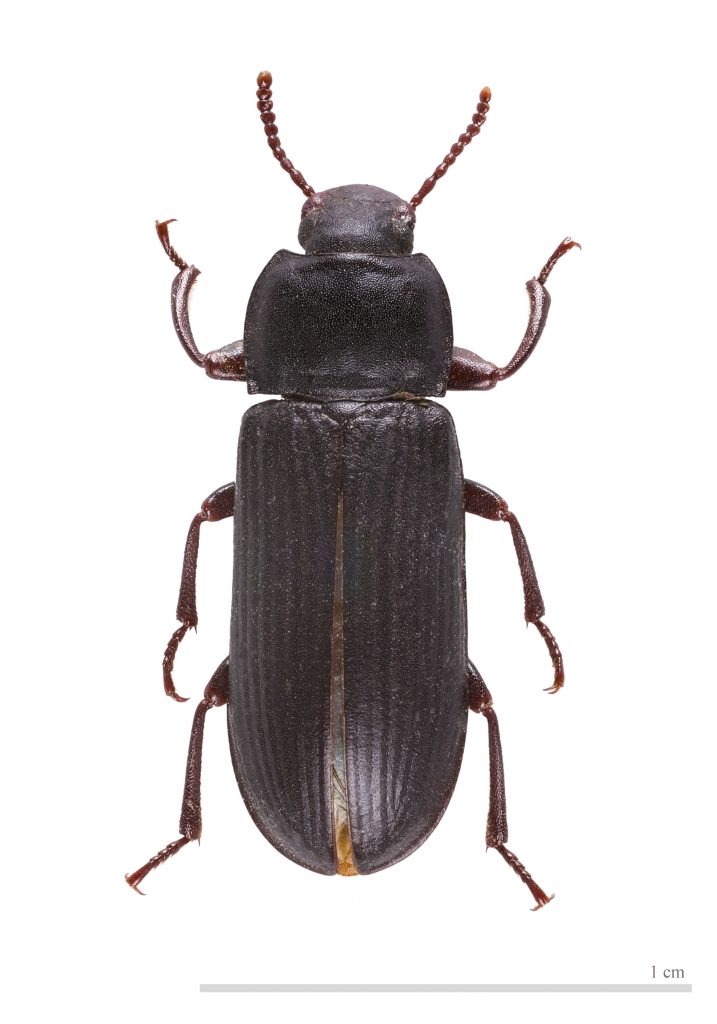
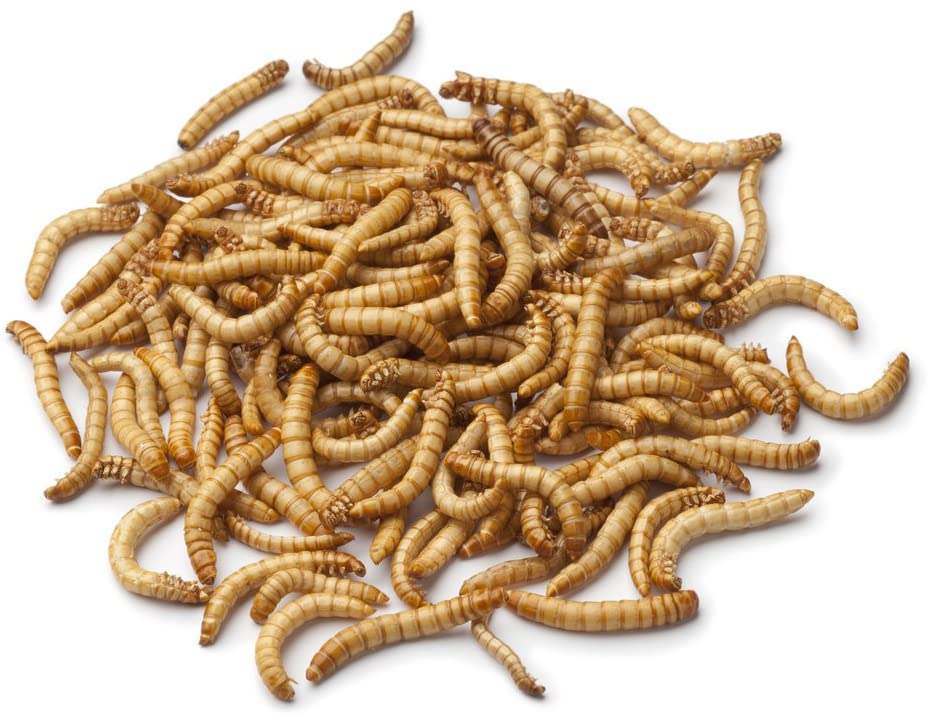
Mealworms are the larval stage of the beetle, Tenebrio molitor, a species of darkling beetle. Like all holometabolic insects, they go through four life stages: eggs, larvae, pupa, and adult. Larvae typically measures about 2,5 cm or more, whereas adults are generally between 1.25 and 1.8 cm in length.
Interesting Facts
According to Wikipedia.org, the mealworm beetle breeds prolifically. Mating is a three-step process: the male chasing the female, mounting her and inserting his aedeagus, and injecting a sperm packet. Within a few days the female burrows into soft ground and lays eggs. Over a lifespan, a female, on average, lay about 500 eggs.
After four to 19 days the eggs hatch. Many predators target the eggs, including reptiles. During the larval stage, the mealworm feeds on vegetation and dead insects and molts between each larval stage., or instar (9 to 20 instar). After the final molt it becomes a pupa. The new pupa is whitish, and it turns brown over time. After 3 to 30 days, depending on environmental conditions such as temperature, it emerges as an adult beetle.
Mealworms have historically been consumed in many Asian countries, particularly in Southeast Asia. They are commonly found in food markets, and sold as street food alongside other edible insects. Baked or fried mealworms have been marketed as a healthy snack food in recent history, though the consumption of mealworms goes back centuries. They may be easily reared on fresh oats, wheat bran, with slices of potato, carrot, or apple as a moisture source. The small amount of space required to raise mealworms has made them popular in many parts of Southeast Asia.
The insect’s main components are protein, fat and fibre, offering a potentially sustainable and low carbon-emission source of food for the future. When dried, larvae is said to taste a lot like peanuts.
Insects-for-food Industry
The leading players in the insects-as-food industry have been held-back by a lack of EU-wide approval. The products are prohibited from sale in France, Germany, Italy and Spain, among other European countries. Without approval from the Food Safety Agency, they faced being banned elsewhere on the continent too. The UK, Netherlands, Belgium, Denmark and Finland, have previously take a permissive approach to an EU law that requires food not eaten before 1997 to obtain novel food authorisation from Brussels. British, Dutch, Belgian and Finnish regulators had decided the EU directive did not pertain to animals products used for food. But in 2018 a new EU law sought to bring some clarity. It stipulated that insect-based dishes would require novel food authorisation, putting the nascent insect-food industry on a weak footing.
The products have remained available in those countries as a result of a transition period to allow companies already producing food from insects to operate until they receive the final judgement.
Insect-based food has long been seen as a part of the solution to cutting the emission of greenhouse gases in food production. Guardian quoted Mario Mazzocchi, professor at the University of Bologna: “ There are clean environmental and economic benefits if you substitute traditional sources of proteins with those that require less feed, produce less waste and result in fewer greenhouse gas emission. Lower costs and prices could enhance food security and new demand will open economic opportunities too, but these could also affect existing sectors.”
Giovanai Sogari, a social and consumer researcher at the University of Parma, said the squearmishness of many consumers towards insect-originated food product may eventually fall away. “There are cognitive reasons derived from our social and cultural experiences-the so-called ‘yuck factor’ – that make the thought of eating insects repellent to many Europeans,” he said. “With time and exposure, such attitudes can change.”
Insect-As- Food Companies
Our research shows there are a number of insect-as-food companies based in Europe and in other countries. They include:
| No. | Company | Country | Insect | Products |
| 1 | Micronutris | France | Yellow mealworms and crickets | Snacks |
| 2 | Agronutris | France | Crickets, yellow mealworms and black soldier fly | Animal feeds |
| 3 | Protifarm | Netherlands | Buffalo beetles | Food ingredients |
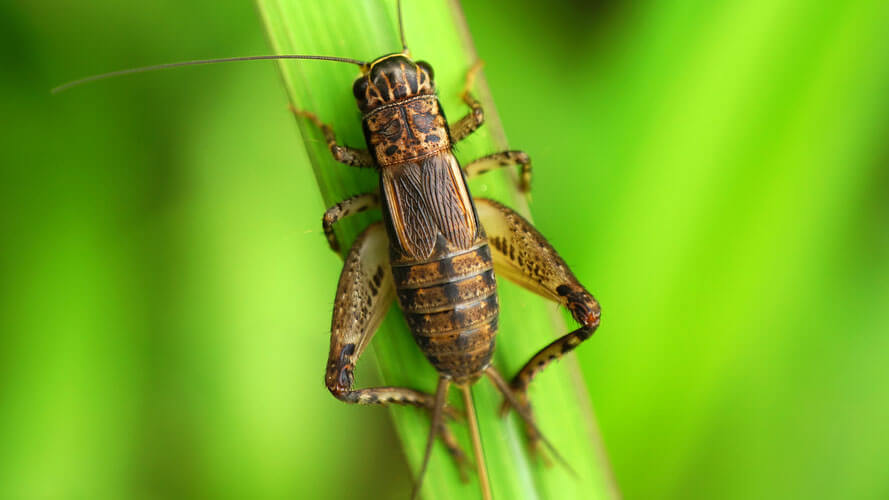
| 4 | Essento | Switzerland | Yellow mealworms, grasshoppers and crickets | Snacks and protein bars |
| 5 | Entogourmet | Spain | Crickets | Power, dried and frozen |
| 6 | Agriprotein | UK | Black soldier fly | Animal feeds |
A long list of insect-as-food companies and entrepreneurs is found on www.bugburger.se. Thailand has the most established insect-as-food industry. It covers insect farms, insect processing companies, and substantial market of insect-eating consumers. In my country Malaysia, the insect-as-food industry has a small potential due to a large population of Muslims in the country. Insects are considered as non-permissible foods.