Electric Cars and Robots: Their Negatives and Positives

Background

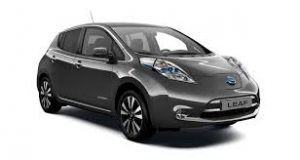
Nissan Leaf, Leading Electric Car in the Market

Electric cars are hogging the headlines in many countries. For example in Norway, electric cars represent about 40 per cent of new car registrations. Charging stations for electric cars are everywhere. Norwegian government is providing incentives and perks to encourage drivers to purchase electric cars.

Buyers do not pay import tax and VAT on plug-in cars, shaving thousands of US dollars of the upfront cost. Running costs are lower because electricity is cheaper than petrol and diesel, while road tax is reduced, and will drop to zero in 2018.

Electric car owners also do not pay road tolls, ferry fees and city emission charges that other drivers face Moreover, the drivers can park for free and bypass traffic by driving in bus lanes.

A consulting company, EV-Volumes, which tracks electric cars globally, estimated the sales of electric cars have exceeded 3 million units. The list of car companies intending to offer electric car models is growing as shown below:

No. Car Manufacturers Models Year
1 Daimler Smart 2009
2 Peugeot iOn 2010
3 Mitsubishi I MiEV 2010
4 Nissan Leaf 2011
5 Renault Bongo Z. E. 2011
6 Tesla Model S P90D, Model S 70D 2012
7 Bollore Bluecar 2012
8 Honda Fit EV 2012
9 Ford Fpcus 2012
10 Renault Zoe 2013
11 VW e-Up! 2013
12 BMW I3 2013
13 Chevrolet Spark EV 2013
14 Fiat 500e 2013
15 Nissan e-NV200 2014
16 Kia Soul 2014
17 VW e-Golf 2014
18 Mercedes B-Class ED 2014
19 Tesla Model  X 2015
20 Nissan Leaf 2015
21 Chevrolet Chevy Bolt 2016
22 Renault Zoe upgrade 2016
23 BMW I3 upgrade 2016
24 Mercedes Smart Fortwo 2016
25 Citroen e-Mehari 2016
26 Opel Ampera-E 2017
27 VW eGolf upgrade 2017
28 Hyundai Ioniq EV 2017
29 Mercedes Cabrio, Forfour 2017
30 Audi e-tron 2018
31 Jaguar I-Pace 2018
32 Tesla Model 3 2018
33 Daimler Generation EQ 2019
34 VW I.D. 2019
35 Lucid Motors Air 2019

Source: FTWeekend, 4 November/5 November 2017
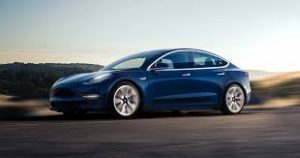
 

Tesla Model 3, Electric Car with Many Advanced Features

The March of Robots

Robots are quietly changing the employment landscape.  The large mining companies such as Rio Tinto are replacing human drivers in managing the operations of the huge trucks that carry commodities such as iron ores. The drivers who drive these monster trucks are well paid but the job is dangerous. In Rio Tinto’s mines at the remote Pilbara in Western Australia, the monster trucks are now driverless. They are being controlled 1,046 kilometres away in a control room in Perth, Western Australia.  These monster trucks operate 24 hours, without tiring.

Monster Truck is Remotely Controlled

In Santa Clara, California, US, robots are being used in selling houses. These robots are operated by the high technology property management start-up, Zenplace, and are intended to take the hassle out of coordinating showing times between real estate agents and prospective renters. The robot is operated by a real estate agent to save driving time in coordinating with the client’s schedules. Now, with the robot, the real estate agent can do between 150 and 20 showings a day, which enhances his/her  commissions.
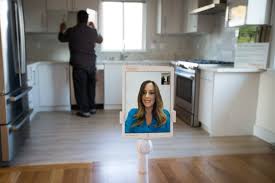
Robot Used in Selling Real Estate

The two cases show that robots can have both negative and positive impacts. Even in a developing country like Malaysia, robots and automation are chipping away many routine jobs. Fortunately, the employees, who are affected by automation, are re-assigned to other jobs.

In 2018, the employees, whose jobs are taken by robots, may not be so lucky.

Best wishes for 2018 from Dato’ Dr Anuar Md Nor, President, Bison Consulting.

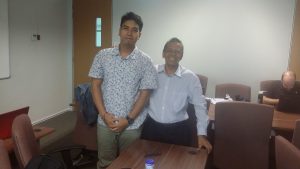
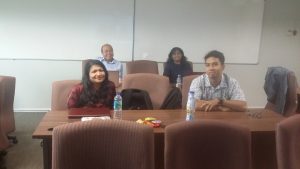
Interlude: Work, Technology and Organization, Class September 2017

                                    Congratulation to All DBA Students

Dr Haji , virtual network expert and Dr Gina,  over-educated insurance agent

A hard working pair

Dr Rajiv and Me

Internet travel expert from Indonesia

Dr Eliana, Dr Khalfan and Dr Ammar

Eliana and two handsome guys from Middle East

Dr Anak, Dr Major, Dr Mohd Mazlan and  Dr Mohammad Shahril

 A clever group with great future ahead of them 

Dr Haji, Dr Gina, Dr Rosalind and Dr Rajiv

The lady’s man with his class mates

Not in the pictures are Dr Barraa, Dr Daniel and Dr Shazleena

Well-known Department Stores Fight Back Online Competitors

Introduction

Previously, locals and foreign tourists to London and New York would head to Harrods, Barneys, Bloomingdale’s when they were in town. Lately, lesser number of tourists is shopping at these grand department stores as they have been buying luxury handbags and cloths online.

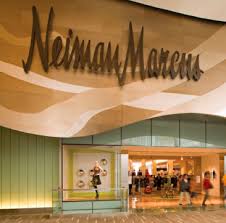
A Neiman Marcus’s Department Store

The grand department stores are fighting back with an array of initiatives to draw customers in and engage them longer, according to an article in Financial Times, How to Spent  It, published on October 7th, 2017.

They have been troubling times for department stores in London and Manhattan, New York, where competition from internet shopping is merely one of the challenges facing the grand old department stores. In their heyday they and their global counterparts encapsulated the spirit of their age, but that age is no more. What is left are vats edifices, which if they are to survive, have to reinvent themselves for the new times we are lining in and keep on their toes as their customers’ tastes and habits continue to evolve.

As Trevor Hardy, CEO of trend-forecasting agency The Future Laboratory, puts it, “ The department-store concept was invented for an era when consumption was inspired to-in had cultural currency. Today, the mere act of consumption is not much aspired to; the new breed of entrepreneurs notably spends very differently for the way earlier wealthy individuals used to spend, but that does not mean there is not still a lot of spending going on.”

If the reason of a department store is to sell, then it must sell those things that today’s consumers want to buy. It must also re-imagine the way it uses its space.

Mortimer Singer, president and CEO of business development and strategic consultancy firm, Marvin Traub Associates, identifies several “headwinds” that the US stores are struggling with.  Firstly, there is what he calls the “new Davids”-lesser-known brands , well over 200 of them, that were born online and in many cases may only be doing about US$10 of business a year each, but collectively “are taking some US$4.2 billion out of the more established retail sector”.

Then there is the clothing and accessories rental business, which he says is booming in New York. This new business has saved consumers a lot of money a year.

Thirdly, what Singer calls the “aftermarket” is also affecting the department stores, with more and more women buying second-hand or “pre-loved” clothing and accessories from luxury websites such as Therearreal.com. Finally, Singer points to the mega-growth of the health and wellness industry, which is also taking huge sums of money that might in the past have been spent in traditional department stores.

In addition, to all that there is Amazon, which is expected to overtake Bloomingdale’s owner Macy’s this year as the seller of what in the US is known as “apparel”. Many grand department stores in New York are using new technology as one way to tackle the “headwinds”. Neiman Marcus, for instance, added features to its app that mean a friend could paragraph a pair of shoes and ask Neiman Marcus whether it stocks them or a similar design. On top of that, its stores now have “Memory Mirrors”, which offer customers 360 degree views of exactly how they look in the chosen garment.

Re-imagining Department Stores

Several department stores are beginning to offer food, while there is a recognition that their stores  had not kept pace will all technology has to offer. Seamless omni-channel service is now mandatory.

Marigay McKee, former chef merchant at Harrods and former president of Saks Fifth  Avenue, who now runs strategic business development company, MM Luxe Consulting, believes, “We have to bring the love and the humanity back into the experience of shopping. Stores need to concentrate on what I call ‘the three Es” – emotion, environment and experience-if they are to appeal to today’s customers.”

This means doing things like ringing up customers when an item comes in that the assistant feels the customer would like, letting people buy a dress in Chicago and change it in New York, or allowing them to buy online and return to a store ( or vice versa).

Hardy, of The Future Laboratory, identifies one of the key problems for modern-day department stored as the dramatic decline in the time customers spend in stores. “Managers need to work out how to get shoppers to stay longer, “ he says. “ They need to bring popular culture back into stores.”

One area with significant growth potential is wellness, health and beauty, and what Hardy call “self- transformation”.    Saks Fifth Avenue offers skiing lessons. There are also boot-camp-style exercise classes and therapy treatments, from the natural to the high tech. Customers can also buy a Peleton exercise bicycle and follow spinning classes from home on a screen attached to the handle bars.

In London, department store, Harvey Nichols, is enticing customers into its stores and keeping them longer. It has invested a great deal in beauty and wellness, opening a new beauty lounge. As well as offering treatments such as LED facial, cryotherapy and vitamin and nutrient injections, the beauty lounge offer make-up masterclasses. It also makes a [pint of always having something exceptional to offer connected with these events.

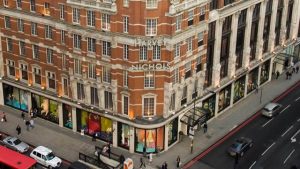
A Harvey Nichols’s Department Store in London

The Future

Meanwhile a buying director of Liberty, which struggled for many years but is now trading profitability believes firmly  that department stores are here to stay, but says they have to offer a compelling reason for customers to visit. “I try to enhance all the things that you cannot get online-this means we offer advice and in-depth knowledge about our products. It is all about eccentricity and the story behind a product. “I also see us as neighbourhood store.”

McKee, with her experience of managing retailers on both UK and US, is a believer in the future of department stores, but says they need to remember that they “have to become the host or hostess, while the customer is the guest”.

What is indisputable is that no stores can expect to survive if, as The Future Laboratory’s Hardy puts it, “all they do is to try to sell us more stuff”.


Reference: Lucia van der Post, Retail of two cities, Financial Times, How to spend it, October 7 2017.