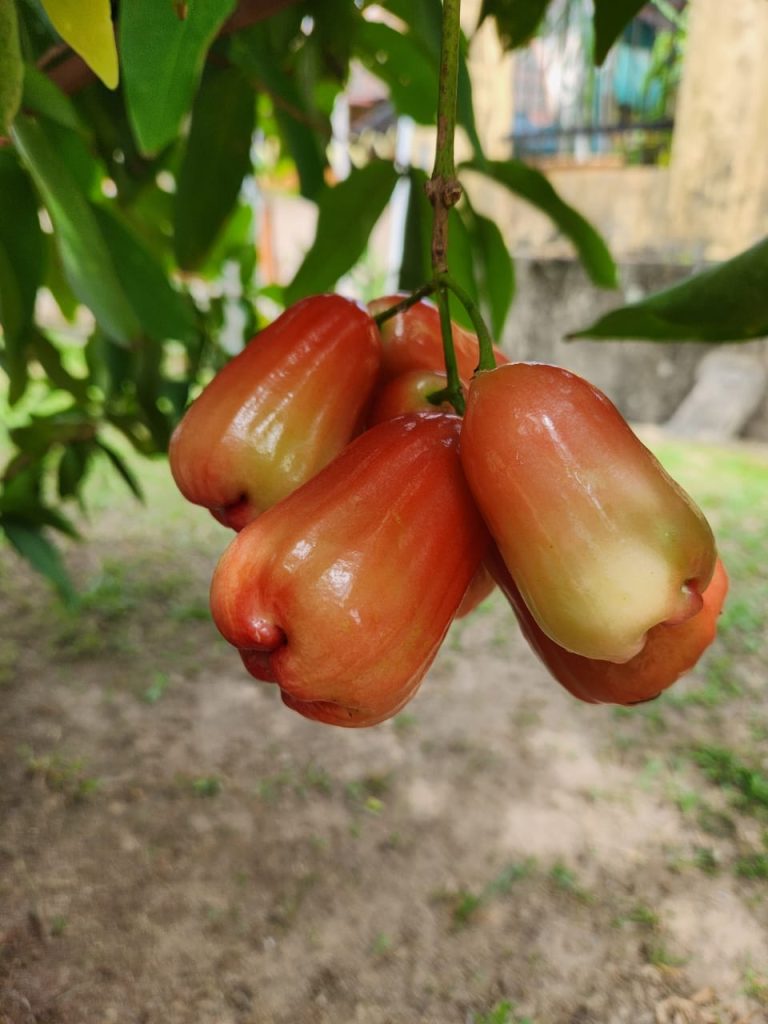
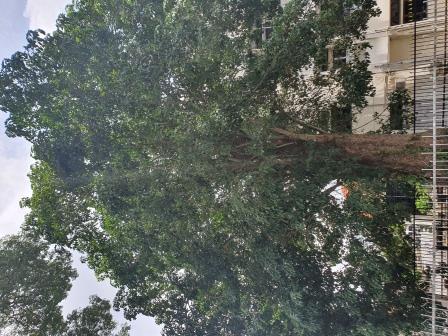
Thanks to my wife, Datin Azimah, who closely takes care of the rose apple tree, pruning and fertlising, we are now ready to enjoy bountiful rose apple fruits. They look juicy red.
The photos are so vivid and beautiful. Readers are welcome to use them in your blogs or albums.
This new Semester 20025/2026, I am introducing a new subject, Organizational Death. Fast-changing buiness environment is causing more companies, including established companies, go bankrupt. Please be free to download the PPT.
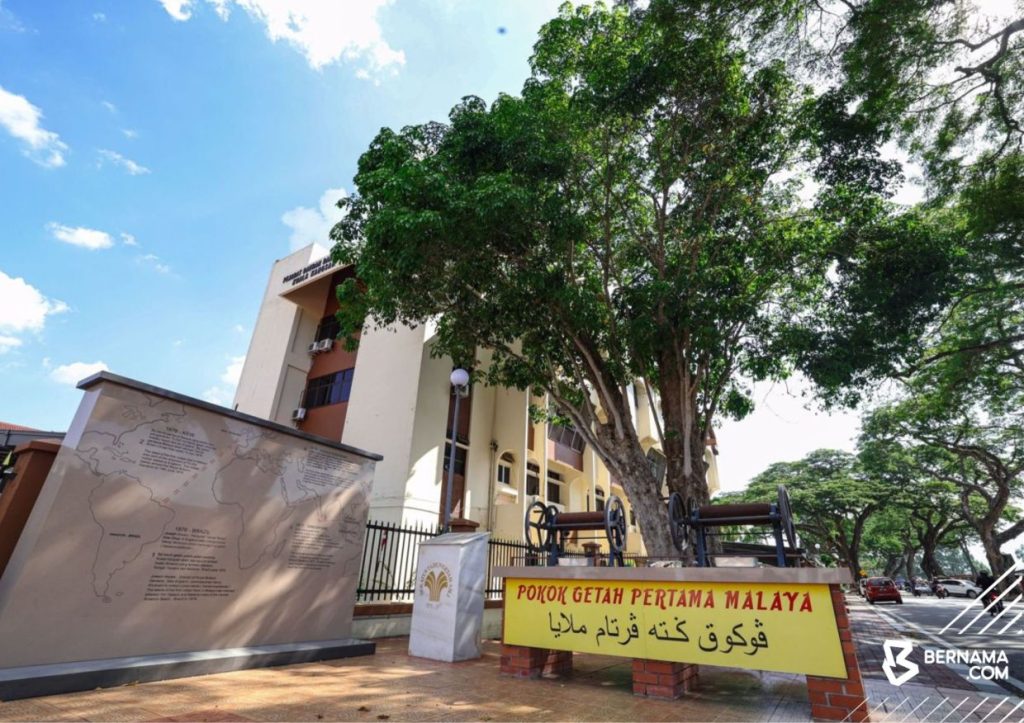
Previously, we highlighted a rubber tree in Kuala Kangsar, Perak, Malaysia. It was the surviving tree among 22 rubber seedlings brought from England.
This rubber tree is 146 years old (Picture sourced from BERNAMA)
In 1877, a total of 22 rubber seedlings were brought into the country from Kew Gardens, England. Of the 22 seedlings, nine were sown in Kuala Kangsar. This is the only surviving tree.
Recently, the media has seemed to catch on the new invention—NFTs. NFT is a unique, non-interchangeable digital asset basked by blockchain ledger technology. Non fungible characteristic of these tokens or assets refers to the unique and non-replicable nature of this digital-crypto assets, compared to, for example a Bitcoin or a US$1 bill, where each unit of the asset is interchangeable and is the same.
Examples of NFTs range widely from digital art, domain names, games, and collectibles to are audio and video recordings. NFTs are created (i.e., minted) on a blockchain, such as Ethereum, which authenticates the ownership and the NFT asset (i.e., where it comes from, where it originates, and who is the owner).
In the physical world, a tangible example would be Mona Lisa’s painting by Leonardo Da Vinci. Although there are many replicas, there is one original Mona Lisa in the world, and this piece of art is unique, creative and indivisible.
Similarly, NFTs are creative works of art that, for the most part, do not allow for fractional ownership. Some NFTs can be very expensive, with a price tag of millions of dollars.
Some trace the origins of the NFTs back to 2012-2013 when colored, small denominations of bitcoins were created. These coins represent different assets with different uses, ranging from collectibles to access tokens. These colored coins were “unique and identifiable from regular bitcoin transactions. “
In 2014, Robert Dermody, Adam Krellenstein, and Evan Wagner founded a peer-to-peer financial platform, Counterparty, which was built on top of the bitcoin blockchain. In 2015 and onward, trading cards and memes became prevalent. Various video games popularized the creation of digital assets to be stored on blockchain technology; these included swords, shields, and even digital parcels of real estate. Crypto kitties became famous in 2017, launched by the Vancouver-based company Axion Zen.
In 2021, NFTs have gained more momentum and have started to permeate the mainstream economy in some unexpected ways. The NFTs are poised to create a brand-new aspect of the digital.
In fact, we are launching our own NFTs based on a series of paintings by a famous Sabah artist, Dato’ Sri Wilson Yong, who called himself the Borneo Art Creator.
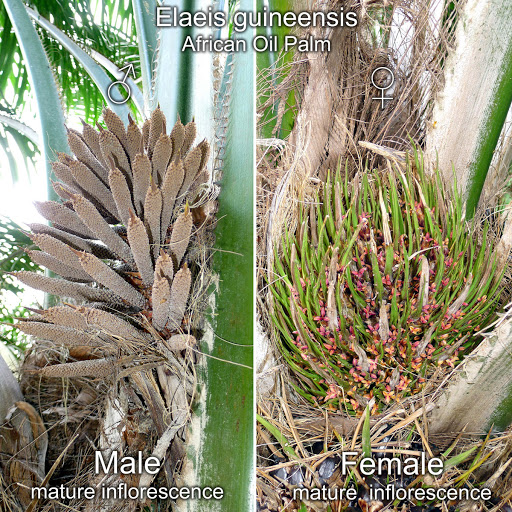
The oil palm industry in Malaysia used to hire thousands of female workers to just manually gather pollen grains from male flowers of oil palms to pollinate female flowers. On average, a group of three workers are required for a every hectare of oil palm plantation.
The oil palm flowers, courtesy of etawau.com
Teams of workers patrolled the oil palm estate daily, searching for male flowers to collect pollen grains. The pollen grains were distributed to other teams who went around pollinating receptive female flowers with hand puffers. I would imagine the oil palm plantation would be full of chatting noises of these women. Today, these chatting noises are gone. The task of pollinating the oil palm flowers is done in silence by a weevil imported from Cameroon of Central Africa.
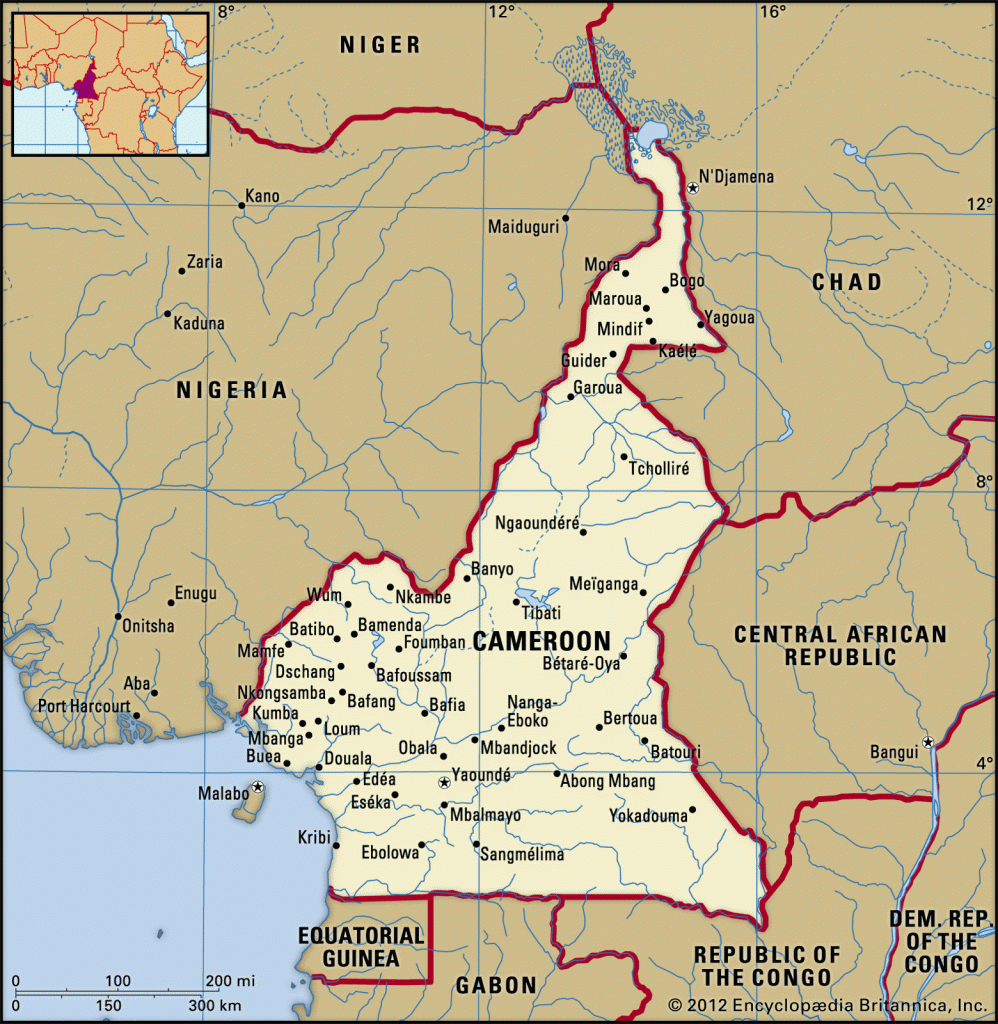
Cameroon where E kamerunicus oringates
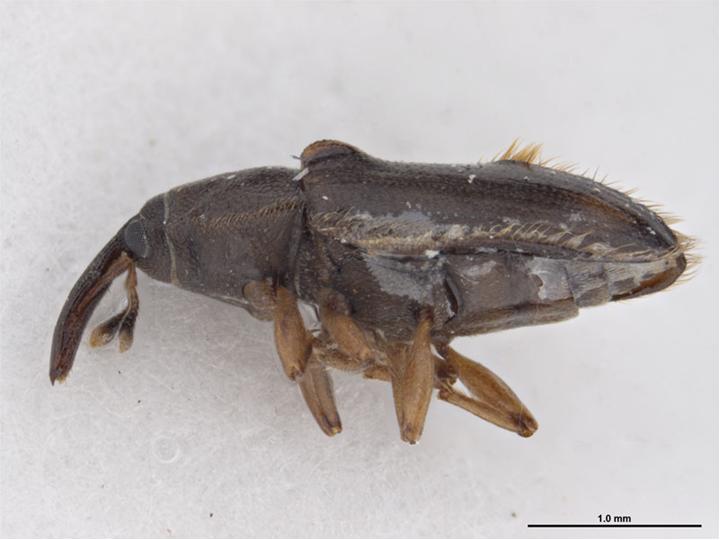
The weevil is known by its scientific name, Elaeidobious kamerunicus (E kamerunicus). The technique of pollinating the flowers by weevil was discovered by Datuk Leslie Davidson, a Scottish planter who worked for Unilever’s oil palm plantation in Sabah, Malaysia. The weevils were officially released into Malaysia on February 21st, 1981.
E kamerunicus is about 5 mm from the horn to the tail
Datuk Leslie Davidson , undeterred and unconvinced by textbook knowledge which claimed that oil palm fruits were wind-pollinated and that heavy rains washed pollen grains away, arranged for more research to prove that that pollination of oil palms in West and Central Africa was largely due to weevils which were not found in Malaysia.
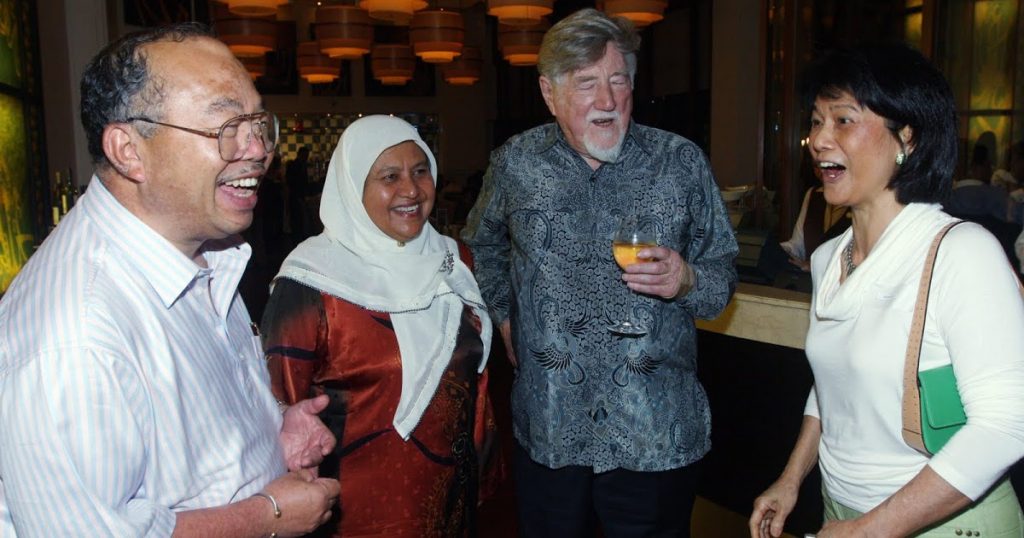
Datuk Leslie Davidson and the scientists who brought in E kamerunicus into Malaysia
Under Davidson’s instruction, a group of four Malaysian scientists and experts, namely Dr Kang Siew Ming, Zam Karim, Dr Tay Eong Beok and Mahbo Abdullah, went to Cameroon to assess the work of Dr Rahman Anwar Syed, the entomologist who was assigned to study oil palm pollination by insects in Africa, especially the E kamerunicus specie.
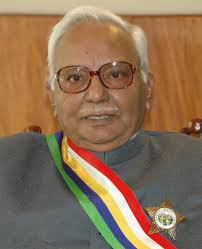
Dr Rahman Anwar Syed proved, in a series of experiments, that the oil palm in its natural habitat was pollinated by different insects, the most important of which the weevil named E kamerunicus. It was also found out that the weevils had evolved with the oil palms and developed a very synergistic relationship with them.
Dr Rahman Anwar Syed started research on pollination by African weevils
Subsequently, the Malaysian government issued an import permit to introduce the weevils into Malaysia. In June 1980, Dr Rahman Anwar Syed arrived in Malaysia from Cameroon with 1,044 weevil pupae individually packed in plastic vials. Only 400 vigorous weevils were selected whilst the rest were destroyed. After six months of testing, the Malaysian government was finally satisfied that the weevils would bring no harm. The results of the tests were presented at a meeting of experts from various Malaysian research agencies. The final authorization was granted to release the weevils for commercial use at Unilever’s oil palm estate in Kluang, Johor, Malaysia. Since then, the weevils had been released in Indonesia, Thailand, Papua New Guinea, Solomon Island and India.
Unilever had sold its oil palm estates in Malaysia to a Malaysian palm oil conglomerate.
When you tuck in to enjoy your fried KFC chickens, please remember E kamerunicus from Cameroon.
Note: This article is extracted from my book, The Palm Oil Multinationals from Malaysia, published by Lap Publishing. The book is available from Amazon.com.
The motor industry in Europe and the US in the early 1900s led to the mad rush for plantation rubber in British Malaya (Malaysia now). There was not enough supply of rubber gathered from the Amazon rainforest of Brazil.
A large part of British Malaya was cleared of its forests and planted with rubber trees. Roads and railway lines were laid out to transport smoked rubber sheets to make tyres to ports and exported to UK and the US.
Financiers in London formed financial syndicates to open-up rubber plantations in British Malaya. Many financial syndicates listed their vehicle on the London Stock Exchange. Thus, more lands were cleared to plant rubber trees in British Malaya. Many young Scottish men went to British Malaya to seek their fortunes by becoming rubber planters.
Before the 1900s, many British farmers were involved with coffee plants and reluctant to switch to rubber, which had unknown market. However, Sir Henry Ridley, a government official, believed in the potential the plantation rubber industry. A few British Advisors to the Malay States in British Malaya worked hard to convince British farmers and local Chinese businessmen to consider rubber trees. One British Advisor to the Malay State of Perak, Sir Hugh Low, planted a rubber tree near a polo club at the royal town of Kuala Kangsar, Perak.
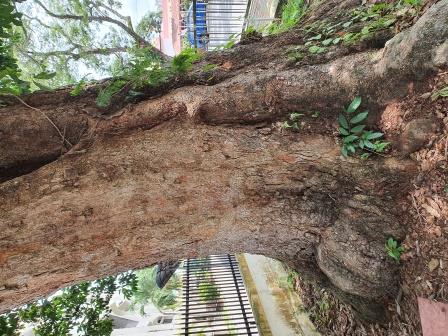
The 140-year old rubber tree in Kuala Kangsar, Perak, Malaysia
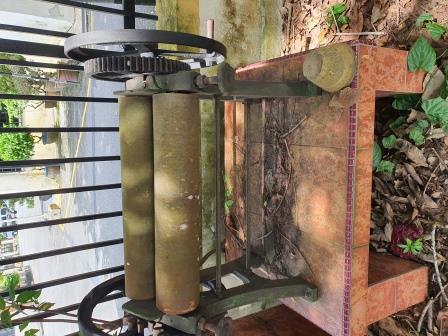
Hand-operated rubber sheet rolling machine
I visited the huge rubber tree two weeks ago. A plaque near the rubber tree noted the rubber tree was planted in the 1880s by Sir Hugh Low to convince the locals to plant rubber trees in a big scale.
The trunk is huge
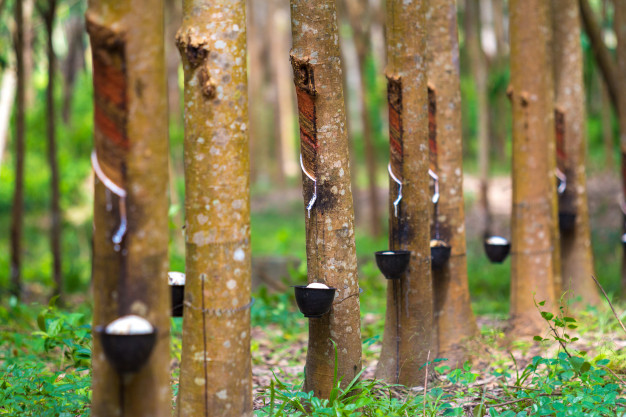
Then, the rubber tree could only be tapped for rubber latex after 7 to 10 years. Today, the rubber tree can be tapped after 3 to 4 years. As seen in the photos, the oldest rubber tree has a huge trunk as compared to a smaller trunk of today’s rubber trees.
Today’s rubber tree with smaller trunks
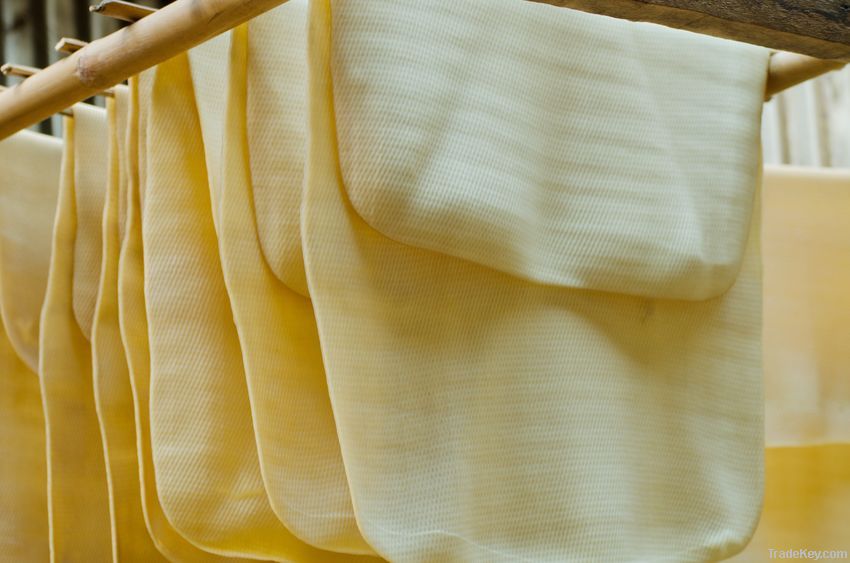
Rubber sheet hung to dry
I used to walk passed the oldest rubber tree in Malaysia as a student at the nearby famous Malay College in the 1970s. The rubber tree is still thriving after 140 years.
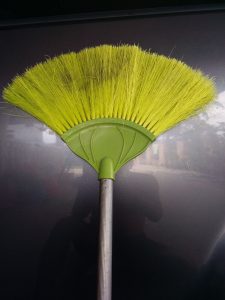
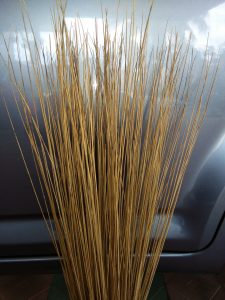
Coconut leaf mid-rib or spine has been used extensively as brooms. However, these brooms have been replaced by plastic brooms, which are cheaper. However, these plastic brooms contribute to the problem of plastic wastes.
Plastic broom, cheap but contributes to plastic waste after use
Coconut leaf mid-rib, an environment-friendly broom
Coconut leaf mid-rib brooms are slightly more expensive as they need to be manually separated from the coconut leaves by using a sharp knife, usually done by women in many countries in Southeast Malaysia. The number of the mid-ribs separated is low as these women get tired after a while. They often get hurt by the sharp knife as they tire during the separation process.
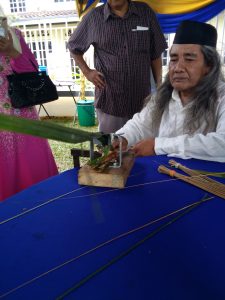
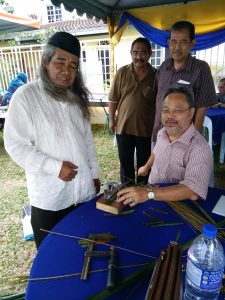
My friend, the “warrior inventor”, Mr Amir Tukiman, had invented a device, which he calls “Lidii”. This device can improve the productivity of separating the spine from the coconut leaf to about 400 per hour. A skilled-person can achieve a rate of above 600 per hour. This device can help a coconut farmer to supplement his income by making coconut mid-rib brooms, which are environmental-friendly.
“Warrior inventor” Mr. Amir Tukiman demonstrating his “Lidii”
The “Lidii” is portable. We are offering early adopters to purchase the device at a price of RM200 or US$20 (FOB) Malaysia. Free delivery is offered to adopters in Klang Valley, Negeri Sembilan and Selangor. Discounts are also offered for order of 5 and more units.
Separation can be done at any location, just requiring a stable table
The “Lidii” can also be used for other palm leaves with firm spines.
Please contact us at 6016 3220 952 or email the inquiry to Dato’ Dr Anuar Md Nor, Founder, Bison Consulting, which is the exclusive agent of the device. His email is datodranuar@gmail.com.