
The More Bizarre Food: Porcupine Bezoar

Introduction 

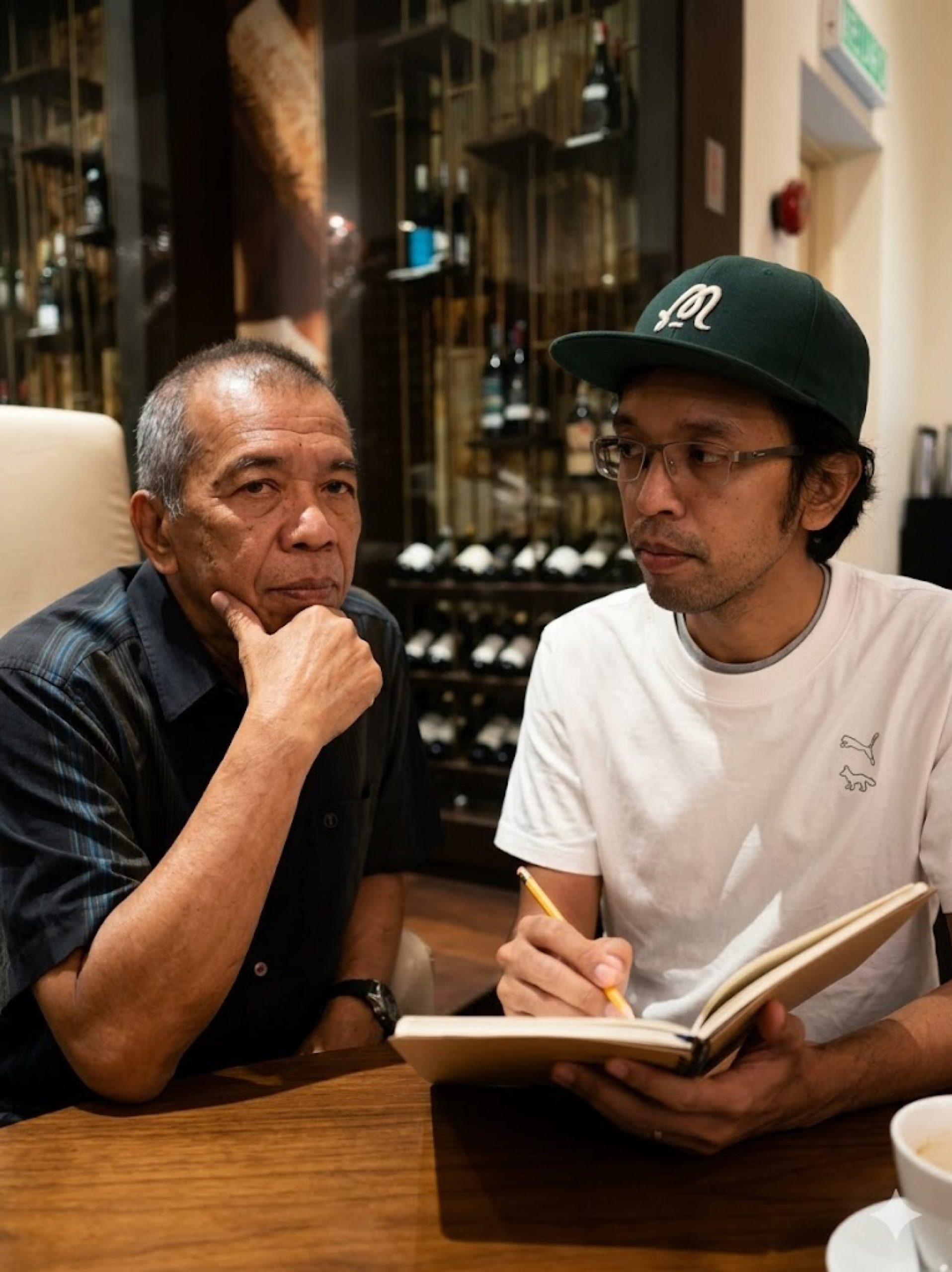
We are a keen follower of the host of The Bizarre Food, Mr. Andrew Zimmern. He eats all kinds of bizarre food. In the many episodes, we had not watched him eat a most bizarre food, namely porcupine bezoar.

Porcupine bezoar is a very expensive herbal food in traditional Chinese medicine. The Chinese believe that porcupine bezoar can treat various kinds of cancer if you can afford it. In Malaysia, a gramme of porcupine bezoar costs about RM 700 (US$/RM exchange rate is 1=3.9). This is despite little scientific research evidence to confirm its effectiveness.

Porcupine Bezoar

Porcupine belongs to the herbivores group of animals. In Indonesia and Malaysia, they feed on bitter-tasting roots and branches of plants and herbs. The diet of porcupine is associated to its strong immune system and ability to self-heal quickly. Porcupine is considered to possess strong immune system that effectively fights toxins and inhibits the effects of poison from its diets.

Bezoar means antidote in Persian language. It is explained that the herbs that porcupine eats when it is sick contain chemical compounds that help fight the damages caused by toxins as well as facilitate healing. The used-chemical compounds from herbs ingested by porcupine form a stone-like-substance inside its body, which is called bezoar. The Chinese takes porcupine bezoar to treat diabetes, hepatitis and dengue fever. It is also taken by cancer patients. The porcupine bezoar stone is formed in the bodies of porcupine is composed of several layers that it looks like an onion. The various grades of porcupine bezoar are shown in Picture 1.
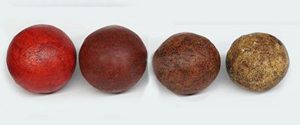
 

Grades of Porcupine Bezoar: Pink Colour is Expensive

Picture 2 shows the cross section of a porcupine bezoar.
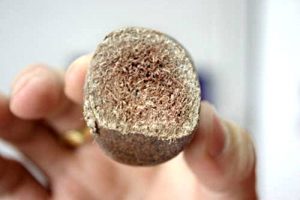
                         Inside of Porcupine Bezoar

Presently, the porcupine bezoar is harvested from porcupine caught in the wild, mainly in Indonesia. Typically, a porcupine bezoar weighs less than 100 grammes. A rare porcupine bezoar weighing 100 grammes can be sold for RM115,000.

High Demands Threaten Porcupine’s Population   

The high demand for porcupine bezoar in the traditional Chinese medicine market has reduced the population of porcupines in the wild in Malaysia and Indonesia. Porcupine population in Indonesia is now restricted to remote areas only. It is noted that a porcupine bezoar is found in about 1 in ten porcupines. In order to harvest the porcupine bezoar, the porcupine is killed and the body is disposed. The Chinese also believes the meat of porcupine has medicinal value.

There is a need to develop a sustainable practice of harvesting porcupine bezoar through modern breeding technique and recovery of porcupine bezoar. In the wild, the porcupine bezoar is valuable because the porcupine eats selected herbs that contain bioactive ingredients which accumulate in the porcupine bezoar.

It is necessary to use modern surgery to recover porcupine bezoar from the stomach of the porcopine without killing it. There is also a need to understand under what conditions and circumstances that a porcupine develops a bezoar in its stomach. This may increase the rate of porcupine bezoar that could be harvested in a population.

The high demand for porcupine bezoar is also leading to the trading of fake porcupine bezoar. According to reports in Malaysian Chinese newspapers, many victims bought porcupine bezoar which comprised balls of herbal leaves that look like a porcupine bezoar. Thus, there is a need to develop a system of quality control to ensure a genuine porcupine bezoar is only sold in the market.

We are consulting a Malaysian company which intends to develop a sustainable method to breed porcupines to harvest porcupine bezoar. The key to the success of the project is to identify herbs that are taken by porcupine in the wild that give the unique potency of the porcupine bezoar.

Webelieve when one has cancer, a ball of uneaten herbs in the stomach of a porcupine is not very bizarre after all.
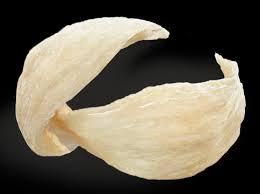
Edible Bird’s Nest is more than Just Soup and Dessert

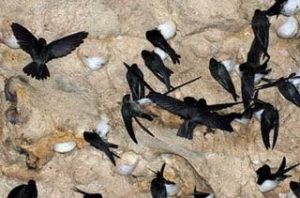
Edible Bird’s Nests in a Cave

Introduction

There are more than twenty four species of swift distributed around the world, but only a few species that produce nests that are deemed edible.  The majority of edible bird’s nests consumed worldwide come from two species, namely Aerodramus fuciphogus and Aerodramus maximus . They can be found in areas covering Nicobar Islands, Thailand, Malaysia, Vietnam, Indonesia, Borneo and Palawan Island in Philippines.

Malaysia is estimated to produce about 350 MT of edible bird’s nest annually, and is mainly harvested in specially-designed bird houses which scatter throughout the country. The price of edible bird’s nest has been influenced by many documentaries  in media channels such as National Geography showing harvesters, hanging high in caves in Thailand and Borneo, to harvest edible bird’s nest in caves. The harvesting of edible bird’s nest is dangerous, thus the justification of its price. A kilogram of edible bird’s nest  in soap or consumed as sweet dessert with rock sugar will set diners back by about RM10,000 in high-end Chinese restaurants in Kuala Lumpur, Hong Kong and Singapore. The burgeoning economy in China had also spurred a high demand for edible bird’s nest which is given as a gift to cement business deals.

A Ready-to-Serve Edible Bird’s Nest

Bioactive Peptides from Edible Bird’s Nest

Edible Bird’s Nest Desert Sweetened by Rock Sugar

Edible bird’s nest is the nest of the swift that is formed from its coagulated saliva. In the nest, a pair of swift would raise a chick. The harvester would wait until  the chick could fly before harvesting the edible bird’s nest. In effect, the harvester is providing a safe place for the swift to raise its young.  Thus, the harvesting of edible bird nest is less harmful than the production of the more expensive food, i.e., caviar. In order to harvest caviar, the fish, sturgeon,  had to be killed to extract the roes, which is caviar.

Studies by researchers at Malaysian universities have discovered key bioactive peptides from enzymatic hydrolysis of proteins of edible bird’s nest. The primary purpose of protein consumption is to provide essential amino acids, which are used by the body to synthesize various structural proteins required for homeostasis maintenance. However, the increasing popularity of functional foods and nutraceuticals has led scientists to seek protein-derived peptides that could prevent or even treat metabolic disorders.

The ability of these peptides to influence biological reactions and physiological conditions is what makes them “bioactive”. A bioactive peptide consists of a certain number of amino acids (2-20) that are usually encrypted within the linear protein chain and remain inactive until released by digestion. Thus, it follows that appropriate gastrointestinal tract (GIT) digestion conditions, food proteins could yield bioactive peptides. Peptide absorption from the GIT is then facilitated by specific or non-specific transporters, cellular endocytosis  and simple translocation (passive diffusion) into the blood circulatory system. However, the level of such bioactive peptide release during food digestion is considered very low and of little consequence to human health.

Therefore the most useful approach involves customized in-vitro protein digestion with human or proteases in order to enhance bioactive peptide production. Upon completion of the enzymatic hydrolysis, the digest is centrifuged and the soluble portion is isolated as the protein hydrolysate while the undigested portion is discarded. High peptide solubility increases absorption potential during oral consumption.

A research group at Universiti Kebangsaan Malaysia, led by Professor Dr Abdul Salam Babji, had tested the desirable activity of bioactive peptides from edible bird’s nest. They include antihypertensive and antioxidant.

Apart from the demonstrated health benefits, one of the main attractions of food protein- derived peptides is the low risk of negative side effects that are normally associated with drug therapy. Therefore, even though peptides are less active on a weight basis, they can be used as preventive or therapeutic agents as relatively higher doses than possible with drugs. The relative safety of food protein-derived peptides may be attributed to faster clearance from the blood circulatory system since they susceptible to peptidase-dependent degradation. Moreover, unlike drugs, peptides are not stored “as is” in tissues but are rather used for the biosynthesis of new protein within the body. Unlike drugs, peptides do not require liver detoxification and are not excreted in the urine; therefore, potential damages to these organs are minimized during peptide therapy, even at high doses.

Bioactive peptides from edible bird nest have better bioavailability to be absorbed in the GIT  as compared to the protein contained in the traditional edible bird’s nest soup. Traditional edible bird’s nest soup consumed together with its bioactive peptides should give better “value” to diners who pay for this expensive coagulated sliver of a swift.

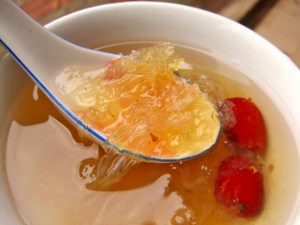
We recently enjoyed a bowl of edible bird’s nest with the edible bird’s nest peptides. It was delicious!!


Organizational Innovation in the Rubber Plantation Industry in the Form of Agency Houses: Part II

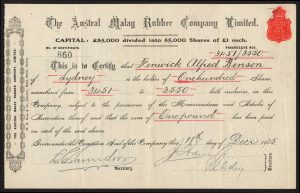
Certificate of Rubber Companies Listed on London Stock Exchange

Background

In the early phase of the rubber industry in early 1900s, investors and speculators floated companies, which owned rubber estates or rubber lands in Malaya, on the London Stock Exchange. Their estates in major states like Selangor and Negri Sembilan had English-sounding names. Some of the English-sounding names included:

  1. Aranlife
  2. Balgownie
  3. Beaumont
  4. Blackwater
  5. Braemer
  6. Broome
  7. Brown Comet
  8. Caledonian
  9. Carey Island
  10. Castlefield
  11. Coalfields
  12. Cullerlie
  13. Colwall
  14. Devon
  15. Didsbury
  16. Easrnor
  17. Ebor
  18. Edinburgh
  19. Effingham
  20. Emerald
  21. Galloway
  22. Glenmarie
  23. Golconda
  24. Golden Hope
  25. Haron
  26. Harfenden
  27. Hawthornden
  28. Haytor
  29. Highland & Lowlands
  30. Holmwood
  31. Inch Kenneth
  32. Kent
  33. Killinghall
  34. Lambourne
  35. Ledbury
  36. Lunderston
  37. Madingley
  38. Merton
  39. Midlands
  40. Monmouth
  41. New Amherst
  42. Newbury
  43. North hammock
  44. Paradise
  45. Pilmoor
  46. Reading
  47. St Andrew’s
  48. Seafield
  49. Seaport
  50. Sedgeley
  51. Shelford
  52. Sione
  53. Strathmore
  54. Strathnairlie
  55. Tremelbye
  56. Vallambrosa
  57. Wardieburn
  58. Waterfall
  59. West Country


We remember many of names existed until in the 1970s, while other estates were absorbed by larger companies. With a shipping travel time of about 40 days between London and Singapore in early 1900s, the owners of the rubber estates in London would need local companies or local managers to oversee their rubber estates in Malaya.

Enter the Agency Houses

The early rubber planters used the fund, raised through the flotation of public companies on the London Stock Exchange, to develop their rubber estates. However, the costs involved in opening up new rubber plantation on a scale dictated by demand lay well beyond the means of almost all rubber planters. In addition, the rubber planters had to wait for at least five years before the rubber trees could be tapped for latex.

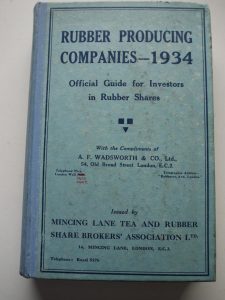
Mincing Lane in London Where Shares of Rubber Companies Were Traded

Those early rubber planters had to seek capital from other sources, namely the established merchant houses based in Singapore and Penang, which have been operating since 1800s. The established merchant houses had the right contacts on the local and overseas financial market. It also involved experiences of business organizations and management techniques, of which most planters were woefully lacking, and the know-how for shipping and marketing rubber on the London market.

The big merchant houses which started in early 1800s, eventually dominated the rubber industry which came to be known as agency houses. By the end of the second decade of twentieth century, the agency houses had established itself in a dominating position in the rubber plantation industry and later in the oil palm industry.  However, it took a generation to consolidate their position. During this period, the early rubber planters made it to the boardroom of rubber companies which were listed on the London Stock Exchange and the rubber speculators from the City of London itself died off and were replaced by the nominees of the agency houses.


The largest Agency House Formerly Known as Harrison and Crosfield

The major agency houses that existed in 1960s included the following:

Agency Houses No. of Companies Number of Estates Planted Areas (acres)
Harrison Crosfield 42 111 231,180
Guthrie 22 39 182,800
Boustead-Buttery 37 58 121,870
REA-Cumberbatch 37 55 97,560
T. Barlow 19 42 102,440
Sime Darby 23 30 73,900
Oriental Estates 14 19 55,140
Plantation Agencies 10 29 48,040
Whittal 22 28 45,210
Harper Gilfillan 16 18 35,560
Ethelburga Agencies 1 9 27,860
J Warren 16 21 26,070
SOCFIN 6 10 62,150
East Asiatic 4 4 21,100
Unitac 7 12 20,260
Other Agencies 5 7 21,040

Source: Zorn Leigh Hunt, Manual of Rubber Planting Companies, 1960, and Strait Times Directory, 1962. Quoted in Fryer (1964)

Guthrie, Another Large Agency House

There were several differences between the pattern of interests of the two largest agency houses, Harrison Crosfield and Guthrie. The first was by far the larger. Guthrie, however, appeared a much more specialized organization: it controlled relatively few companies and fewer estates than smaller rivals. The properties under its management, however, were of very large size, including both the largest rubber and oil palm estate in Malaysia. Guthrie had also a leading position in the cultivation of oil palm.

By the 1980s, the agency houses were bought over by Malaysian interests Several names such as   Sime Darby, East Asiatic and Boustead  are still operating under the new Malaysian owners until today.

As a business historian, we appreciate and value the contribution of individuals who managed these agency houses and created a plantation industry from the jungles of Malaya in the early 1900s.

Our thanks to Mr. Lampard, Mr. T. Barlow, Mr. Boustead Brothers, Sir John Hay, Mr. Money, Sir J. Anderson and others.

Reference:

  1. J. M. Tate. The RGA History of the Plantation Industry in the Peninsular Malaysia. Oxford University Press, Kuala Lumpur, 1996.

The Rubber Industry Had H. N. Ridley, the Palm Oil Industry Just Had Pragmatic Planters: Part 1

Introduction

Legend had it that four seed s of African Elaeis guineensis  brought over by the Dutch into Indonesia in 1848 and planted in Bogor, Indonesia, laid the foundation for the palm industry in Malaysia and Indonesia. The two countries now produce more than eighty per cent of palm oil in the world.

The earliest record of four seedlings showed two originated from Burdoun (Reunion) or Mauritius and two from Amsterdam. The Government of Holland, who ruled Indonesia, actively promoted the usefulness of the oil palm tree and established experimental plots at Banjar Mas in Java and Palembang in Sumatra, Indonesia. It took another fifty years before an oil palm plantation was established.

The lack of enthusiasm of local authorities of Java and the doubts of planters both about the profitability and the milling methods to be employed held back the development of the oil palm industry. The technology for processing palm oil was finally invented in the early 1900s. At that time, oil palm had to compete with rubber, which was experiencing near-fever demand to make tires for cars.

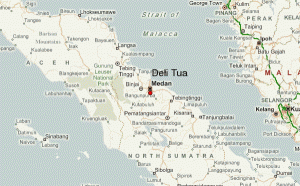
The foundation of the oil plantation industry is generally attributed to one M. Adrien Hallet, a Belgian with some knowledge of oil palm in Africa. He planted oil palms of Deli origin in 1911 on a large commercial oil palm plantation in Sumatra, Indonesia. Hallet recognized the avenue palm trees growing in Deli, near Medan, Indonesia,  were more productive than the palm trees in Africa and also had superior fruit composition. Within three years, 2,600 hectares of oil palm trees were planted. However, the growing of oil palm trees stagnated during the First World War.

Deli, Near Medan in Indonesia Where Palm Oil Industry Started in Southeast Asia

In the meantime, another planter, M.H. Fauconnier, a Frenchman, who had been associated with Hallet, planted oil palm trees in neighbouring Malaya during 1911 and 1912 at Rantau Panjang, Kuala Selangor, Selangor. The oil palms were in full bearing by 1917 and in that year the first seedling were planted on an area later to be known as Tennamaram Estate.  When we visited the estate, the first oil palm trees in Malaya were no longer there as palm oil trees grow for about thirty years.  Nevertheless, the progeny of these early oil palm trees built the foundation of the globally important palm oil industry.


M. H. Fauconnier, The Pioneer Oil Palm Planter in Malaya


Other Planters Took Notice   

The second commercial oil palm plantation was established by Messr. Guthrie at Sungai Buloh, near Kuala Lumpur, which was known as Elmina Estate. The first palm oil processing mill was established by Sime Darby in 1925 at the Tennamaram Estate, which extracted crude palm oil from oil palm fruits.  Over the years, due to the growing population of Kuala Lumpur, Elmina Estate became a housing area, and nearby the largest prison complex in Malaysia.

In the period when rubber dominated the agriculture sector in Malaya, a few planters with an eye to overseas markets began growing the oil palm. Although palm oil was used in the manufacture of soaps, margarine, vegetable oils and grease, there was little progress in the industry. After the slump in rubber prices after the First World War, rubber planters were forced to search for alternative crops.  No large-scale development occurred until 1924, when three rubber companies in the Guthrie group formed Oil Palm Malaya Ltd. The example was followed by other planters. Because of the need for capital and special expertise, especially in processing of oil palm, the industry was confined to large plantations, using the then advantage of existing rubber industry infrastructure. In addition, the oil palm, which in Africa grew naturally in riverine forests or freshwater swamps, flourished in Malaya’s tropical climate. Without pronounced dry season, Malaya was a place where an oil palm tree could be planted throughout the year..

Following table highlights the key events in the palm oil industry

Date Events Impact
1875 Oil palm was introduced to Malaya as ornamental plants The beginning of the oil palm industry
1903 First trial on planting oil palm in Batu Tiga, Selangor, by Malayan Department of Agriculture The first agriculture research on oil palm in Malaya
1910 First commercial plantation of oil palm started in Nigeria The start of oil palm plantation for export of crude palm oil
1911 First large-scale planting of oil palm by a Belgian company in Sumatra, Indonesia The start of oil palm plantation in Southeast Asia
1917 First large plantings Malaya at Tennamaram Estate and Elmina Estate The start of the commercial palm oil plantation Malaya
1953 Market pool system established by Malayan palm oil producers. Previously, palm oil was exported in drums. The development of markets for Malayan palm by industry players to reduce shipping costs
1956 Establishment of FELDA, one of the largest palm companies in the world. A Malayan government agency responsible to develop rubber and oil palm plantations.
1961 FELDA planted oil palm on a 350-hectare plot This was followed by rapid expansion in areas planted with oil palm
1966 Malaysia (independent Malaya) overtook Nigeria as the world’s leading exporter of palm oil Malaysia gained leadership in palm oil industry by pioneering many industry innovations
1972 Four palm oil refineries started operations Start of processing industry to produce palm oil products for export markets
1979 Establishment of Palm Oil Research Institute of Malaysia (PORIM), now known as Malaysia Palm Oil Board Start of a research institute specializing in palm oil industry
1980 Establishment of Kuala Lumpur Commodity Exchange The exchange facilitates the trade in palm oil products
1981 Acquisition of Guthrie by Permodalan Nasional Bhd (PNB), a Malaysian government-owned investment company The largest Brutish-owned plantation company was acquired by Malaysian interests
1981 Introduction of weevils, an insect from Cameroon, Africa, to pollinate oil palm trees This new technique eliminates manual workers to pollinate oil palm trees. It increases the productivity of oil palm to bear fruits
1999 Guthrie established the first oil palm estate in Indonesia The first purchase of a large piece of land in Indonesia by a Malaysian company
2000 Acquisition of a large listed plantation company in Indonesia by Guthrie This expanded the plantation land owned by Malaysian companies.
2008 Mergers of three palm oil companies owned by PNB Created the largest listed palm oil company in the world with more than 500,000 hectares. As a result, Guthrie ceased as a company.
Now Indonesia is the largest producer of palm oil in the world The country has more areas than Malaysia suitable for oil palm plantations

Source:  Dato’ Anuar Md Nor, The palm oil multinationals from Malaysia. Lambert Academic Publishing , 2015.


Continue in Part 2

The Malaysian Innovators: H. N. Ridley

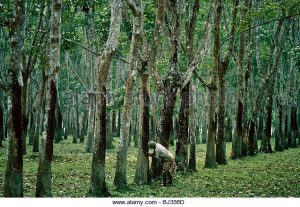
A rubber plantation in Malaysia

Background 

Today, not many people

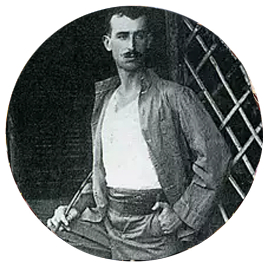
would know H. N. Ridley. As a Malaysian business and innovation historian,  I had studied the development of Malaysian major industries. I noted, in each industry, there was a notable industry champion. Of all the Malaysian industries, plantation rubber had the most economic impact on British Malaya (Malaysia before independence in 1957), and the development of the rubber plantation industry can be attributed to one individual, namely H. N. Ridley.

Many historians would agree that the economic foundation of British Malaysia in late 1800s and early 1900s was built on the plantation rubber industry. When the motorcar industry was emerging in Europe and US there was a huge demand for rubber latex to produce tires. Then, the supply of rubber latex, which was tapped from wild rubber trees in the Amazon jungle in South America, was not enough to meet the need of the fast growing tire producing companies.Thus, efforts were made to produce rubber latex under plantations. British planters were already planting coffee plants in large estates in British Malaya and Ceylon.British Malaya and Ceylon had the suitable climate for the rubber trees found in the Amazon jungle. In 1876, the British government of India assisted Henry Wickham to buy 70,000 seeds (at 10 Pounds per 100 rubber seeds). He chartered a ship, SS Amazons, to export the rubber seeds, with the goodwill and co-operation of the Brazilian government, to Kew Gardens in London, where 2,800 germinated. Most of the germinated seeds were sent to Ceylon, and a few to Singapore and Java.

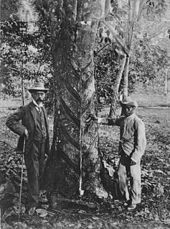
In 1888, H. N. Ridley came to Singapore and was appointed the Director of the Singapore Botanic Garden. During his tenure of twenty three years, H. N. Ridley became a fervent champion of the rubber plantation industry and earned him the nickname, “Mad Ridley”. There were many challenges facing the early plantation rubber industry in the late 1800s. One of them was convincing the local British and Chinese planters to switch from coffee bushes to rubber trees. Another was to extract rubber latex from the rubber trees without damaging them. Ridley spent many years promoting rubber trees as a commercial crop. He gave away rubber seeds when he met the coffee planters. Notable planters who shared his vision included Tan Chay Yan and the  Kindersley brothers. These planters were the first group of planters who planted rubber trees on their estates. He also established a technique to harvest rubber latex without damaging the rubber trees.

Mr. Ridley and his assistant in front of the rubber tree in Singapore

By the early 1900s, the rubber plantation industry had significant areas planted with rubber trees. By 1910, British Malaya became an important rubber producer, riding on the rapid growth of the motorcar industry in Europe and US., and H. N. Ridley’s dream fulfilled. More important was that the rubber plantation industry opened vast areas in British Malaya where rubber trees were planted in large estates by British-owned companies. They obtained capital from the listing of their shares on the London Stock Exchange. Rubber trees were also planted by villagers in smallholdings. It seemed that everyone in British Malaya planted rubber trees, and every investor in London owned shares of rubber companies.

Lesson Learned

The emergence of the rubber plantation industry  showed the need of commitment and efforts of an  industry champion such as H. N. Ridley who believed in the potential of the rubber plantation industry. He also helped in solving the various technical problems facing the nascent rubber plantation industry.  Many industries also had such industry champions.

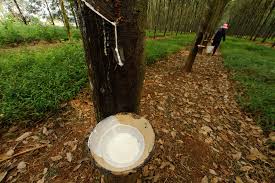
Rubber latex flowing into a cup

British Malaya became a prominent producer of an important industrial material in the early 1900s. Now, Malaysia can again became an important producer of products that the world needs, but we need industry champions of the calibre of H. N. Ridley. He lived long enough to see the growth of the rubber industry when he passed away on 24th, October, 1956.

We hope new Malaysian industry champions will rise!!