
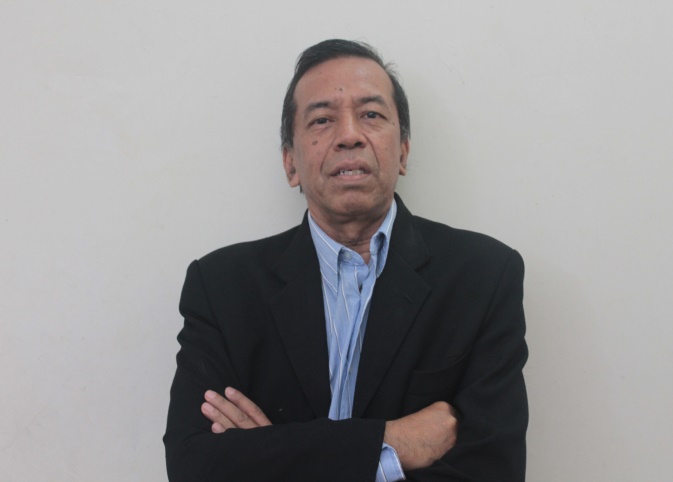
About Dato’ Dr Anuar Md Nor

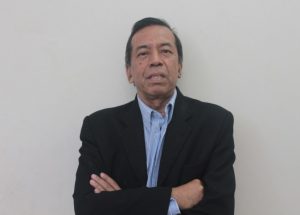
Dato’ Dr Anuar Md Nor is a specialist in the area of innovation management, venture capital and business networks as strategic resources. He teaches these subjects at Azman Hashim  International Business School, Universiti Teknologi Malaysia. He is also Adjunct Professor at the the School of Management, Asia e University, Malaysia.

He founded Bison Consulting, a consulting firm that offers services such as intellectual property valuation, firm valuation, grant application and “halal” certification application.He has authored three books, Securing Private Equity in Malaysia, The Palm Oil Multinationals from Malaysia, and The Role of Networks in Internationalization Process. 

He has an undergraduate degree in Chemical Engineering from University of Birmingham, England, an MBA from School of Management, University of Bradford, England, an MSc. in Management of Technology from Massachusetts Institute of Technology, Boston, USA. He completed his PhD in Business Management from Universiti  Teknologi MARA (UiTM), Shah Alam, Malaysia.

Before establishing Bison Consulting, he was CEO of PNB Equity Resources Sdn Bhd, a subsidiary of Permodalan Nasional Berhad, the largest investment company in Malaysia and CEO of Malaysian Technology Development Corporation Sdn Bhd, the venture capital company owned by Malaysian government. During his tenure, he had invested in high technology companies in Silicon Valley, USA.

Dato’ Dr Anuar Md Nor lives with his wife, Datin Azimah, in Seremban, Negeri Sembilan, Malaysia. It is a commuter town about one hour drive to Kuala Lumpur, the capital city of Malaysia. He tends his garden plot planting several fruit trees, while his wife tends her orchid plants. Our four children work in Kuala Lumpur. Our second son is a famous artist with sculptures installed in London and Singapore, having graduated from Rhode Island School of Design, USA,  and Central Saint Martins, London, UK. Our daughter graduated from the Australian National University, Canberra. Our eldest son manages his own design company while our youngest son works as a securities trader in a Malaysian Investment Bank.

We share our home with seven cats, namely, Junior, Baby, Yen, Charlie, Malaya, Tuya and Momo, and they like to be fed with boiled sardines.

Blog’s New Feature: eStore

This blog has been established for a while now. We are now incorporating an eCommerce feature in the blog to help readers and general internet users to purchase downloads as well as a range of foods containing bioactives based on our research and works.

The downloads include:

  1. eBook covering topics in innovation and management
  2. eThesis covering PhD thesis conducted at Malaysian universities
  3. eReport covering topics in intellectual property valuation and valuation of firm
  4. eAccess sign-ins to on-line databases
Use various devices for on-line learning

We plan to offer a eAccess sign-in to extensive databases in partnership with Asia e University. Members will be able to use the on-demand learning platform for pure learning and register an on-line Bachelors, Masters and PhD degrees with Asia e University. We will announce when this eAccess sign-in will be operational.

A popular on-line Malaysian university

Please click the button: eStore on our website.

We thank all readers for your generous patronage.

Yours sincerely,

Dato’ Dr Anuar Md Nor


Continued March of the Robots

Background

Like it or not, robots are steadily marching forward replacing humans in their stride.

Many human jobs are being replaced by robots or robots are collaborating with humans, which were reported as follows:

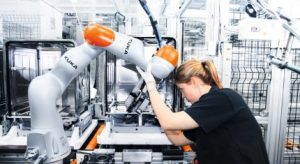
Working robots: collaborative robots or “cobots” are being installed in factories to work alongside with humans. In Britain, cobots are being used to address the shortage of workers due to Brexit. A study from Massachusetts of Technology (MIT) indicates that cooperation between humans and robots is more productive than using either humans or robots alone and reduce human idle time by 85 per cent.

A cobot produced by Kuka

In addition, cobots are being utilized in restaurants. At Mofongo’s distillery and cocktail bar in the Dutch city of Groningen, a cobot climbs a 26-ft high bar to tap bottle of spirits. In a restaurant in Tokyo a cobot boxes takeaway dumplings. Trials are underway for machines to go through medical records using artificial intelligence to ensure that they get the right medical record.

(Source: Mark Bridge. Robots in restaurant to solve staff shortage. The Times, June 16, 2018)

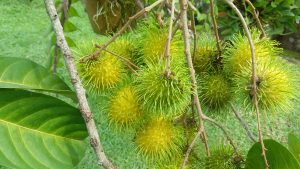
Soft fruits robots: there goes students’ summer jobs of picking strawberries! We spent a summer during our college days in a strawberry farm in Northern England.  The pays enabled us to buy a nice bicycle. A company, Fieldwork Robotics Ltd in the UK is developing a prototype robot capable of picking raspberries. The robotic system could be adapted to pick other fruits and vegetables. Running on wheels and guided by cameras, they will have multiple arms, equipped with sensors to detect and pick ripe berries.

Soon, rambutan could be picked -up by robots without having a stiff neck

(Source: Miles Costello. March of the robots  was never so sweet. The Times, August 6, 2018.

A robot stuntman: The Walt Disney Company’s researchers initially had developed a robot stuntman by devising a lump of metal that could be flung across a space into a net. It had sensors and its centre of mass could be shifted, allowing its flight to be controlled and a precise landing would be made. It was followed by a headless, limbless automation made up of three connected shafts, and then a full humanoid robot. It was noted that robots have started to become mobile and autonomous and can begin to imitate sophisticated stuntmen or stuntwomen.

Robotic actors “employed” to do stunts in movies

(Source: Will Pavia. Disney’s next trick: a robot stuntman. The Times, August 7, 2018.

More bad news for human employees: It was reported that Citigroup, the US banking giant, had announced that it would reduce up to half of its technology and operations staff in the next five years and replace them with machines. Another  large bank, Credit Suisse, was planning to automate a large number of compliance jobs.

(Source: Miles Costello and Dominic Walsh. 10,000 workers @may be replaced by machines”. The Times, June 12, 2018.

In Malaysia, there is an urgent need to replace foreign workers in large oil palm plantations to harvest fruits and transport them to palm oil mills quickly. Foreign workers in oil palm plantations represent a major portion of immigrants in Malaysia.