

Revolutionary healthcare technology from Africa for the world

A drone used by Zipline to deliver medicines via a parachute

Usually you do not expect Africa to be a hot bed for innovation. A new revolutionary healthcare technology could change this perception. Neil Munshi, writing in Financial Times on April 25th, 2019, noted this technology will be applied in Africa as well as outside Africa.

The world’s largest drone delivery network, ferrying 150 different medicines and vaccines, as well as blood, to 2,000 clinics in remote part of Ghana, was announced on April 24th, 2019. The network represents a major expansion for Silicon Valley start-up Zipline, which began delivering blood in Rwanda in 2016, using pilotless, pre-programmed aircraft.

The move along with a new agreement in Rwanda signed in December 2018, takes the company beyond simple blood distribution to more complicated vaccine and plasma deliveries.

“What this is going to show is that you can reach every GPS coordinate, you can serve everybody, “ said Keller Rinaudo, Zipline chief executive.

“Every human in that country or region can be within a 15-25 minute delivery of any essential medical product; it is a different way of thinking about universal coverage.”

Keller Rinaudo, CEO of Zipline
(Image captured from the company’s website, flyzipline.com)

Zipline will deliver vaccines for yellow fever, polio, diphtheria and tetanus which are provided by the World Health Organization’s (WHO) expanded project on immunization. WHO will also use the company’s system for future mass immunization programmes in Ghana. Later this year, Zipline has plans to start operations in North Carolina, US and Southeast Asia.

The company said it would be able to serve 100 million people within a year, up from the 22 million that it projects in Ghana and Rwanda will cover. In Ghana Zipline said healthcare workers would receive deliveries via a parachute drop within about 30 minutes of placing their orders by text message. Zipline’s drones will have a round-trip range of 160 km, travelling at 100 km an hour.

The drones are the least complicated part of the business, Mr Rinaudo said, compared with designing a complex supply chain where none exists, integrating into national healthcare systems and working with regulators such as the civil aviation authorities in Rwanda who touted Zipline to their Ghanaian counterparts. Ghana’s president, Nana Akufo-Addo, has been known for his plan to take the country-a lower-middle-income nation with about US$4,500 in per capital income in purchasing power parity terms-“beyond aids”.

But his ambitious economic reforms programme has been slow to progress and much remains underdeveloped.

Still the International Monetary Fund (IMF) earlier projected Ghana to be the fastest-growing economy in the world this year, at 8.8 per cent.

Murraya koenigii: first-aid kit plant around the house

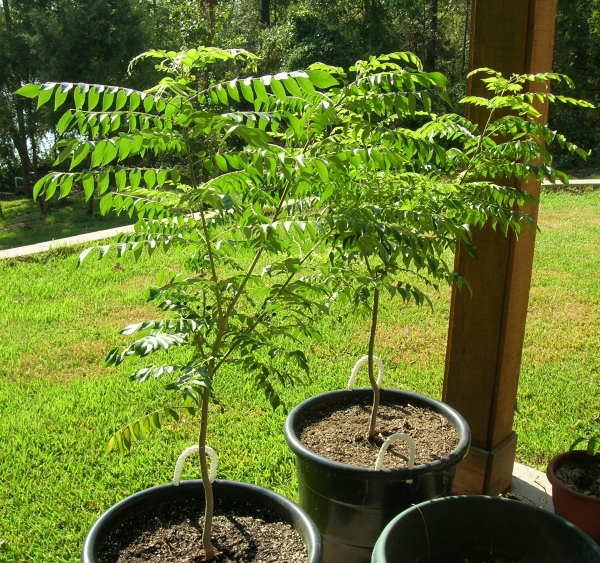
A growing tree of murraya koenigii

Murraya koenigii, common name curry leaf tree in English or just curry tree is actually a shrub which can grow to a height of 2.5 metres. It is also known as daun kari, Indian curry tree, curry bush, karapincha, karwa pale, garupillai, kerupulai, kadi patta or sweet neem. It belongs to rutaceae family and is believed to be native to India. The tree thrives well in tropical and subtropical climates and can be widely found in the Indian Subcontinent and South East Asia. They are also cultivated in Australia, Nigeria and China. The green leaves are pinnate with 11 to 21 leaflets of 2cm to 4 cm long and 1cm to 2 cm broad. The leaves are highly aromatic when rubbed or crushed. It can be propagated from stem cutting, seeds or root sprouts. The tree produces tiny white flowers which become red fruits when young and black when ripe.

The fresh leaves of curry leaf tree are used both as herb and spice for food seasoning and flavoring in South Indian and Southeast Asian cuisines. As the name suggests, the leaves are almost always a must have when cooking curry. Curry is a name of a dish originating in the Indian subcontinent and now spread to Southeast Asia. It is a combination of spices or herbs, usually including ground turmeric, cumin, coriander, ginger, and fresh or dried chilies with curry leaves stir fried with vegetable oil, mustard seeds and chopped onions at the beginning of its preparation. Dried curry leaves are, however, inferior in aroma and flavor and so not often used.

Note:

  1. It is important not to confuse this plant with another plant that is also known as “curry plant” (Helichrysum italicum) which has strong smell of curry powder but is not in any way used in making curry dishes.
  2. Genus Murraya is named in honour of Johan Andreas Murray (1740 – 1791), Professor of Botany at Gottingen while species koenigii is named in honor of Johann Gerhad Konig (Koenig) (1728 – 1785), who was a missionary and botanist in India. 

Nutritional Value and Chemical Contents

There are more to these humble leaves than just as food seasoning and flavoring. For starters, the leaves have 66.3% moisture content, 16.0% carbohydrates, 6.4% fiber, 6.1% protein and 1.0% fat. It is rich in minerals including calcium, phosphorous, iron, magnesium, copper and various vitamins such as B3 (nicotinic acid) vitamin C, vitamin A, vitamin B and vitamin E.

The plant also contains cinnamaldehyde and numerous carbazole alkaloids, including mahanimbine, girinimbine and mahanine. It also has linolool, which gives it its unique aroma. These compounds are present in the leaves, stems, bark, and seeds and exhibit antioxidant, anti-microbial, anti-cancer and anti-inflammatory properties which are useful for treating and preventing many diseases and health disorders. The plant is widely used in Ayurvedic and other alternative or traditional medicine.

Medicinal Uses of Murraya Koenigii

Though the leaves have always been sought after for their unique flavour and usefulness in cooking, there are also a number of health benefits that make them highly useful. Some of the well-known remedies are listed below:

  • Curry leaves can aid weight loss. Carbazole alkaloids work against weight gain and adding the leaves into the diet also help in regulating cholesterol levels in the body.
  • Curry leaves are said to support bowel movement and help stimulate digestive enzymes when consumed. They are good for treating an upset stomach such as diarrhea, constipation and dysentery.
  • Carbazole alkaloid compound in curry leaves speeds up the process of healing wounds as topical application. Curry leaves have a similar effect on inflamed skin, boils and first-degree burns
  • They also help provide relief from morning sickness and nausea to women during pregnancy.
  • The anti-hyperglycemic properties of the leaves are beneficial in controlling blood glucose level. This is perhaps one of the most important health benefits of consuming the leaves.
  • The leaves are also thought to be a good food supplement for eyesight as it contains vitamin A.
  • Essential oil of curry leaves can help in reducing stress effectively. This is probably because of the calming effect of the scent of curry leaves (the scent of curry leaves is due to the present of linolool compound).
  • Curry leaves are also good for the hair. It is said to promote hair follicle growth and repair and help prevent or at least delay graying of hair either by rubbing or massaging the leaves in paste form or in powder form mix with oil to the scalp.
The curry plant can grow in a pot around the house

The Verdict

Whether for food flavoring or for its many health benefits, this is one tree worth having in the compound of one’s home. It’s like having a first-aid kit by your side all the time. Growing it is not difficult as it is quite hardy and can be grown on the ground or in pots.

About the guest contributor

Mr Ahmad Rozi is a stingless bee farmer in Terengganu, Malaysia. He writes on interesting topics about foods, places and traditional medicines in his state and region. You can place an order with us at 6016 3220 952 to order his honey.

A 64-year old among the youth of Silicon Valley

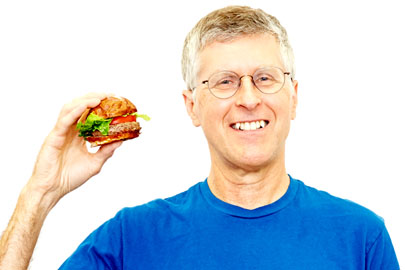
The 64-year old founder of Impossible Foods Inc.

The founder of plant-based meat company Impossible Foods Inc., Prof. Pat Brown, is a 64-year old who stands out among that many young founders of billion-dollar start-ups in Silicon Valley, California, US.

What he lacks in youth, he makes it up for an ambition. Instead of just changing the world, Prof. Brown intends to save it. Recently a deal announced between Impossible Foods and Burger King is a step toward achieving his goal of reducing the carbon emissions generated by the meat industry.

An article by Emiko Terazono and Tim Bradshaw in Financial Times on 6th, April, 2019 traced the achievements of Prof. Brown.

Prof. Brown is known in the scientific community for his research in genetics and microbiology, including defining the mechanism by which the HIV virus infects cells. After taking a sabbatical from the role as a professor at Stanford University in 2010, he wanted to find a global issue he could make a real difference. He concluded that finding the causes of cancer or Alzheimer’s were secondary to the environmental damage caused by eating meat and dairy.

“Nothing comes remotely close to the catastrophic environmental impact of the livestock industry,” he said. From greenhouse gases emission to the negative effects on land and water, he is convinced that humans are racing to ecological disaster unless meat and dairy consumption is cut or eliminated. He realized that instead of preaching a shift in eating habits, or lobbying to change regulations, offering consumers tasty alternatives proteins was how to trigger change.

A marathon-running vegan, he has not eaten meat for five decades or dairy for 15 years. “If you can figure out what makes meat delicious — you save the planet from our environmental catastrophe,” said Prof Brown.

With the backing of Silicon Valley investor Khosla Ventures, he launched Impossible Foods Inc. in 2011, putting together a team that included molecular biochemists, chemists and data scientists to produce plant-based meat from a molecular level.

Mr. Samir Kaul, a founding partner at Khosla Ventures with a background in genomics who looked up to Prof. Brown in his days as a scientist, said it was an easy decision to back him.

“He has a history of taking on a big challenge and, frankly, winning.”

Impossible Foods discovered that heme, an iron-containing protein molecule present in plants and animals, was the ingredient giving meat its aroma, taste and texture. Produced through genetic engineering and yeast fermentation, it is also behind the juices that make the Impossible Foods’s burger bleed.

In 2016, it introduced a burger made of wheat and potato  protein, coconut oil, and heme. It looked, tasted, smelt and sizzled like a real meat burger.

Even before Impossible Foods launched a product, Prof. Brown turned down an offer with hundreds of millions of dollars for the company from Google in 2015.”For Prof. Brown possibly, his reason to do this is not to get rich. For Pat, it’s to make the world a better place, “ said Mr Kaul.

This year the group has introduced a new burger after swapping wheat for soyabeans and using less salt. After signing its distribution deal with Burger King, it is fundraising to increase the capacity of its production facility in Oakland, California, US.

Along with rival Beyond Meat, which is preparing to float its shares in the US, Impossible Foods has sought to lure meat-eating consumers who want to reduce intake of meat or looking for tasty options, casting the net wide than vegans.

Prof. Brown’s pronouncement that he is not bothered about exits have been perceived as arrogance by some venture capitalists. But he has raised more than US$475 million since 20111 and drawn plenty of backers, including Bill Gates and others. Bruce Friedrich, who launched the Good Food Institute, a US not-for-profit that promotes alternative proteins and advice start-ups, calls Prof. Brown “a prophet” and praises his “infectious optimism”.

It has not all been plain sailing. Impossible Foods reduce its salt content of its burger after campaigners criticised it for having too much. It had to wait several years before the US FDA last year acknowledged that heme was “generally recognized as safe”. It defended the testing of its products on rats after criticisms from animal rights group Peta.

Impossible Foods produces soy leghemoglobin by genetically modifying yeast and using fermentation. The ingredient is key because it carries heme, an iron-rich molecule found in real meat. The heme in the Impossible Burger is atom-for-atom identical to the heme found in meat, fish, plants and other foods.

If the Impossible burger is successful, Prof. Brown hopes to eliminate animal meat in the food chain by 2035, helping the earth restores its vegetation cover.

“Half of the earth’s land has been significantly and destructively disrupted by animal agriculture, “ he said. “So the replacement of that industry with a tiny fraction of the land and environmental impact and resulting recovery of the ecosystems will be visible from outer space, ” he said.

We eagerly wait for Impossible Whopper to be introduced in Malaysia

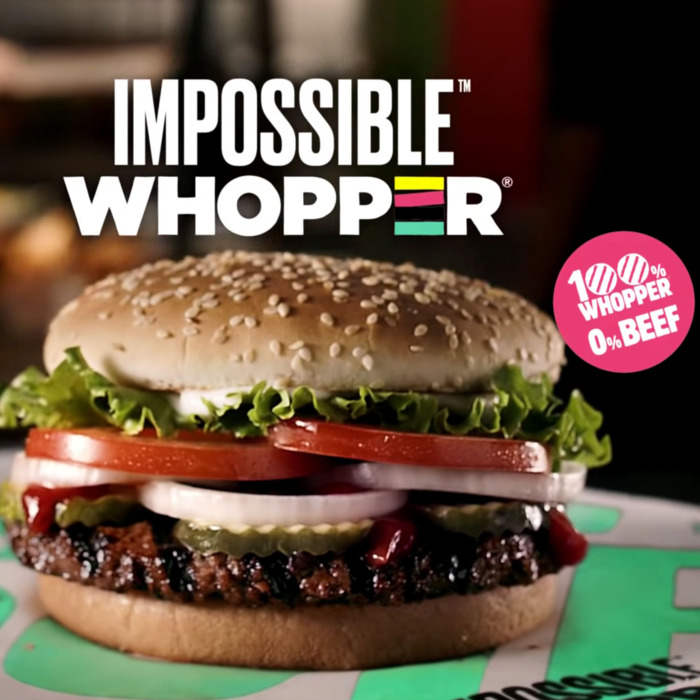
Plant-based burger sold at Burger King outlets in Missouri, US

In the Lex Column of the Financial Times on 3rd, April 2019, we noted an interesting article. It highlighted that growing numbers of vegetarians mean big food groups are keen to invest in plant-based substitutes for meat. Start-ups are ahead in the race to produce alternatives that look and taste like the real meat stuff. Thus, a major market may develop.

Veganism was once a fringe movement. Now, it is becoming mainstream. US sales of plant-based food was growing 10 times faster than the rest, according to research group Nielsen.

As consumers reduce their meat intake,  manufacturers are racing to exploit the trend. In other words, interest in plant-based burgers is sizzling hot!

Same old-style veggie burgers would be beaten in a taste test by the cartons in which they came. The latest version sizzle and “bleed” like real meat, manufacturers claim. In the food industry hype is a vital ingredient. Nestle, the Swiss food giant, calls its new soy protein-based patty “incredible burger”. It has launched recently, soon after news that Impossible Foods of the US had struck a deal with the large fast food chain Burger King.

The battle of the plant-based burger will be had fought. Unilever, which recently bought meat-substitute company The Vegetarian Butcher, had joined the fray. This company was mentioned in our previous blog.

California-based Beyond Meat, also mentioned in a previous blog, is another contender. It is preparing for an IPO as it seeks to expand its market territory. Competition will reduce industry profits.

For now, affluent consumers are expected to pay up. Smaller, rich households are the top buyers of plant-based burgers, says research group NPD. Impossible Whopper will cost about a US$ more than its beef counterpart.

Food groups are looking beyond committed dead-cow dodgers for growth. Just 5 per cent of Americans say they are vegetarians and 3 per cent are vegans. Many consumers, though, are cutting down on meat consumption. Health is the main reason, says Mintel, a market research company. Americans say they like the taste of the plant-based burger. Environmental worries also feature. Meat and dairy provide about 18 per cent of calories but uses 83 per cent of farmland and produces 60 per cent of agriculture’s greenhouse gas emission, a science paper said last year.

Leonardo DiCaprio, an investor in Beyond Meat, is one of the major celebrities who endorse the eco-credentials of meat substitute. Alternative meat is fashionable, virtue-signalling and tasty. No wonder the food industry want to take a bite, the Lex Column concluded.

Back to Impossible Whopper

The Burger King restaurant in Missouri, US, is testing the plant-based burger at 50 outlets. The plant-based burger will be supplied by Impossible Foods. As a result of this deal, the company is looking to raise fresh funding to increase its production capacity. Impossible Foods has already raised more than US$475 million since it was founded in 2011.

Impossible Foods and Beyond Meat have created plant-based products based on molecular science, where cells are created to mimic that of animal protein. Both pride themselves on offering burgers that aim for the same mouth feel as those made from beef. Both products “bleed” like meat, with Impossible Foods using “heme” – a protein created by its scientists through genetic engineering and yeast fermentation, while Beyond Meat uses beet juice.

The Impossible Whopper has the same ingredient as the company’s version of its burger, which now uses soyabeans instead of wheat. The diameter has been adjusted so that it fits in the Burger King bun.

Dato’ Anuar Md Nor’s Comment

We have not been visiting fast food outlets for the last three month to reduce meat consumption. When the Impossible Whopper is offered in Burger King restaurants in Malaysia, we could be enticed to visit its outlet again. We are sure McDonalds is watching!