
Malaysia’s Traditional and Complementary Medicine goes mainstream

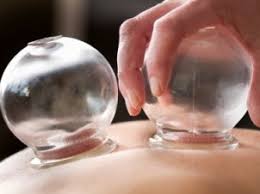
Cupping is a popular detoxing of the body in Malaysia

What are Traditional Medicine, Complementary Medicine and Alternative Medicine?

Traditional Medicine (TM) has different definitions to different people. However the World Health Organisation defines TM as “the sum total of knowledge, skills and practices based on the theories, beliefs and experiences indigenous to different cultures that are used to maintain health, as well as to prevent, diagnose, improve or treat physical and mental illnesses”

TM is therefore a comprehensive term that refers to a diverse form of health practices, approaches, knowledge and beliefs incorporating plant, animal, and/or mineral based medicines, spiritual therapies, manual techniques and exercises applied singularly or in combination to maintain well-being, as well as to treat, diagnose or prevent illness that has long established in a country.  Some of the best-known TM systems include Traditional Indian Medicine (Ayurveda), Traditional Chinese Medicine (TCM), and Traditional Arabic Medicine (Unani). Traditional Malay Medicine (TMM) also falls under this category.

It is an accepted fact that countries in Africa, Asia and Latin America use TM to help meet some of their primary health care needs. In Africa, up to 80% of the population uses TM for primary health care.

Health care practices that are not part of the country’s conventional health care system or modern medicine are often referred to as Complementary and Alternative Medicine or CAM. Strictly speaking however Complementary Medicine (CM) is different from Alternative Medicine (AM) though sometimes, the terms CM or AM are used interchangeably with TM. CM is by definition non-conventional medicine practice used together with conventional medicine practice while AM is used in place of conventional medicine practice.

Complementary and Alternative Medicines (CAM) come in a wide variety of forms. The 5 main categories include the following:

Alternative medical systems

Homeopathy and Naturopathy are among the healing practices that evolved from AM. Others may include The Traditional Malay Medicine (TMM), The Indian Traditional Medicine (Ayurveda) and The Traditional Chinese Medicine (TCM). Within TCM are Acupuncture and Acupressure.

Acupunctureis a TCM technique that uses thin, sterile needles to stimulate specific points around the body. The goal is to help the body’s natural healing process kicks in. Acupuncture is believed to encourage the release of endorphins, natural painkillers that can also increase feelings of well-being. Studies have shown that acupuncture can be effective in treating a number of conditions, like neck and back pain, nausea, anxiety, depression, insomnia as well as infertility. Somewhat similar to Acupuncture, Acupressure is a therapy in which the same acupoints are stimulated by hand. The therapy may be effective in the same way, but to a lesser degree than Acupuncture.

Mind-body medicine therapy

Hypnosis is a popular type of mind-body therapy. Others may include Meditation, Yoga and Music Therapy.

Yoga is often practiced as a form of exercise and a means of reducing stress. However Yoga is also used in CAM. Indeed, some research indicates that Yoga may help manage conditions like anxiety, insomnia, migraines, and depression.

Biologically-based therapies

Biologically-based therapies in CAM use substances found in nature, such as herbs and vitamins. Others in this category may include Aromatherapy, and Nutritional Therapy.

Herbal Medicine, also called Botanical Medicine or Phytomedicine, refers to using a plant’s seeds, berries, roots, leaves, bark or flowers for medicinal purposes. It is used to treat allergies, asthma, eczema, premenstrual syndrome, rheumatoid arthritis, fibromyalgia, migraine, menopausal symptoms, chronic fatigue and irritable bowel syndrome. In The United State this category of CAM is the most popular and most widely used.

Manipulative and body-based methods

Manipulative and body-based methods in CAM are based on manipulation and/or movement of one or more parts of the body. Some examples include chiropractic or osteopathic manipulation, massage and cupping.

Cupping is performed by applying cups made of glass or similar tools to selected skin points and creating a vacuum, either by heat or by suction. There are two methods of cupping – dry or wet. Dry cupping does not draw blood while wet cupping removes blood stasis, which is an accumulation of toxins in the body. Most commonly, cups are made out of glass. However, before the use of glass, cups made of bamboo, clay, or animal horns were used. Some uses of cupping are for the treatment of lower back pain, neck and shoulder pain, headache and migraine. Cupping is also reported to help stimulates blood circulation, aids in detoxification, and promotes healing

Energy therapies

Energy therapies involve the use of energy fields. Examples include Qi Gong, Reiki, Therapeutic Touch, Aura Metaphysic and Color Vibration Therapy.

Reiki is an energy medicine practice that originated in Japan. In Reiki, the practitioner places his hands on or near the person receiving treatment, with the intent to transmit ki, believed to be life-force energy.

Adoption of Traditional and Complementary Medicine (T&CM) – The Malaysian Perspective

In Malaysia the use of Traditional and Complementary Medicine (T&CM) is widespread and increasing. Malaysia’s rich tropical biodiversity is a reliable source for natural health products and the government is now aware of its full potential. The high demand for T&CM has led to tireless efforts by the Malaysian government to integrate it into the national healthcare system. Hence, efforts were and are ongoing to take TM and CM mainstream with the view of TM and CM complementing and not to replace the role of conventional medicine practices. Towards this end TM and CM are grouped together under the umbrella of Traditional and Complementary Medicine (T&CM). These health systems and practices used to be outside the conventional modern medical system.

Several initiatives and measures were taken to ensure safety and quality of T&CM practices in the country. These include the establishment of the Traditional and Complementary Medicine Division (T&CMD) by the Health Ministry in 2004 and the gazettement of Traditional and Complementary Medicine (T&CM) Act (Act 775) on 10 Mac 2016 and enforced on 1 August 2016. Under the act the recognised T&CM practices have been categorised into six main groups based on the main ethnic groups and concept of practice. The six practices are Traditional Malay Medicine (TMM), Traditional Chinese Medicine (TCM), Traditional Indian Medicine (TIM), Homeopathy Medicine and Islamic Medicine

Status and progress of T&CM in Malaysia.

The mainstream healthcare system in Malaysia is the modern or conventional medicine. However the Health Ministry Malaysia advocates T&CM as a complement to modern medicine and strives to not only make safe and quality T&CM services accessible to the public, but by integrating them into the national health care system with the aim of achieving holistic health care for all Malaysians. 

The Traditional and Complementary Medicine (T&CM) Act 2016 (Act 775) which governs T&CM practices and practitioners in Malaysia, was gazetted on 10 March 2016 and enforced on 1 August 2016.  Malaysia is one of the very few countries to regulate diverse practices and practitioners of T&CM. The enforcement of the Act will be conducted in phases.  

As of July 2017, 15 hospitals have successfully combined T&CM practices within the national healthcare system. Currently, there are seven (7) modalities of T&CM practices offered in T&CM units of government hospitals, namely:

  1. Traditional Massage for chronic pain and stroke
  2. Acupuncture for chronic pain and stroke
  3. Herbal Therapy as an Adjunct Treatment for Cancer
  4. Traditional Postnatal Care
  5. Shirodhara
  6. External Basti Therapy
  7. Varmam Therapy

While the following are the government hospitals where some T&CM services are available (The five main services currently offered are Malay Massage, Malay Postnatal Care, Acupuncture, Chinese Herbal Therapy, and Shirodhara):

  1. Hospital Kepala Batas, Pulau Pinang
  2. Hospital Sultanah Bahiyah, AlorSetar
  3. Hospital Putrajaya, Putrajaya
  4. Hospital Rehabilitasi Cheras, Kuala Lumpur
  5. National Cancer Institute, Putrajaya
  6. Hospital Port Dickson
  7. Hospital Sultan Ismail, Johor Bharu
  8. Hospital Sultanah Hajjah Kalsom, Cameron Highlands
  9. Hospital Sultanah Nur Zahirah, Kuala Terengganu
  10. Hospital Perempuan Raja Zainab II, Kota Bharu
  11. Hospital Jasin, Melaka
  12. Hospital Umum Sarawak, Sarawak
  13. Hospital Duchess of Kent, Sabah
  14. Hospital Sungai Buloh
  15. Sabah Women and Children Hospital 

Notes:  The Malaysian model of integrating conventional health practices and CAM may signal the move towards Integrative Health Care. Integrative Health Care is defined as a comprehensive, often interdisciplinary approach to treatment, prevention and health promotion that brings together complementary and conventional therapies.

Why Traditional and Complementary Medicine?

The National Health and Morbidity Survey conducted by the Ministry of Health Malaysia in 2015 on Traditional and Complementary Medicine had revealed some interesting findings. Among the reasons given for the use of T&CM practices was mainly to maintain wellness while the use as treatment was still low. For those who seek T&CM practices as a treatment, the percentage of use as primary treatment or complementary treatment were almost equivalent. The number of people who used T&CM as an alternative treatment without seeking treatment in conventional medicine is less than 20%.

Also, Malaysian population are most likely to use T&CM for health problems related to musculoskeletal system problems such as myalgia, join pain muscle ache and back pain. This is similar to the reported reason for T&CM use worldwide especially in USA.

About the guest contributor

Mr Ahamad Rozi Daud is a keen practitioner of traditional medicines in Kuala Terengganu, Malaysia. He is a stingless bee honey producer. This honey is considered to have special health properties.
“The old men and the sea”: Terengganu’s coastal fishermen

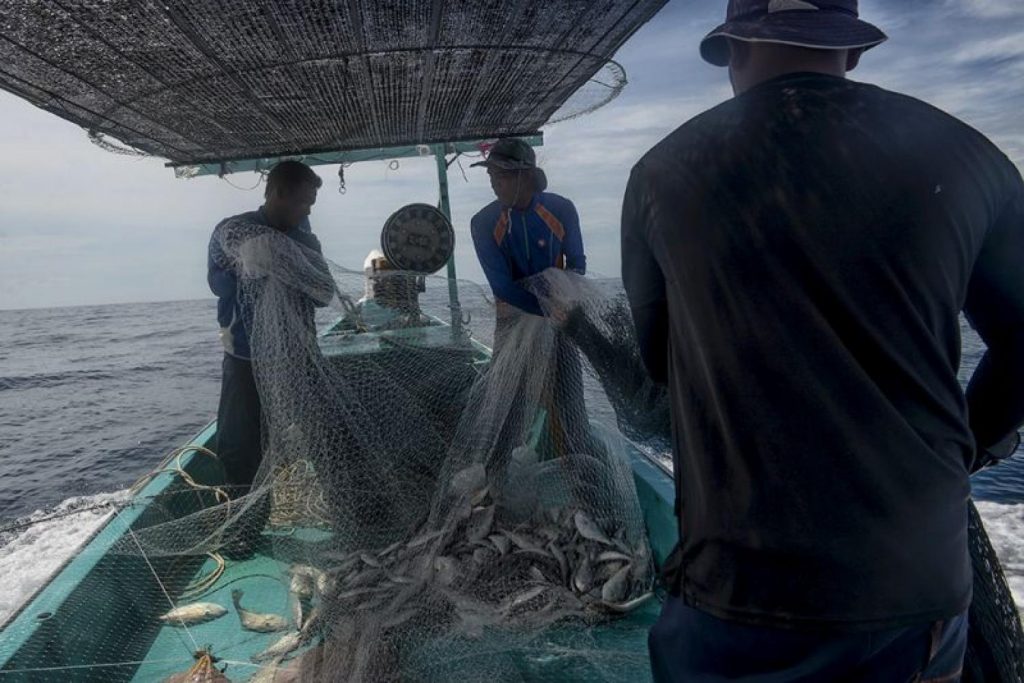
Pulling in the day’s catches on the high sea of South China Sea. Picture is captured from Malaysian Insight, taken by Nazir Sufari on 21st October, 2017.

Long coastline, largest number of fishers

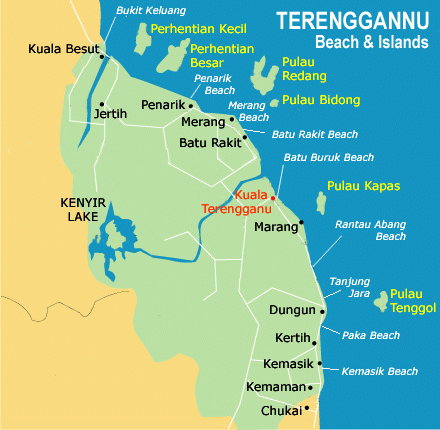
The state of Terengganu in the east coast of Peninsular Malaysia has a long coastline stretching for about 244 km. Famous for its white sandy beaches, the long coastline facing the vast South China Sea is dotted with quaint fishing villages, turtle landing sites and quite a few beach hotels, resorts and chalets. The wide expense of the South China Sea is rich in natural resources of different marine life. Naturally therefore, fisheries has developed to be an important food and also income sources that contribute significantly to the livelihoods of local coastal communities for decades and through generations. About 11,000 locals are earning their living from the sea as coastal fishers or more commonly called coastal fishermen, the largest in the peninsular (fishing activities within 30 nautical miles from shore is classified as coastal fishing or inshore fishing while beyond 30 nautical miles as offshore fishing or more commonly known as deep sea fishing)

Operational zones, boats sizes & gears

The Malaysian fishing waters are divided into zones to facilitate orderly fishing, avoid unequal competition between diverse players and also to avoid conflicts.

Zone A is for fishing operation within 5 nautical miles from shore. This zone is for the traditional fishers and owner operated boats using traditional gears like hooks and lines and fish traps or bubu. An estimated 55% of Terengganu coastal fishers are from this category.

Zone B is between 5 – 12 nautical miles from shore for owner-operated commercial fishing vessels of less than 40 GRT (Gross Registered Ton) using non motorised gears as trawl nets, purse seine nets, drift nets, gill nets as well as hooks and lines. It is estimated that 35% of Terengganu coastal fishers are from this second category.

Zone C, between 12 – 30 nautical miles from shore is for commercial fishing vessels of between 40 – 70 GRT. Motorised fishing gears are allowed such as trawl nets, purse seine nets, drift nets as well as gill nets. Only an estimated 10% of Terengganu coastal fishers are engaged in this sector.

Zone C2 is for vessels of more than 70 GRT and are not included in the discussion here as these are deep sea fishing vessels operating beyond the 30 nautical miles from shore in the EEZ (Exclusive Economic Zone). These are offshore fishers and not coastal fishers.

Thus, most of Terengganu coastal fishers or about 90% of them are operating less than 12 km from shore under class A and class B categories using boats of less than 40 GRT. And when categorised according to boat sizes, 72% of Terengganu coastal fishers are using boats of 15 GRT and lower. Only 18% are operating with boats of 16 – 40 GRT while 10% with boats of 40 – 70 GRT (Only boats of 40 – 70 GRT are considered medium sized boats, while boats of under 40 GRT are considered small boats)

Seasonal and weather dependent occupation

In general, November to February is the North East Monsoon season in Terengganu. During this period wind speed can reach 40 knots or more and sea waves can reach 4 meters in height. This is too rough and dangerous for A and B class fishers with boats of under 40 GRT to go out to sea to fish. The downtime period of about 4 months leaves these fishers without incomes. Few of these fishers are able to seek other alternative incomes or jobs during this period. Most will only tend to their boats and mend their nets while waiting for the opportunity to resume fishing again – the only skill they know or posses for most. For most as well, incomes from the active fishing period from March till October will not be able to help them tide this rough period. Thus, many will be dependent upon the allowance from the government to survive.

All in a day’s work for coastal Terengganu fishers

A typical day for these traditional fishers and majority of B zone fishers of Terengganu begins with them setting out very early in the morning in their boats so as to be at their chosen fishing spots before the sun rises. Most are already old and very few young people are interested in this kind of job as it involves very hard work. For traditional fishers it is a task carried either individually or accompanied by another crew using a boat fitted with an outboard motor. For drift or gill netters with boats of under 15 GRT a four or five men crew is the norm. A purse seiner however requires a lot more crew. A 25 GRT purse seine boat for example requires a crew of 14. For these non trawlers, it is their routine to head to artificial reefs or to spots they have laid their unjangs to carry out their fishing business. Unjang or also unjam is a crude form of fish aggregating device made from palm fronds tied with tree branches that will attract marine life to feed, shelter or even for shade when submerged in the seawater – a lure of sort if it is temporary and doubled as an artificial habitats for marine life if permanent.

For traditional fishers this is the spot for them to lay, check or to retrieve their fish traps or bubus and gather the catches. Similarly to hooks and lines fishers it is the place to throw their lines and reel in the catches. For drift and gill netters as well as purse seiners they would be very busy laying their nets and after a couple of hours pulling in the catches. This process is then repeated for a couple of times but at different spots. And by mid day many of them would call it a day and would begin preparing to head to shore after way past noon. Often these fishers reach the shore and the jetties in the evening to the waiting middle men or buyers. Here they are rewarded for what they have got or caught. A good day’s catch would bring home the smiles on their face. If not they just have to put on a brave face and try their luck another day. Such is their life – unpredictable and uncertain.

Fishermen’s woes

The life as coastal fishers of Terenggganu is hard. Not only is the cost of living high, their incomes are also falling and lower than before. These fishers are bringing back much lower catches now, that even the current high fish prices are not enough to compensate them for the lower quantity of fish landed. A common argument put forward for the dwindling fish resources in coastal Terengganu waters is due to over fishing. Statistic wise, that is quite debatable as the number of coastal fishers in Terengganu is quite stable for a long time. So too are the fish gears issued. And the Fishery Department is constantly monitoring and controlling the issuance of license for fishing permits as well approvals for fishing gears.  But opinion of over fishing has its merit if one considers the issue of encroaching foreign fishing boats from Vietnam and Thailand. These illegal fishermen are using big trawlers fitted with illegal nets that sweep the sea bed and hauling everything, unjangs, fish traps, juvenile fish and more, leaving the sea bed bare and clean. As a result the sea is pretty much destroyed of its complex marine ecosystem and deprived much of its needed marine life to breed and regenerate. Some Malaysian trawlers from outside the state are reported to be doing similar thing and illegally encroaching into the areas reserved for traditional fishers at night and when there in no enforcement.  Hence, enforcement or more appropriately the lack of it is the issue here.

So what is the future for them?

These coastal fishers are important to the country and need to be protected and helped for the interest of food security of the country. We already have good system and regulation in place. It only needs fine tuning from time to time. What is important is for all parties to abide by the rules and regulation. Proper enforcement of the regulation is therefore the key to solving the problem.

About the guest contributor

Mr Ahmad Rozi is a stingless bee farmer in Terengganu, Malaysia. He writes on interesting topics about foods, places and traditional medicines in his state and region.

Murraya koenigii: first-aid kit plant around the house

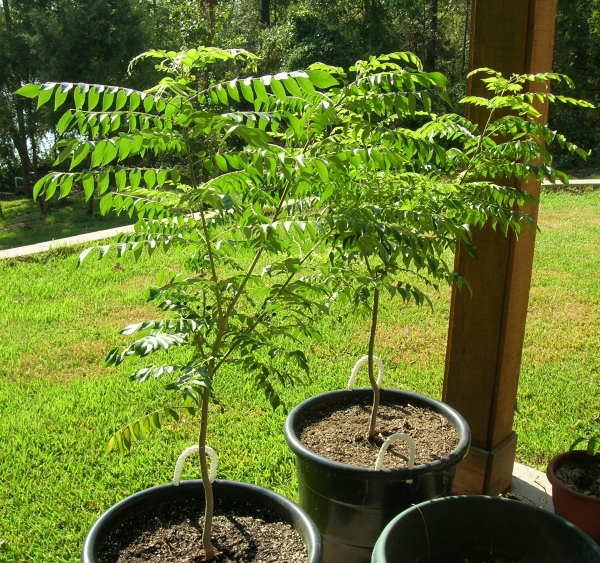
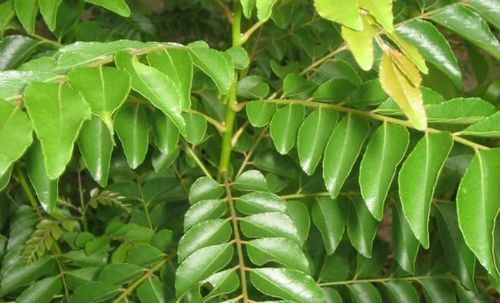
A growing tree of murraya koenigii

Murraya koenigii, common name curry leaf tree in English or just curry tree is actually a shrub which can grow to a height of 2.5 metres. It is also known as daun kari, Indian curry tree, curry bush, karapincha, karwa pale, garupillai, kerupulai, kadi patta or sweet neem. It belongs to rutaceae family and is believed to be native to India. The tree thrives well in tropical and subtropical climates and can be widely found in the Indian Subcontinent and South East Asia. They are also cultivated in Australia, Nigeria and China. The green leaves are pinnate with 11 to 21 leaflets of 2cm to 4 cm long and 1cm to 2 cm broad. The leaves are highly aromatic when rubbed or crushed. It can be propagated from stem cutting, seeds or root sprouts. The tree produces tiny white flowers which become red fruits when young and black when ripe.

The fresh leaves of curry leaf tree are used both as herb and spice for food seasoning and flavoring in South Indian and Southeast Asian cuisines. As the name suggests, the leaves are almost always a must have when cooking curry. Curry is a name of a dish originating in the Indian subcontinent and now spread to Southeast Asia. It is a combination of spices or herbs, usually including ground turmeric, cumin, coriander, ginger, and fresh or dried chilies with curry leaves stir fried with vegetable oil, mustard seeds and chopped onions at the beginning of its preparation. Dried curry leaves are, however, inferior in aroma and flavor and so not often used.

Note:

  1. It is important not to confuse this plant with another plant that is also known as “curry plant” (Helichrysum italicum) which has strong smell of curry powder but is not in any way used in making curry dishes.
  2. Genus Murraya is named in honour of Johan Andreas Murray (1740 – 1791), Professor of Botany at Gottingen while species koenigii is named in honor of Johann Gerhad Konig (Koenig) (1728 – 1785), who was a missionary and botanist in India. 

Nutritional Value and Chemical Contents

There are more to these humble leaves than just as food seasoning and flavoring. For starters, the leaves have 66.3% moisture content, 16.0% carbohydrates, 6.4% fiber, 6.1% protein and 1.0% fat. It is rich in minerals including calcium, phosphorous, iron, magnesium, copper and various vitamins such as B3 (nicotinic acid) vitamin C, vitamin A, vitamin B and vitamin E.

The plant also contains cinnamaldehyde and numerous carbazole alkaloids, including mahanimbine, girinimbine and mahanine. It also has linolool, which gives it its unique aroma. These compounds are present in the leaves, stems, bark, and seeds and exhibit antioxidant, anti-microbial, anti-cancer and anti-inflammatory properties which are useful for treating and preventing many diseases and health disorders. The plant is widely used in Ayurvedic and other alternative or traditional medicine.

Medicinal Uses of Murraya Koenigii

Though the leaves have always been sought after for their unique flavour and usefulness in cooking, there are also a number of health benefits that make them highly useful. Some of the well-known remedies are listed below:

  • Curry leaves can aid weight loss. Carbazole alkaloids work against weight gain and adding the leaves into the diet also help in regulating cholesterol levels in the body.
  • Curry leaves are said to support bowel movement and help stimulate digestive enzymes when consumed. They are good for treating an upset stomach such as diarrhea, constipation and dysentery.
  • Carbazole alkaloid compound in curry leaves speeds up the process of healing wounds as topical application. Curry leaves have a similar effect on inflamed skin, boils and first-degree burns
  • They also help provide relief from morning sickness and nausea to women during pregnancy.
  • The anti-hyperglycemic properties of the leaves are beneficial in controlling blood glucose level. This is perhaps one of the most important health benefits of consuming the leaves.
  • The leaves are also thought to be a good food supplement for eyesight as it contains vitamin A.
  • Essential oil of curry leaves can help in reducing stress effectively. This is probably because of the calming effect of the scent of curry leaves (the scent of curry leaves is due to the present of linolool compound).
  • Curry leaves are also good for the hair. It is said to promote hair follicle growth and repair and help prevent or at least delay graying of hair either by rubbing or massaging the leaves in paste form or in powder form mix with oil to the scalp.
The curry plant can grow in a pot around the house

The Verdict

Whether for food flavoring or for its many health benefits, this is one tree worth having in the compound of one’s home. It’s like having a first-aid kit by your side all the time. Growing it is not difficult as it is quite hardy and can be grown on the ground or in pots.

About the guest contributor

Mr Ahmad Rozi is a stingless bee farmer in Terengganu, Malaysia. He writes on interesting topics about foods, places and traditional medicines in his state and region. You can place an order with us at 6016 3220 952 to order his honey.

Serai kayu – remedy for treating hypertension in East Coast of Malaysia

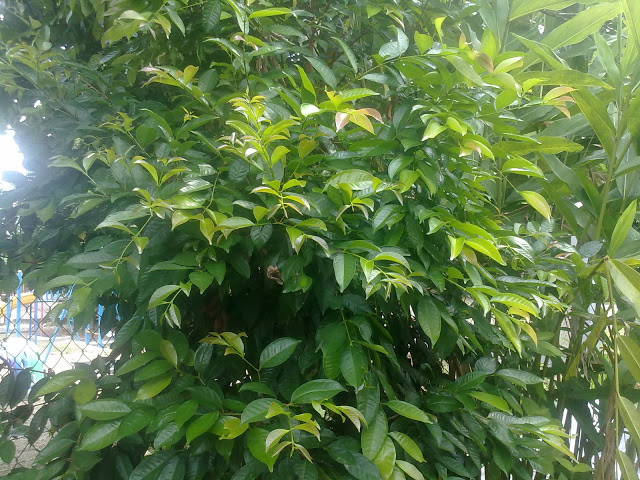
A young serai kayu tree. Its leavers are used as condiments in local dishes

Syzygium polyanthum, common names Indonesian bay leaf in English, serai kayu in Malay is a mildly aromatic species of a wild flowering plant native to South East Asia under the Myrtaceae family. The plant is called by various names in Indonesia and Malaysia. In Indonesia its other names are daun salam, meselengan, ubar serai, gowok, manting and kastolam. In Malaysia the name serai kayu is more widely used in the east coast states of Kelantan and Terengganu in Peninsular Malaysia. In the west coast it is often call daun samak or daun salam. Used as food seasoning, serai kayu is often confused with Mediterranean bay laurel (Laurus nobilis, Lauraceae) which is used as food seasoning and flavoring. Serai kayu may to a certain extend has similar foliage and aroma to bay laurel but is from a different family.

The serai kayu plant or tree can grow to a height of 30 metres. The leaves are elliptic of 5 to 13 centimeters long and 3 to 6 centimeters wide. They are dark green in color and have a distinct aroma when crushed. The leaves contain citral and eugenol oil, tannin and flavanoid. The tree bears clusters of small, cream-colored flowers which attract bees, butterflies, wasps and other insects for nectar (good news for all beekeepers). The flowers produce whitish green drupes (small single seed fruits like berries) that turn to pink and dark red when fully ripe which attract birds, squirrels et cetera. The tree is of medium hardwood and suitable for making furniture and other house items. The leaves are the most important and sought after part of the plant, while the barks, roots and fruits are less frequently used though has medicinal value as well. The plant is easy to propagate, either from fruits (seeds) or cuttings.

Serai kayu trees used to be quite common in the country but with the flow of time, many were discarded and replaced with other more commercially valuable trees and somewhat forgotten. Nowadays, except in Kelantan and Terengganu, they are quite hard to find in the peninsular. The trees are relatively easy to find in these two states as their leaves feature prominently in many local dishes. Also in the two states their uses in traditional medicine are better known, hence are often kept or even planted at the back of the house for future uses when the need arises.

Use of serai kayu for cooking

In the states of Kelantan and Terengganu, in certain dishes the leaves are used more than just for seasoning. In dishes such as nasi kerabu, laksa and laksam for example, serai kayu leaves are such important ingredients that without them the dishes are considered incomplete. The leaves are also taken with rice as salads or ulam with or without sambal belacan (a side dish of blended or pounded chilly, shrimp paste, salt and squeezed lime juice taken with rice to complement the fish or ulam) or budu (fermented anchovies). In Indonesia the leaves are used as seasoning in cooking, usually in chicken, meat, fish and vegetable dishes. They give out a distinct pleasant aroma, much in the same way as bay leaves (bay laurel) are used in Mediterranean dishes.

Use of serai kayu in folk medicine

In the east coast states of Kelantan and Terengganu, the leaves of serai kayu are used to treat hypertension, high cholesterol, diabetes mellitus, gastritis, and diarrhea among others.

As for hypertension it has been a subject of study by a team of researches from the Universiti Sains Malaysia (USM) Kubang Krian campus in Kelantan. The team had done a laboratory study on the treatment for hypertension using serai kayu on rats. In the study it was found that serai kayu was effective in lowering the blood pressure of the rats by as much as 30%. This research by the USM team was conducted in relation to the findings obtained from the National Health Morbidity Surveys (NHMS) done in 1996 and 2006. The findings revealed inter alia, a much lower than expected incidence of hypertension in Kelantan vis-à-vis the national average. The figure for Kelantan was only 13.9% while national average was 40.5%. (In the first NHMS conducted in 1996, 32.4% or 2.6 millions of Malaysian above 30 years old had hypertension. In the second survey done ten years later, the percentage of Malaysian above 30 that had hypertension had jumped to 40.5%. Ironically however for the state of Kelantan, from out of 2,508 subjects surveyed, only 13.9% had hypertension). This revealing article had appeared in the online version of Berita Harian, a Malaysian newspaper on 30th, September 2014.

From the research conducted one can surmise that consuming serai kayu on a regular basis, as well as taking serai kayu as remedy for hypertension were likely factors that contributed to the lower incidence of hypertension recorded in the state. It is common knowledge that many people in Kelantan and Terengganu took to serai kayu as a remedy for hypertension. Serai kayu features prominently in many foods there as well.

Awareness is on the rise

People are now rediscovering serai kayu as a prized plant, not just as a food seasoning but also as a remedy for various illnesses. Its medicinal value has long been known in traditional medicine but the knowledge was not widespread and developed enough to gain wider acceptance. This could be due to the lack of Research and Development (R&D) as well as communication limitation. However, with the digital technology and the widespread use of social media, time is changing and the futures looks brighter. Now, more and more people are talking and discussing about the subject in blogs and facebooks. Even universities and other research institutions are undertaking various researches on this subject. All aimed at either to unearth more of its secrets, to confirm what has already been known or to commercialize the findings.  It is interesting to see that serai kayu saplings are now easily available in nurseries, both conventional and online, and people are buying them. Serai kayu products in powder and extract forms are also already on the market.

Besides uses in culinary and medicine the plants have the potential to be used as ornamental trees and beautify the landscape. They have nice foliage and crowns to do the job especially when they bloom. They can also be grown to provide shades in gardens, parks, parking lots et cetera.

Comments by Dato’ Dr Anuar Md Nor

The serai kayu is a multi-purpose tree. Its leaves and fruits are used in dishes and treatment of various aliments. Its fruits feed various birds. Unfortunately, the serai kayu tree has been abandoned for more commercial trees.

Everyone must plant the serai kayu tree to sustain its species for our future generation.

About the guest contributor

Mr Ahmad Rozi is a stingless bee farmer in Terengganu, Malaysia. He writes on interesting topics about foods, places and traditional medicines in his state and region.

Nasi dagang: “Trader’s dish” of Terengganu

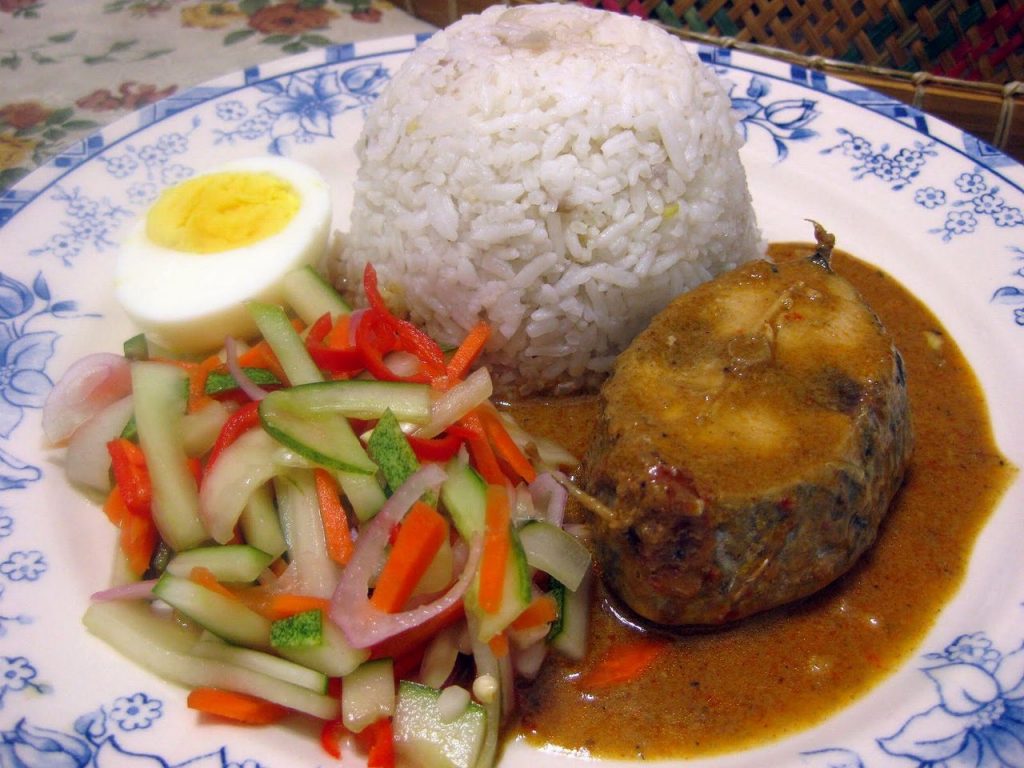
The simple but delicious nasi dagang

Nasi dagang, “trader’s dish” is a dish of rice and curry. Ubiquitous in the east coast of Peninsular Malaysia, it is a popular meal for breakfast as “nasi lemak” is in the west coast. It can even be found in the Southern Thai provinces of Narathiwat, Yala and Pattani. Nasi dagang or “trader’s rice” in Malay could have originated from the dish concocted by the early traders for their packed provision while plying their trades at the time, hence the name of the dish that has stuck until today.

An indigenous dish of the region, it makes use of abundant natural resources readily available – rice, herbs and spices from the land and ikan tongkol (tuna fish) from the sea for the curry. Unique to the east coast, nasi dagang has two main versions, Nasi dagang Kelantan and Nasi dagang Terengganu. The Nasi Dagang Kekantan is made from long grain reddish brown rice.The Terengganu version of nasi dagang is a mixture of white fragrant rice and white glutinous rice. Visually, Nasi dagang Kelantan is generally reddish brown while Nasi dagang Terengganu is generally white and glossy. As for its accompanying curry, the Kelantan version uses normal curry powder while nasi dagang Terengganu uses specially concocted herbs and species

About Nasi Dagang Terengganu

In Terengganu, nasi dagang is considered its traditional rice specialty. Simple, delicious, and wholesome are among the common descriptions given to this food. True that it is a very simple dish consisting of just rice, fish curry, pickles and chilly sauce.  And yet it can be very gastronomically fulfilling – a complete meal by itself that has most of the nutritional value that matters. Visually appealing to some due to the white glossy color of the rice, it is also a versatile dish for any meal of the day, be it breakfast, lunch or dinner. And it is fitting enough for those special occasions like hari raya, thanksgivings and similar events. It is available from various outlets and settings – posh hotels, restaurants & eating shops, hawkers, kiosks, and even night markets

At its most basic, the nasi dagang Terengganu comprises of a rice dish with a side dish of ikan tongkol (tuna fish) curry and mixed pickles of cucumber, carrots and onions together with chilly sauce. Hard boiled eggs whether separate or put together into the curry with the fish can be an added option. If preferable, the tuna fish can be substituted with mackerel or other types of fish. The dish is prepared by steaming a mixture of fragrant rice and glutinous rice infused with coconut milk over low heat. The result is a white glossy rice dish that is both fragrant and creamy. Preparation of the dish will take 8 hours as the rice need to be soaked overnight (or at leas 8 hours) while the cooking itself will take about 2 hours.

The nasi dagang Terengganu has not been commercialised. Hardly any cafes or restaurants promote this delicacy in Kuala Lumpur lamented a writer in a column of an online news portal recently. That aptly describes the sad truth concerning this delicacy outside its state of origin, Terengganu. It has the potential to expand its market reach, not just confined to Terengganu but there are no takers.

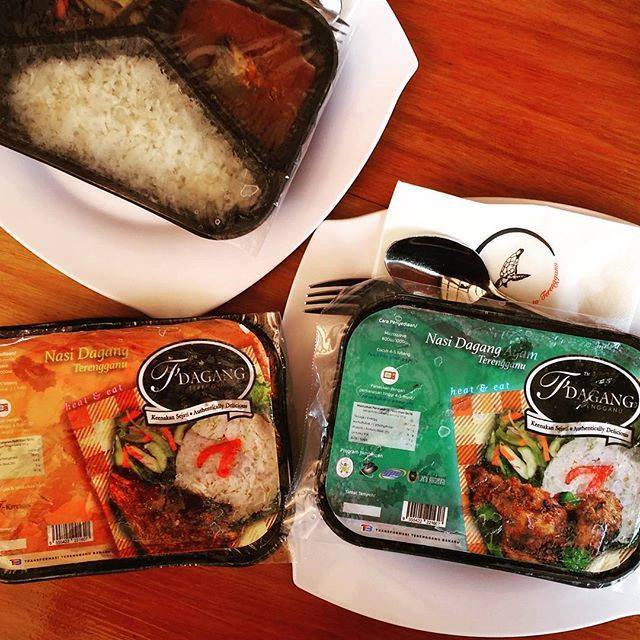
Well, that is about to change as a company owned by the state of Terengganu has ventured into the making of Terengganu traditional foods. And the company has produced a line of frozen foods that includes nasi dagang Terengganu. The frozen foods in packs form are not just for the domestic market but for the overseas markets as well. The company’s frozen nasi dagang Terengganu in packets are currently available in several selected T Mart convenient stores and Shell petrol stations in the Klang Valley and other parts of the country.

Frozen nasi dagang

For the overseas markets, a trial shipment of 20,000 packs of nasi dagang Terengganu and keropok lekor Terengganu (fish sausage) made recently to the British capital was reported to be well received. The news report also said that the foods are marketed by a UK fast food chain Chicken Cottage, which is also owned by the state of Terengganu. The frozen packs of keropok lekor and nasi dagang Terengganu are available in selected supermarkets selling frozen Asian foods.

Now that is certainly good news for all the diehard fans of nasi dagang Terengganu outside the state. Now, one can easily get this delicacy when that cravings start to act.

However, the frozen nasi dagang packs do not have the real taste of freshly prepared version. You have to be in Terengganu.

About the guest contributor:

Mr Ahmad Rozi Daud is a stingless bee farmer in Kuala Terenganu, Malaysia. He resides near Rantau Abang, Terengganu . He also provides training for those who are interested to be a stingless beekeeper or apiarist. Please contact us at 6016 3220 952 for assessment of suitability of your location for stingless bee farming.

Will the giant leatherback turtle return to Rantau Abang, Terengganu, Malaysia?

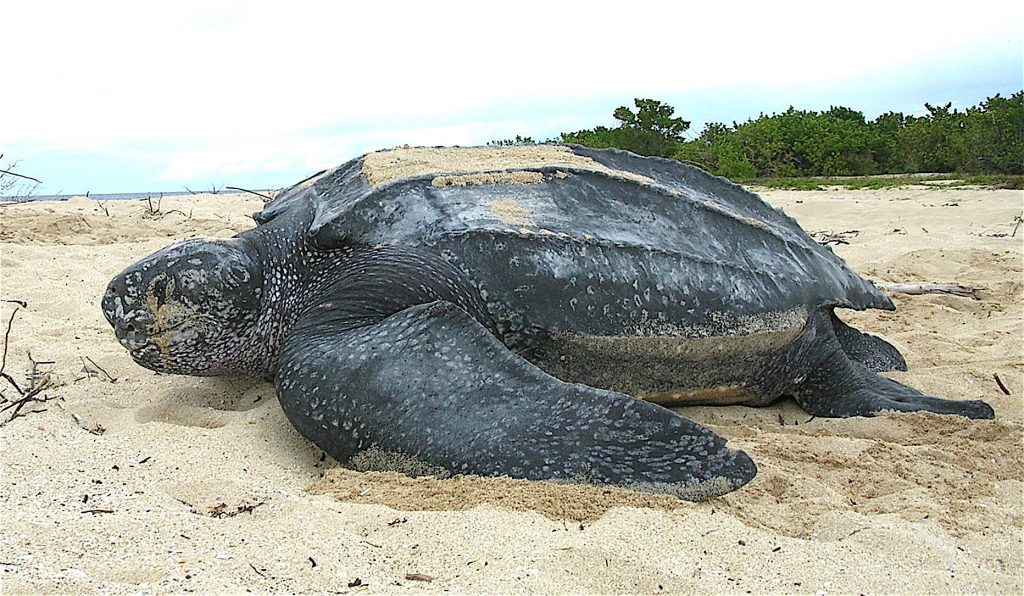
The Rantau Abang beach in the state of Terengganu, Malaysia , is one of the few places on earth that the giant leatherback turtles (leatherbacks) choose to come ashore to nest. Once, they helped put this normally quiet small village on the world map. Tourists, foreign and domestic as well as locals flocked by the thousands to this village to watch the leatherbacks come to nest and lay eggs on its beach between the months of March and October. It once had the largest nesting population in the world, hosting 10,000 nests per year.

Rautau Abang town is now a quite town

Leatherbacks’ Facts

The Leatherbacks (Dermochelys Coriacea or Penyu Belimbing to locals) are both the largest sea turtles and the oldest living reptiles. Leatherbacks can live to 50 years or more. Male leatherbacks can reach up to 2.6 metres in length and weigh 900 kg.

A leatherback is easily distinguishable by its leathery soft shell or carapace, and by its long front flippers. Seven ridges run down the length of its white spotted carapace. All other species of turtles have hard shells. Leatherbacks are found in all of the world’s oceans except the Arctic and the Antarctic. Females spend their entire lives at sea except to nest, while males never left the water.

Leatherbacks and other turtles play an important role in the marine ecosystem. They feed on jellyfish and help check its population. The leatherback’s extra-long esophagus is lined with spines to facilitate digestion of jellyfish.  Leatherbacks lay eggs on dry, sandy, tropical or subtropical beaches. They lay between two and six clutches of eggs in a single nesting season. Each clutch contains 65 to 180 eggs and is laid approximately every two weeks. Incubation takes about 60 days. As with other reptiles, the temperature during incubation will determine the sex of the turtles. For leatherbacks, temperatures above 29 degrees centigrade will result in female hatchlings. Hatchlings or baby leatherbacks are not cared for by the adults and are left to fend for themselves. The young ones that survive stay back in tropical waters until maturity. It takes 15 – 20 years for them to reach breeding age and become adults and then began their oceanic migratory journeys.

Adult leatherbacks prey on jellyfish and subsist almost entirely on them. They migrate thousands of miles in their lifetimes through ocean basins and high seas for the purpose. Migration occurs between the cold waters where mature leatherbacks feed, to the tropical and subtropical beaches in the regions where they hatch. These great swimmers complete their marathon journeys normally every 2 to 3 years to return to the same breeding grounds to nest. They can also dive much deeper than any other marine turtles. The deepest dive recorded was 1,230 meters

Odds Stacked Against Survival

Female leatherbacks lay hundreds of eggs each nesting season. Sadly however, very few of these hatchlings survive into their first year. They are very vulnerable to become prey to crabs, monitor lizards and birds while on their way out to sea, soon after hatching. In the shallow waters, many more hatchlings are eaten by fish. Only about 6% of these young leatherbacks survive their first year. Over the next 15 – 20 years more mortality among these young leatherbacks will reduce their survival rate further. And their chances of becoming adults and to regenerate will slide as well. Getting caught in trawling activities as well as succumbing to predators such as sharks are reasons for increase mortality among young and adult leatherbacks alike. Mistakenly consuming plastic bags floating in the seas and oceans as jellyfish is another contributing factor as well.

Why the Steep Drop in Nesting Numbers?

Globally, the leatherbacks are now classified as endangered while in Malaysia, where the situation is much worse; it is classified as critically endangered. Nowadays very few of these graceful leatherheads return to Rantau Abang to nest.  Where 10,000 nesting was recorded in the 1950s, this  had dropped to fewer than 10 nesting by 1999 and just 2 in 2008 and 2010. There was only a solitary nesting in 2017.

Poaching and human consumption of the leatherbacks’ eggs are often cited as the most significant factor for the species decline. Gross abuses towards the leatherbacks by the locals and tourists during nesting and when returning to sea, most likely discourage the leatherbacks from returning to nest. They were trapped in net by trawling activities, and these further add to this dwindling population of leatherbacks coming to nest. Mortality due to ingestion of floating marine debris like discarded plastic bags which resemble their favourite prey, jellyfish is also a contributing factor. Ineffective conservation efforts initiated in the 1960s had not helped either as exposure of the eggs to high temperatures inadvertently results in only female hatchlings.

The Department of Fisheries Malaysia (The Department) now has a Turtle Information Centre at Rantau Abang. Besides disseminating information concerning turtles; the Centre and the Department are also involved in conservation efforts: Rangers are patrolling the beaches to protect the turtles and their eggs from poachers when they come ashore to nest. Collection (except by licensed turtle egg collectors) or eating of turtle eggs are forbidden.

The Rantau Abang Fisheries Protected Area was established in 1991 covering the entire 30km beach and extends 18.5km out to sea. Gill nets of a mesh size 25.4cm, which killed up to 400 turtles a year, were subsequently banned from Malaysian waters altogether. The department is now enforcing these requirements and protective measures.

The Department is continuing and improving on its hatchery activities in its efforts to help increase the turtle population, particularly the leatherbacks

Will these giant leatherbacks make a come-back to Rantau Abang?

Rantau Abang is now returning to its quiet days of old – no more bustling with tourists as it used to be. And the reason is due to the dwindling number of turtles coming to nest at its beach, especially the leatherbacks. Given its relatively unspoiled and undisturbed stretch of beach, Rantau Abang is thought as the right place for leatherbacks to come to nest. The beach terrain is favorable. Its soft sandy beach is steep and is close to vegetation allowing the leatherbacks to quickly find suitable nesting spots – just a short crawl from the water edge. Minus the crowd of turtle watches and their attendant disturbing antics of old, the place would be ideal for the leatherbacks to return and nest again. So given time, these giants of all turtles might just come back more often. But for how soon I’m not willing to guess.

Dato’ Dr Anuar’s Comment 

The lesson for Rantau Abang is that it is costly for the folks of the town and Terengganu as a whole. By selling eggs of the leatherbacks continuously over many years for a fistful of RM, the town lost its important economic assets that come onshore voluntarily. Consuming the eggs means that future generation of leatherbacks is gone forever.

About the guest contributor:

Mr Ahmad Rozi Daud is a stingless bee farmer in Kuala Terenganu, Malaysia. He resides near Rantau Abang, Terengganu . He also provides training for those who are interested to be a stingless beekeeper or apiarist. Please contact us at 6016 3220 952 for assessment of suitability of your location for stingless bee farming.

Honey from Stingless Bees – A New Superfood

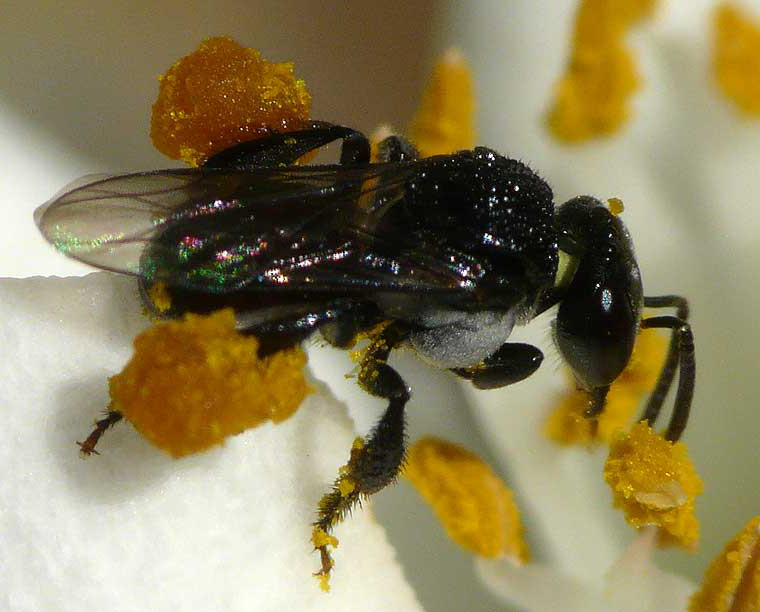
A stingless bee

Honey of the stingless bees is a sweet, viscous food substance produced by stingless bees from floral nectar. It is quite similar to honey from the common honey bees (genus Apis) in most aspects but with its own distinctive physicochemical profiles, minerals and bioactive compounds.

There are more than 500 species of stingless bees worldwide. They can be found in most tropical or subtropical regions of the world, such as Australia, Africa, Southeast Asia and tropical America. Malaysia has its share of 33 species.

Stingless bees are closely related to the common honey bees (genus Apis) as both belong to the same Apidae family. However stingless bees are categorized under the Meliponini tribe while the common honey bees (genus Apis) are from Apini. Even though they cannot sting as their name suggests, these bees are able to protect their colonies by using their strong mandibles to grip their intruders.

Stingless bees are efficient pollinators and until recently are mainly used for such purposes, though the Mayans of Central America had been known to be using their honey for medical purposes a long time ago. Stingless bees honey is now gaining popularity and more and more people are rearing stingless bees for their honey, including Malaysia. For Malaysia this phenomenon only began around 2012.

Two Recommended Species of Malaysia

Out of the 33 Malaysian species identified so far, two that stand out more are Heterotrigona Itama and Geniotrigona Thoracica. These two have been recommended and promoted by the Malaysian Agricultural Development Institute (MARDI) as more suitable for meliponiculture – the propagation and culturing of the stingless bees for their honey. These two species are known for their high honey production, more tolerance to diseases and parasites as well as for their ease of keeping. Stingless bees of Itama species can produce 0.5 – 1.5 kg of honey per hive per month, while the Thoracica species twice as much.

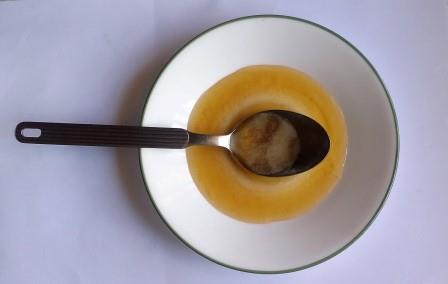
Honey from stingless bee

By-products of Stingless Bees

Besides honey as their primary products, stingless bees also produce bee bread and propolis as secondary by-products. Bee bread is an extremely nourishing food derived from pollen and serves as the main source of protein for stingless bees and their larvae. The propolis on the other hand is produced by stingless bees from resin of trees collected by their worker bees. Propolis acts as the main building block for their hives. This includes pots for storage of honey and bee pollen as well as chambers for the queen and her brood. Studies done have shown that propolis displays antioxidant and antimicrobial properties and so has useful medicinal benefits.

Color of Stingless Bees Honey

Honeys of stingless bees originate from floral nectar with light golden color as almost always the norm. However they can exhibit any color from light brown to dark brown or almost black depending on a combination of factors. Among the factors are stingless bee species, the predominant flowers visited and stage of fermentation of the honey among others. Fermentation of stingless bee honey occurs naturally while still in the pots and continues post harvest, changing the tone of its color slightly darker in the process.

Physicochemical Composition of Stingless Bees Honey

Stingless bees honey has higher water content than honey of the Apis bees. It is less sweet and contains less sugar. It has more antioxidant, antimicrobial, anti-inflammatory as well as moisturizing properties than honey of the Apis bees. Stingless bees honey also contains minerals such as potassium, calcium, sodium, magnesium as well as manganese

Why Stingless Bees Honey?

Stingless bee honey is generally more palatable because it is not overly sweet or thick and is nutritious. It is also believed to have medicinal properties more than honey of the Apis bees.

Interest as well as studies done on stingless bee honey is still quite new and there lies potential for more benefits still unknown to us today to be discovered. It is comforting to know that people are opening up to accept stingless bee honey as a worthy or even superior competitor to the Apis bee honey. The Mayans were correct in pioneering its uses long time ago and they might have just helped us found the food that could well become our new superfood for today.

About the guest contributor:

Mr Rozi Daud is a stingless bee farmer in Kuala Terenganu, Malaysia. He also provides training for those who are interested to be a stingless beekeeper or apiarist. Please contact us at 6016 3220 952 for assessment of suitability of your location for stingless bee farming.