

Snails offer path to the perfect glue

Garden snails moving; note the mucus behind

At our small fruit garden at the back of our house in Seremban, Negeri Sembilan, Malaysia, snails are a menace, eating young papaya leaves through the night. These slow-moving snails can be found in the morning before they manage to hide under the stones and small logs or run across my neighbour’s fence. We will crush them with our feet, producing a crushing sound when their protective shells are broken. But some scientists are interested to study these menacing garden snails.    

We noted an interesting article on snails, which was written by Tom Whipple in The Times on June 19, 2019.  

According to him, scientists have long envied snails. When a snail wants to travel up a wall, it secretes a sticky mucus that holds it securely but still allows it to move. When it stops, the mucus hardens and fastens it even to rough surfaces with ten times that force. When it thinks it is time to move again, it releases more mucus and heads on up the wall.

Scientists struggle to do that: the glues they make are either strong and irreversible, such as superglue, or weak and reusable. A rare exception is Velcro, which can be extremely strong and can also be reused, but it requires a strip on each of the objects being joined.

Now, inspired by the remarkable mucus of snails, a team of researchers think they have cracked a glue that is both strong and able to be reversed: a Velcro in gel form. When wet the glue is wobbly like a snail’s slime. When dry it holds tight, then when rehydrated it returns to its mucus-like state.

The glue, described in the journal Proceedings of the National Academy of Sciences, was made from a “hydrogel”, a network of chemical chains that absorbs and swells in water. In experiments its creators showed that it was strong enough to hold up the weight of a human, who dangled off a support held by two square centimetres of the dried adhesive. He did not stay long enough for it to rain: when you add water the strength decreases tenfold.

The key, said Anand Jagota, from Lehigh University in Pennsylvania, US, was to make a gel that became strong only after it had shrunk. “Most of the time, in the process of drying, something shrinks,” he said. “When a gel shrinks, if it also stiffens it develops stresses that break the bonds.” This means that even if it stuck down before, the shrunken version releases the bond.

Professor Jagota, who worked with Shu Yang from the University of Pennsylvania, US, said that their gel did not do this. “The secret is to shrink when you’re soft then stiffen when you’re not shrinking. That’s the trick, otherwise any old gel would work. That’s what we think the snail does.”

Then when you add water, “it has a memory, the material remembers its original state. Everything becomes soft and it comes off easily. To a great extent it goes back to its original shape.”

He said they thought that the glue could be used in a range of applications. “You can imagine many cases where you want a bond you can release. Bandages, for instance. You could well want something strong that you could unglue easily by pouring water on it.”

Our Comments

Given the scientific secrets of the common garden snails, now, we feel we should not crush them but release them to a place that they can enjoy eating other leaves rather than our young papaya leaves.

US-China Trade War Affects Materials for New Energy Technologies

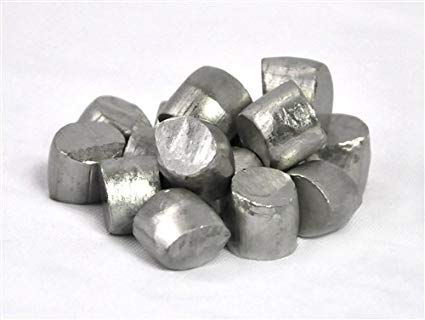
Tin metal-Malaysia used to be the largest producer of tin in the world

New energy technologies require mineral resources such as copper, cobalt and lithium. A shift in the global energy system from fossil fuels- driven by cost reductions that are making new technologies  are increasingly competitive and by government policies to fight global warming and local pollution-is expected to result in steep increases in demand for some metals and other materials.

Demand for copper, for example, could rise by 275 to 350 per cent by 2050, according to research by Yale University in the US. The World Bank estimated in 2017 that action to limit the rise in global temperature to 2OC from pre-industrial levels could a seven-fold increase in demand for cobalt and an eleven-fold increase in demand for lithium by 2050.

 Chinese companies have been investing to secure supplies of these minerals, buying up mines in countries from Australia to South America.

Simon Moores of Benchmark Mineral Intelligence, a research firm, said the importance of technologies such as electric vehicles and battery storage meant “whoever controls these supply chains controls industrial power in the 21st century”.

Concern about mineral supplies has been growing in the US administration and Congress and has been heightened by China’s warnings of plans to curb export of rare earths. China accounts for mote than 80 per cent of world rare earths production.

The US commerce department has published a report in 2018 looking at 35 critical minerals, which found that imports accounted for more than 50 per cent of US domestic demand for 29 of them, and 100 per cent for 14 of them.

The list of the 35 critical minerals include the following:

  1. Aluminum (bauxite), used in almost all sectors of the economy.
  2. Antimony, used in batteries and flame retardants.
  3. Arsenic, used in lumber preservatives, pesticides and semiconductors.
  4. Barite, used in cement and petroleum industries.
  5. Beryllium, used as alloying agent in aerospace and defense industries.
  6. Bismuth, used in medical and atomic research.
  7. Cesium, used in R&D.
  8. Chromium, used primarily in stainless steel and other alloys.
  9. Cobalt, used in rechargeable batteries and superalloys.
  10. Fluorspar, used in the manufacture of aluminum, gasoline and uranium fuel.
  11. Gallium, used in integrated circuits and optical devices like LEDs.
  12. Germanium, used fir fiber optics and night vision applications.
  13. Graphite (natural), used for lubricants, batteries and fuel cells.
  14. Hafnium, used for nuclear control rods, alloys, and high-temperature ceramics.
  15. Helium, used fir MRIs, lifting agent, and research.
  16. Indium, used mostly in LCD screens.
  17. Lithium, used primarily for batteries.
  18. Magnesium, used in furnace linings for manufacturing steel and ceramics.
  19. Manganese, used in steelmaking.
  20. Niobium, used mainly in steel alloys.
  21. Platinum group metals, used for catalytic agents.
  22. Potash, mainly used as fertilizers.
  23. Rare earth elements group, primarily used in batteries and electronics.
  24. Rhenium, used for lead-free gasoline and superalloys.
  25. Rubidium, used for R&D in electronics.
  26. Scandium, used for alloys and fuel cells.
  27. Strontium, used for pyrotechnics and ceramic magnets.
  28. Tantalum, used in electronic components, mostly capacitors.
  29. Tellurium, used in steelmaking and solar cells.
  30. Tin, used as protective coatings and alloys for steel.
  31. Titanium, used as a white pigment or metal alloys.
  32. Tungsten, used to make wear-resistant metals.
  33. Uranium, mostly used for nuclear fuel.
  34. Vanadium, mostly used for titanium alloys.
  35. Zirconium, used in high-temperature ceramic industries.

Source: www.usgs.gov.

Reference for article: Ed Crook Financial Times, June 12th, 2019.

States Create Useful Money

We have created a new category, Economic Matters, which features economic topics which would be useful to innovators in understanding how economies work.

Today, we highlighted the article written by Martin Wolf, a well-known economist of Financial Times, on 29th, May, 2019.

According to Martin Wolf, the state is the most important of all our institutions.  It is the ultimate guarantor of security. But its power makes it frightening. For this reason, people sometimes pretend it is weaker than it is.

In one area of economics, this is particularly true; money. Money is a creature  of the state. Modern monetary theory, a controversial account of this truth is analytically correct, so far it goes. But where it does not go is crucial: money is a powerful tool, but it can be abused.

L Randall Wray of the University of Missouri-Kansas City set out these ideas in Modern Monetary Theory (MMT). They have the following fundamental elements:

First, taxes drive money. This doctrine is called “chartalism”. Governments can force their citizens to use the money it issues, because that is how people pay their taxes. The state’s money will thus become the money used for domestic transactions.

Banks depend upon the government’s bank-the central bank- as lender of last resort. The lOUs  of banks-the predominant form of money in today’s economies-are imperfect substitutes for such sovereign money. They are imperfect, because banks may become illiquid or insolvent and so may default  That is why banking crises are common.

Second, contrary to conventional wisdom, no mechanical relationship exists between holdings of central bank  liabilities by banks (that is, reserves) and the creation of bank money. Since the financial crises, central bank balance sheets and bank reserves have grown hugely, but broader monetary aggregates have not. The explanation is that the dominant driver of the money supply is the (risk adjusted) profitability of lending, which is high in boom times and low in busts. The weakness of credit also explains why inflation has remained low.

Third, governments need never default on loans in their own currency. The government does not need to raise tax or borrow to pay its way; it is possible for it to create money it needs. This makes it simple for governments to run deficits, in order to ensure full employment.

Fourth, only inflation sets limits on a government’s ability to spend. But, if inflation emerges, the government has to tighten demand, by raising taxes.

Finally, governments do not need to issue bonds in order to fund themselves. The reason for borrowing is to manage demand, by altering interest rates, or the supply of reserves to the banks.

This analysis is correct, up to a point.  It has also implications for policy. A sovereign government can always spend, in order to support demand. Again the expansion of the central bank balance sheet does not make high inflation likely, let alone inevitable.

Some believers in MMT argue that the power to create money should be used to offer jobs  guarantee or finance programmes such as the Green New Deal proposed by Democrats in the US. But such ideas do not follow from their analysis. These are suggestions for where the state should spend.

What then are the problems with MMT?

These are twofold: economic and political

An important economic difficulty, clear from the painful western experience in the 1970s, is that it is hard to know where “full employment”  lies. Excess demand may exist in some sectors or regions, and deficient demand elsewhere. Full employment is a highly uncertain range, not a single point.

A still more important economic mistake is to ignore the expectations that drive people’s behaviour. Suppose holders of money fear that government is prepared to spend on its high priority items, regardless of how overheated the economy might become. Suppose holders of money fear that the central bank has also become entirely subject to the government’s whims (which has happened often enough in the past). They are then likely to dump money in favour of some other asset, causing a collapsing currency, soaring asset prices and booming demand for durables. This many not lead to outright hyperinflation. But it would lead to a burst of high inflation, which becomes entrenched.

The focus of MMT’s proponents on balance sheet and indifference to expectations that drive behaviour are huge errors.

The mistakes are economic ones but there is a related and far worse political error, as Sebastian Edwards of University of California, Los Angeles, has argued. If politicians think they do not need to worry about the possibility of default, only about inflation, their tendency may be to assume output can be driven far higher, and unemployment far lower, than it is possible without triggering an upsurge in inflation.

That happened to many western countries in the 1970s. It has happened more often to developing countries, especially in Latin America. But the economic and social consequences of big spikes in inflation can be very damaging.

Yet the same is also true for high employment.

So in managing a modern monetary economy, one has to avoid two gross errors. One is to rely on private sector to much, since that can all too easily end up with highly destructive financial booms and busts.

The opposite error is to rely on government-led demand too much, since that may well generate destructive inflation booms and busts. 

The solution, nearly all the time, is to delegate the needed discretion to independent central banks and financial regulators. Yet proponents of MMT are right that during a period of structurally feeble private demand (as in Japan since 1990) or a deep slump, a sovereign government must and can act, on its own or in cooperation with the central bank, to offset private weaknesses. 

There is then no reason to fear the constraints. It should just go for it.