
How the World is Waking Up to Initial Coin Offering

This article is courtesy of Jagdish Pandya  and Shahin Noble Pilli, which was published in  Forbes India Marquee, March 2018.

Summary

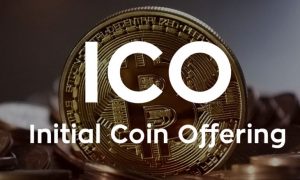
The world held its breadth and witnessed in wonder , the most prominent among news-worthy stories, the rise of a Fintech innovation called ICO in 2017. In laymen’s  language-Initial Coin Offering. ICO implies crowdfunding a new cryptocurrency and an innovative idea that can be implemented on the blockchain technology. As of now, ICO mostly is raised for this reason. But what is interesting is the way it has changed the whole ecosystem of fundraising.
Introduction

Until now, entrepreneurs with groundbreaking ideas found raising money for their projects an immensely cumbersome process. However, with the introduction of ICO the speed of fundraising has witnessed an unprecedented acceleration with astonishing ease. Let’s take a closer look to decipher this phenomenon called ICO

What is an ICO (Past, Present and Future)

In the past, fundraising for even the most brilliant idea would take ages for the founders. Without a strong network connection accompanied with an aggressive media presence it would take several rounds of meetings to close a single round of funding. Time, which the founders could have spent making their offering/idea better, was wasted in these endless meetings on fundraising 1.0.

With the introduction of online collectives such as Kickstarter and IndieGoGo the funding process started to improve. However, though these online crowdfunding platforms believed in meritocracy and helped raise fund quickly and easily earlier, there were still some disadvantages for the entrepreneurs. One of the most important one was that these platforms charge 5-10% of the total funding and many start-ups didn’t have a large social media backing or PR presence. But it was nevertheless Fundraising 2.0, which was better than the previous, and thus people went ahead with it,

Meanwhile, there were developments taking place at a phenomenal speed in the realm of financial technologies and soon we saw Fundraising 3.0 in the avatar ICO. What the world witnessed in wonder in 2017, is a result of some earlier developments attributed to some visionaries. It was J. R Willet, the pioneer, who studied Computer Science at Seattle Pacific University, and invented the initial coin offering (ICO) finding model in 2012. On July 31st, 2013, he launched the first ICO, Mastercoin (now called Omni), and raised about US$500,000 for his project and since then the ICO has seen rapid and aggressive growth in collection of funds and number of ICOs.

Willet sated that, “Everything I was doing with Mastercoin (now called Omni) was new and untried. I was really excited about creating a decentralized exchange, and I thought that price-stabilized assets would be a really big deal someday.” Since the first ICO in 2013, there has been a flood of ICOs with new ICO launching every other day.  In 2016 alone, 54 major ICOs raised close to US$103 million. 2017 has been phenomenal for ICOs, raining around US$4.80 plus billion in 90 plus ICOs. Cryptocurrency market capitalization increased from US$7 billion in January of 2016 to over US$550 billion as of December 31st 2017, and the wealth generation for early investors was extremely exuberant and having profits in multi millions.

This triggered a positive cyclic motion for ICO and various types of cruptocurrencies. Today, ICos are revolutionizing the way start-ups, entrepreneurs and corporations raise funds  efficiently and directly to investors, compared to time taken via the VC route and IPO or private placement. However, this has not resulted in the annihilation of the traditional ways of fund raising. On the contrary, the VCs and Private Investors had tried to move with the changing time and actually co-exist and contribute to this new phenomenon. The top VC firms like Sequoia  Capital and Andreessen Horowitz participated in the recently held Filecoin ICO, signalling a positive reaction from their side or maybe as an act of testing the waters before going full throttle.

The tremendous rise of ICOs is a result of more than one reason. Apart from its ability to unleash funds for the founders, it has revolutionized the overall Fintech sector by triggering massive convergence of various ideologies and technologies that further shape the way we do business transactions, raise capital for an idea that kept us awake, or untie ourselves from the existing methods and means of monetary straightjackets.

Interestingly, the vast majority of ICOs thus far have been used to raise funding for a technology project related to crytocurrency, blockchain, or some other form of decentralization. But in the future, the same can be applied for other types of business as well.

Maths, Myths and Metaphors about ICOS

Tokens are compared to Kickstarter-style crowdfunding  in traditional IPO sales. As tokens provide utility and are redeemed by the issuer, they provide token holders with unique equity insight to a functional project/product/service and opportunity to redeem in the future. Additionally, it also provides expected potential appreciation on the possible progress and success of the project/product/service of the issuing company. An ICO’s functioning is simple: a team with an ide, but short of fund, uses blockchain technology to issue a certain amount of digital tokens (aka “coins”) sold in an auction to people paying in either, Bitcoinor Ether, regular money like US dollars or British pounds. “Token” might sound like Monopoly money, but their impact on the real world is growing by tne day.
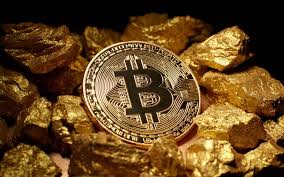
Bitcoin-The most popular cryptocurrency

The mechanics of an ICO involves setting up a crowdfunding website and whitepaper with information about the business model and founding team. Details of the whitepaper  will include the problem that the platform is trying to solve, management structure, plans for development and allocation of resources.

Buyers then deposit an established crytocurrency such as Ethereum or Bitcoin to receive a primary key (in the form of a cryptographic algorithm for new tokens.

ICO Essentials

  1. The business idea: Ideally, the coin/token should have some value inside your business idea but technically it is a choice.
  2. The team: A strong leadership means that the credibility quotient will go high.
  3. The technology: In the ever-changing world of cryptocurrency, the faster and better ones will take it all.
  4. The White Paper: It is like your Pitch deck in the form of a webpage putting out your details like your daily active users , revenue, user acquisition strategy, what do you intend to do with the money etc. in front of everyone who is interested in participating your ICO. And then you need to prove your credibility to the world that you can deliver on what you are saying in your White Paper.
  5. Coin economics: This is part where the reality kinks in. You and your ICO participants should know exactly what is going to be with the coins in pre-ICO, ICO and post ICO stages and what will be the distribution, usage and returns in the long-run.
  6. Post IPO: The goal is generally to get the token listed on as many reputed exchanges where others who missed out in the ICO can buy it later. The more the demand, the higher the price and valuation of your company.

According to Tokendata, a total of US$5.6 billion was raised from ICOs in 2017, based on 442 ICOs, with the median of US$ 4.5 million raised, another historic milestone eclipsing the US$265 million raised from 2014 to 2016 combined. But in spite these facts, there are so many who think that Bitcoin, Ethereum  and Blockchain generally are Fintech or cryptocurrencies. It’s like missing the big picture and fundamentally misinterpreting the power of innovation that has already started changing the world.

The main advantage of investing in ICO and tokens is that it is listed and liquid, unlike seed stage /start-up stage, as the investments are locked and not listed, so no liquidity. In the crypto exchange, these ICO/Tokens get listed, and immediately the investors can sell their tokens in the exchange, much like a public stock exchange. But on the flipside, the investors have no control over the board on the decisions, for the fund deployment, project decisions etc.  Investors should do their due diligence on the promoters and feasibility and viability of the project.

What Next

As the market steadily matures, more sophisticated investors and large VCs and other asset investors will invest in ICOs and token in start-ups and existing companies will take the ICO route to raise funds faster and efficiently. ICOs and tokens on blockchain are a very powerful  economic   strategy for investors and fundraisers, leading to more innovations and technologically transforming the entire global fundraising industry, a major disrupter and game changer.

Top ICOs in 2017 and Current Market Capitalization (in US$ million)

No.

Name of ICO

Amount raised 

Current market capitalization

1

Tezos

208.0

912.7

2

EOS.IO

200.0

4,731.1

3

Bancor

153.0

72.9

4

Status

95.0

117.0

5

TenX

80.0

74.2

6

Mobile GO

53.3

12.5

7

SONM

42.0

18.2

8

Basic Attention Token

35.0

158.3

9

Civic

33.0

38.7

10

Storj

30.0

83.9

11

Polybius

28.9

6.4

12

Aragon

24.8

22.1

13

Aeternity

22.4

216.9

14

OpenANX

18.8

4.7

15

Cosmos Network

16.8

22.6

16

Qtum

15.6

297.5

17

Giga Watt

14.6

2.2

18

Mysterium Network

14.1

3.1

19

Nimiq

13.6

2.8

20

Tokencard

12.7

9.4

21

Dao Casino

12.3

3.7

22

Gnosis

12.3

28.6

23

iEx.ec

12.1

31.6

24

ATB Coin

11.8

0.7

25

Blockchain Capital Fund III

10.0

Not available

Source: Autonomous NEXT Analysis and Bison Consulting Research
 

Moringa Tree: Superfood Crop

Today, we have an opportunity to discuss with Professor Sayed Azam Ali, CEO, Centre of Crops for the Future, located at University of Nottingham Malaysia. Among the topics of discussion were the impact of climate change on major crops in Malaysia, such as oil palm and rice. A higher variation of temperatures observed over a period of years would impact on the productivity of crops such as rice. In addition, the world’s agriculture is mainly focused on four major crops such as rice, wheat, maize and soybean. He said the temperature in Britain has become warmer while the temperature has become hotter.

The R&D Centre of Crops of the Future

Professor Sayed noted that efforts should be directed towards reviving forgotten crops. He highlighted that moringa tree is one, which leaves contain several bio-actives for general good health. The moringa tree originated from India and then brought into Malaya (Malaysia before 1957) by Indian immigrants. The moringa tree, over time, had adopted well in Malaysia.

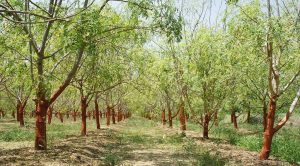
Moringa Trees Plantation

The leaves of Moringa are packed with a full spectrum of nutrients. They are consumed in powder form by pounding fresh dried leaves.

Centre of Crops for the Future had undertaken expensive research efforts on the planting of moringa tree and product developments. We have agreed to promote intensive cultivation of moringa trees under plantation method. We can also assist smallholders to plant moringa trees. The leaves are suitable as feed for small animals such as goats and rabbits. The leaves of moringa trees can be harvested after six months.

We are offering locally-grown moringa leaves and power in our eStore.

Please contact Dato’ Dr Anuar Md Nor at 016 3220 952 or email at datodranuar@gmail.com.

Cochlear Implant: The Hearing Miracle

Background

An article in the London Times on August 28th, 2018, described a miracle moment of baby Max when a cochlear implant was switched on in May 2018, just after his first birthday, and Max turned to his mother, Rebecca,  in wide-eyed, open-mouthed astonishment.

The cochlear implants, which cost about US$10,00 for each ear, are electronic devices that perform the same action as the inner ear, or cochlea, which is often damaged in people who are deaf.

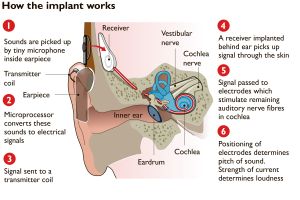
A sound processor worn outside the ear captures sounds and turns them into digital signals that are picked up by an implant placed inside the head via surgery. It converts the signals into electrical impulses that it sends through the ear to stimulate the hearing nerve. This sends signals to the brain that are interpreted as sound.


The research efforts on cochlear implant had been long that started  in the 1950s, thanks to the pioneering efforts of scientists such as Mr Djourno and Mr. Eyries in France, Dr James Doyle in USA,  Dr Simmons in USA, and Dr Graem Clark in Australia.

An excellent 1993 paper by Andrew H. Van de Van and Raghu Garud, Innovation and Industry Development: The Case of Cochlear Implant, examined how the cochlear implant industry had emerged from 1960s to 1990s. They noted the existence of an industrial infrastructure that includes institutional arrangements, resource endowments, and technical economic activities.

It is found that this infrastructure of cochlear implants industry emerged through an accretion of numerous technical and institutional events involving many public and private sector actors over an extended period of time.

Moreover, this institutional arrangements and resource endowments that emerged to facilitate and provide momentum of the cochlear implant industry became the inertial forces that hindered subsequent technological developments by private firms. The findings emphasize that the management of innovation must be concerned not only with micro-developments of a proprietary technical device but also with the creation of an industrial system that embodies the social, economic, and political infrastructure that any technological community need to sustain its members.

Reference:

Andrew H. Van de Ven and Raghu Garud (1993). Innovation and Industry Development: The Case of Cochlear in Research on Technological Innovation, Management and Policy, Volume 5, page 1-46.

You can upload the article by clicking below.

Innovation and industry Development- the case of cochlear implants


About Dato’ Dr Anuar Md Nor

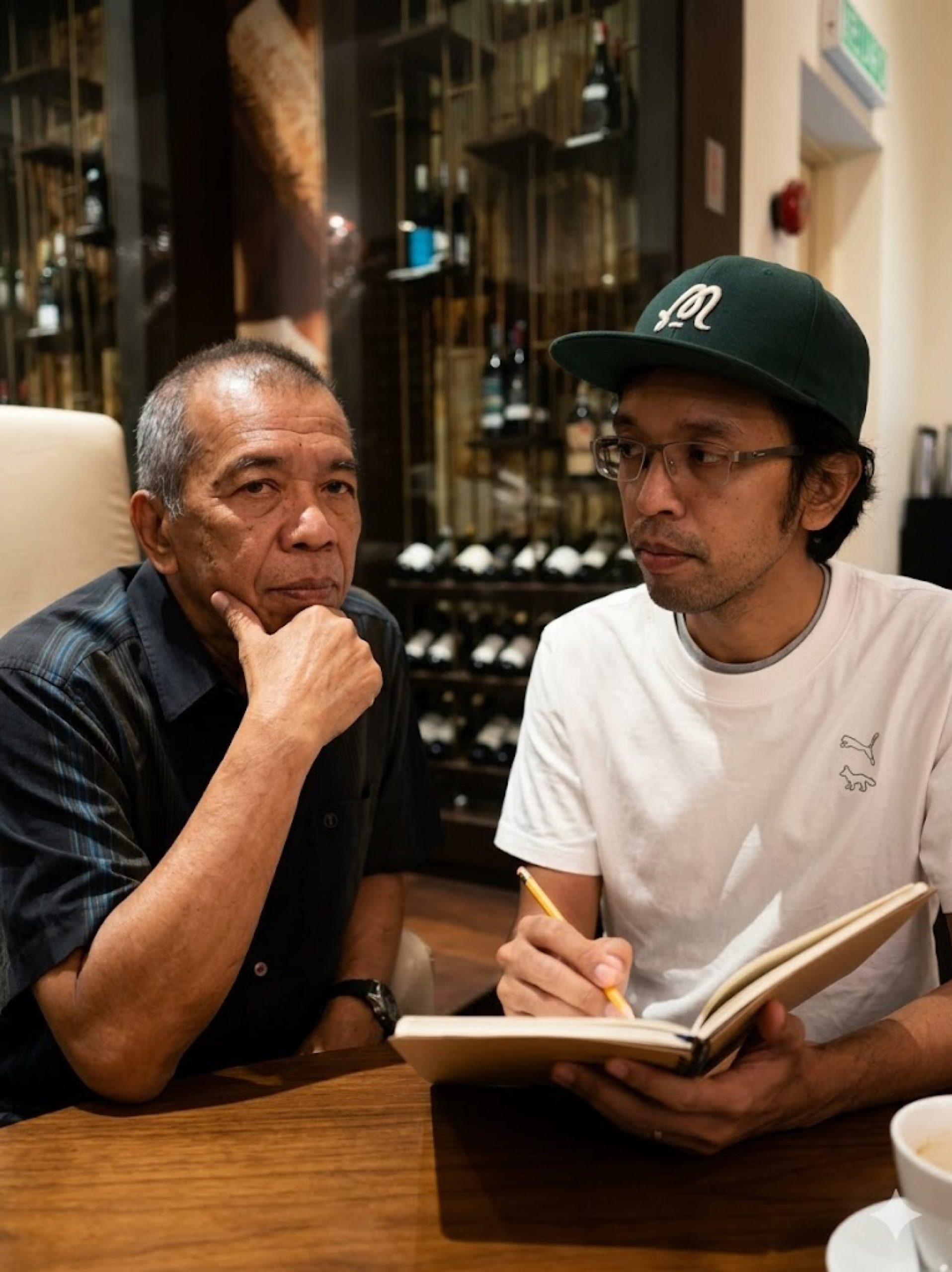
Dato’ Dr Anuar Md Nor is a specialist in the area of innovation management, venture capital and business networks as strategic resources. He teaches these subjects at Azman Hashim  International Business School, Universiti Teknologi Malaysia. He is also Adjunct Professor at the the School of Management, Asia e University, Malaysia.

He founded Bison Consulting, a consulting firm that offers services such as intellectual property valuation, firm valuation, grant application and “halal” certification application.He has authored three books, Securing Private Equity in Malaysia, The Palm Oil Multinationals from Malaysia, and The Role of Networks in Internationalization Process. 

He has an undergraduate degree in Chemical Engineering from University of Birmingham, England, an MBA from School of Management, University of Bradford, England, an MSc. in Management of Technology from Massachusetts Institute of Technology, Boston, USA. He completed his PhD in Business Management from Universiti  Teknologi MARA (UiTM), Shah Alam, Malaysia.

Before establishing Bison Consulting, he was CEO of PNB Equity Resources Sdn Bhd, a subsidiary of Permodalan Nasional Berhad, the largest investment company in Malaysia and CEO of Malaysian Technology Development Corporation Sdn Bhd, the venture capital company owned by Malaysian government. During his tenure, he had invested in high technology companies in Silicon Valley, USA.

Dato’ Dr Anuar Md Nor lives with his wife, Datin Azimah, in Seremban, Negeri Sembilan, Malaysia. It is a commuter town about one hour drive to Kuala Lumpur, the capital city of Malaysia. He tends his garden plot planting several fruit trees, while his wife tends her orchid plants. Our four children work in Kuala Lumpur. Our second son is a famous artist with sculptures installed in London and Singapore, having graduated from Rhode Island School of Design, USA,  and Central Saint Martins, London, UK. Our daughter graduated from the Australian National University, Canberra. Our eldest son manages his own design company while our youngest son works as a securities trader in a Malaysian Investment Bank.

We share our home with seven cats, namely, Junior, Baby, Yen, Charlie, Malaya, Tuya and Momo, and they like to be fed with boiled sardines.

Blog’s New Feature: eStore

This blog has been established for a while now. We are now incorporating an eCommerce feature in the blog to help readers and general internet users to purchase downloads as well as a range of foods containing bioactives based on our research and works.

The downloads include:

  1. eBook covering topics in innovation and management
  2. eThesis covering PhD thesis conducted at Malaysian universities
  3. eReport covering topics in intellectual property valuation and valuation of firm
  4. eAccess sign-ins to on-line databases
Use various devices for on-line learning

We plan to offer a eAccess sign-in to extensive databases in partnership with Asia e University. Members will be able to use the on-demand learning platform for pure learning and register an on-line Bachelors, Masters and PhD degrees with Asia e University. We will announce when this eAccess sign-in will be operational.

A popular on-line Malaysian university

Please click the button: eStore on our website.

We thank all readers for your generous patronage.

Yours sincerely,

Dato’ Dr Anuar Md Nor


Continued March of the Robots

Background

Like it or not, robots are steadily marching forward replacing humans in their stride.

Many human jobs are being replaced by robots or robots are collaborating with humans, which were reported as follows:

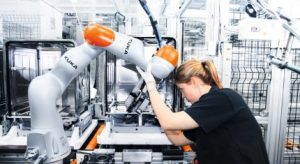
Working robots: collaborative robots or “cobots” are being installed in factories to work alongside with humans. In Britain, cobots are being used to address the shortage of workers due to Brexit. A study from Massachusetts of Technology (MIT) indicates that cooperation between humans and robots is more productive than using either humans or robots alone and reduce human idle time by 85 per cent.

A cobot produced by Kuka

In addition, cobots are being utilized in restaurants. At Mofongo’s distillery and cocktail bar in the Dutch city of Groningen, a cobot climbs a 26-ft high bar to tap bottle of spirits. In a restaurant in Tokyo a cobot boxes takeaway dumplings. Trials are underway for machines to go through medical records using artificial intelligence to ensure that they get the right medical record.

(Source: Mark Bridge. Robots in restaurant to solve staff shortage. The Times, June 16, 2018)

Soft fruits robots: there goes students’ summer jobs of picking strawberries! We spent a summer during our college days in a strawberry farm in Northern England.  The pays enabled us to buy a nice bicycle. A company, Fieldwork Robotics Ltd in the UK is developing a prototype robot capable of picking raspberries. The robotic system could be adapted to pick other fruits and vegetables. Running on wheels and guided by cameras, they will have multiple arms, equipped with sensors to detect and pick ripe berries.

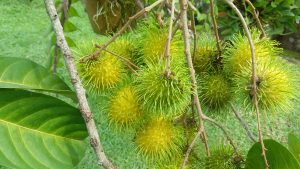
Soon, rambutan could be picked -up by robots without having a stiff neck

(Source: Miles Costello. March of the robots  was never so sweet. The Times, August 6, 2018.

A robot stuntman: The Walt Disney Company’s researchers initially had developed a robot stuntman by devising a lump of metal that could be flung across a space into a net. It had sensors and its centre of mass could be shifted, allowing its flight to be controlled and a precise landing would be made. It was followed by a headless, limbless automation made up of three connected shafts, and then a full humanoid robot. It was noted that robots have started to become mobile and autonomous and can begin to imitate sophisticated stuntmen or stuntwomen.

Robotic actors “employed” to do stunts in movies

(Source: Will Pavia. Disney’s next trick: a robot stuntman. The Times, August 7, 2018.

More bad news for human employees: It was reported that Citigroup, the US banking giant, had announced that it would reduce up to half of its technology and operations staff in the next five years and replace them with machines. Another  large bank, Credit Suisse, was planning to automate a large number of compliance jobs.

(Source: Miles Costello and Dominic Walsh. 10,000 workers @may be replaced by machines”. The Times, June 12, 2018.

In Malaysia, there is an urgent need to replace foreign workers in large oil palm plantations to harvest fruits and transport them to palm oil mills quickly. Foreign workers in oil palm plantations represent a major portion of immigrants in Malaysia.

Malaysian Invention: Palm Leaf Mid-Rib Separator

Introduction

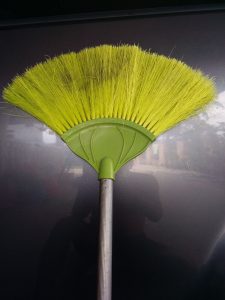
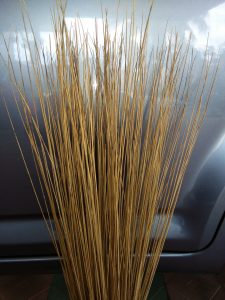
Coconut leaf mid-rib or spine has been used extensively as brooms. However, these brooms have been replaced by plastic brooms, which are cheaper. However, these plastic brooms contribute to the problem of plastic wastes.

Plastic broom, cheap but contributes to plastic waste after use
Coconut leaf mid-rib, an environment-friendly broom

Coconut leaf mid-rib brooms are slightly more expensive as they need to be manually separated from the coconut leaves by using a sharp knife, usually done by women in many countries in Southeast Malaysia. The number of the mid-ribs separated is low as these women get tired after a while. They often get hurt by the sharp knife as they tire during the separation process.

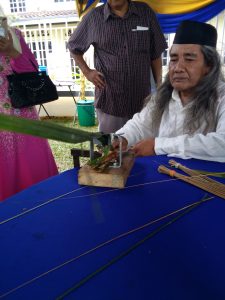
My friend, the “warrior inventor”, Mr Amir Tukiman, had invented a device, which he calls “Lidii”. This device can improve the productivity of separating the spine from the coconut leaf to about 400 per hour. A skilled-person can achieve a rate of above 600 per hour. This device can help a coconut farmer to supplement his income by making coconut mid-rib brooms, which are environmental-friendly.

“Warrior inventor” Mr. Amir Tukiman demonstrating his “Lidii”

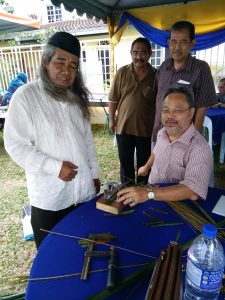
The “Lidii” is portable. We are offering early adopters to purchase the device at a price of RM200 or US$20 (FOB) Malaysia. Free delivery is offered to adopters in Klang Valley, Negeri Sembilan and Selangor. Discounts are also offered  for order of 5 and more units.

Separation can be done at any location, just requiring a stable table


The “Lidii” can also be used for other palm leaves with firm spines.

Please contact us at 6016 3220 952 or email the inquiry to Dato’ Dr Anuar Md Nor, Founder, Bison Consulting, which is the exclusive agent of the device. His email is datodranuar@gmail.com.

“Halal” Certification and Logo: A New Intangible Asset for the Food Industry

Introduction

Muslim consumers have been a major factor in the increased demands for food products and services that conform to the Islamic religious principles. These food products are considered “Halal” and that they contain ingredients that are permitted in Islam.

“Halal” Certification System  

“Halal” originates from an Arabic phrase that means allowed or permitted by Islamic law. According to JAKIM (Department of Islamic Development Malaysia),  the Malaysian authority that manages application for “Halal” certification, a “Halal” food means that:

  • Does not stem from or consists of any part of or item that is forbidden to Muslims by Islamic law, or animals that have not been slaughtered according to Islamic law.
  • Does not contain any substance that is considered impure in Islamic law.
  • Is not prepared, processed or manufactured using equipment or utensils that are not free from impurities as defined by Islamic law.
  • That, in the preparation, processing or storage stage, does not come in contact with or stored near any kind of food that does not meet the requirements of paragraph (a), (b) or (c) or any substances that are considered impure by Islamic law.

A food product manufacturer would apply to JAKIM for “Halal” certification process. Presently, the “Halal” certification is voluntary in Malaysia. Once approved, a “Halal” certificate would be issued to the successful food manufacturer. The “Halal” certificate is an assurance that a particular product or food premise (restaurant) has been thoroughly investigated and found to conform to Islamic law and therefore is suitable for use or consumed by Muslim consumers. Food products or premises certified as “Halal’ by JAKIM  utilize the registered trademark “Halal’ logo.

Halal Logo Issued by JAKIM

The Halal’ logo is usually displayed prominently on the packages of the food product or showed in the signage of a food premise.

“Halal” Certification/Logo Has Become a Valuable Customer-Related Intangible Asset   

In Malaysia, the value of the “Halal” certification/logo can be looked at from the patronage of food outlets. During the recent fasting month, most popular food outlets had fewer patrons, who were mainly non-Muslim customers. This indicates that the value of the “Halal” certification/logo intangible assets could be estimated by the additional volume of Muslim customers that could be generated if the food premises are certified “Halal”.

The value of “Halal” certification/logo would be substantial in countries such as Malaysia and Indonesia which have significant Muslim populations. Multinational food countries such as Nestle and Unilever have used their manufacturing facilities in Malaysia to produce “Halal” certified products with “Halal” logo displayed clearly on their food packages.

Halal Logo on a Food Package

The Test of Intangible Asset of “Halal” Certification/Logo for Valuation 

For an intangible asset to exist from a valuation, accounting, and legal perspective, it must possess certain attributes, as defined in Reilly and Schweihs’s (1999) book, Valuing Intangible Assets. The authors define intangible assets as having the following attributes:

  • It is not physical in nature;
  • have specific identification and recognizable description;
  • Have legal existence and legal protection;
  • Is subject to private ownership and transferability;
  • Have tangible evidence or manifestation of the existence of the intangible assets;
  • Was created or came into existence at an identifiable time or as the result of an identifiable event; and
  • Is subject to term ination of existence at an identifiable time or as a result of an identifiable event.

Reilly and Nesi (1992) extend this list and state that for an intangible asset to have a quantifiable value from an economic perspective, it must possess certain additional attributes, such as:

  • Generate some measurable amount of economic benefits in the form of income or a cost decrease which may be measured in several ways , including net income, net operating income or net cash flows, etc.; and
  • Enhance the value of other assets which is it is associated.

Test of Attributes of “Halal” Certification/Logo as Intangible Asset for Valuation 

The table bellows shows the test of attributes of “Halal” certification/logo:

No. Attributes Yes or No
1 It is not physical in nature


Yes.

It is in the form of “Halal” logo

2 have specific identification and recognizable description


Yes

The products are listed as “Halal” in JAKIM’s data base. The “Halal’ logo can be displayed in product packages and premise signage and in brochures.

3 Have legal existence and legal protection


Yes.

The “Halal” logo is protected by Malaysian law.

4 Is subject to private ownership and transferability


Yes.

The logo is owned by the food product manufacturer.

5 Have tangible evidence or manifestation of the existence of the intangible assets


Yes

“Halal” logo displayed on product packages, premises and brochures.

6 Was created or came into existence at an identifiable time or as the result of an identifiable event.


Yes.

The “Halal” certification/logo is issued after a inspection is made by JAKIM.

7 Is subject to termination of existence at an identifiable time or as a result of an identifiable event.


Yes.

The “Halal” certification/logo is valid for two years and can be renewed by an application to JAKIM.

8 Generate some measurable amount of economic benefits in the form of income or a cost decrease. Yes.

Increased patronage of Muslim consumers, therefore revenue.

9 Enhance the value of other assets which is it is associated. Yes.

The value of business would be increased due to additional market of Muslim consumers.


The next article would provide an example the estimated value of the “Halal” certification/logo intangible asset of typical food outlet in Malaysia.

Reference:

Reilly, F. and Nesi, N.A. (1992). Interstate intangible asset transfer, the CPA Journal Online, Vol. 62, No.8, pp. 34-40.

Please note we offer services to help local and foreign food companies to apply the JAKIM’s  “Halal” certification in Malaysia. The JAKIM’s “Halal” logo is widely recognized as a trusted assurance for “Halal” food products. Please be free to contact Dato’ Dr Anuar at datodranuar@gmail.com or visit our website, www.bisonconsulting.net.