

Privacy

Privacy Policy for The Blog of Dato’ Dr Anuar Md Nor

If you require any more information or have any questions about our privacy policy, please feel free to contact us by email at Privacy.

At www.datodranuar.com we consider the privacy of our visitors to be extremely important. This privacy policy document describes in detail the types of personal information is collected and recorded by www.datodranuar.com and how we use it.

Log Files
Like many other Web sites, www.datodranuar.com makes use of log files. These files merely logs visitors to the site – usually a standard procedure for hosting companies and a part of hosting services’s analytics. The information inside the log files includes internet protocol (IP) addresses, browser type, Internet Service Provider (ISP), date/time stamp, referring/exit pages, and possibly the number of clicks. This information is used to analyze trends, administer the site, track user’s movement around the site, and gather demographic information. IP addresses, and other such information are not linked to any information that is personally identifiable.

Cookies and Web Beacons
www.datodranuar.com uses cookies to store information about visitors’ preferences, to record user-specific information on which pages the site visitor accesses or visits, and to personalize or customize our web page content based upon visitors’ browser type or other information that the visitor sends via their browser.

DoubleClick DART Cookie

→ Google, as a third party vendor, uses cookies to serve ads on www.datodranuar.com.
→ Google’s use of the DART cookie enables it to serve ads to our site’s visitors based upon their visit to www.datodranuar.com and other sites on the Internet.
→ Users may opt out of the use of the DART cookie by visiting the Google ad and content network privacy policy at the following URL – http://www.google.com/privacy_ads.html

Our Advertising Partners

Some of our advertising partners may use cookies and web beacons on our site. Our advertising partners include …….

  • Google

While each of these advertising partners has their own Privacy Policy for their site, an updated and hyperlinked resource is maintained here: Privacy Policies.
You may consult this listing to find the privacy policy for each of the advertising partners of www.datodranuar.com.

These third-party ad servers or ad networks use technology in their respective advertisements and links that appear on www.datodranuar.com and which are sent directly to your browser. They automatically receive your IP address when this occurs. Other technologies (such as cookies, JavaScript, or Web Beacons) may also be used by our site’s third-party ad networks to measure the effectiveness of their advertising campaigns and/or to personalize the advertising content that you see on the site.

www.datodranuar.com has no access to or control over these cookies that are used by third-party advertisers.

Third Party Privacy Policies

You should consult the respective privacy policies of these third-party ad servers for more detailed information on their practices as well as for instructions about how to opt-out of certain practices. www.datodranuar.com’s privacy policy does not apply to, and we cannot control the activities of, such other advertisers or web sites. You may find a comprehensive listing of these privacy policies and their links here: Privacy Policy Links.

If you wish to disable cookies, you may do so through your individual browser options. More detailed information about cookie management with specific web browsers can be found at the browsers’ respective websites. What Are Cookies?

Children’s Information
We believe it is important to provide added protection for children online. We encourage parents and guardians to spend time online with their children to observe, participate in and/or monitor and guide their online activity. www.datodranuar.com does not knowingly collect any personally identifiable information from children under the age of 13. If a parent or guardian believes that www.datodranuar.com has in its database the personally-identifiable information of a child under the age of 13, please contact us immediately (using the contact in the first paragraph) and we will use our best efforts to promptly remove such information from our records.

Online Privacy Policy Only
This privacy policy applies only to our online activities and is valid for visitors to our website and regarding information shared and/or collected there. This policy does not apply to any information collected offline or via channels other than this website.

Consent
By using our website, you hereby consent to our privacy policy and agree to its terms.

Privacy Policy Online Approved Site

Update
This Privacy Policy was last updated on: Friday, November 24th, 2017.
Should we update, amend or make any changes to our privacy policy, those changes will be posted here.
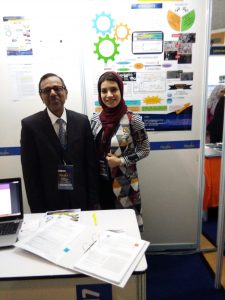
Motivating Innovators: Employee’s Compensation System

Malaysian scientists participating in a technology exhibition

Introduction 

Recently, we attended a talk by Dr. Joon Seok Lee, President, Korean Invention Promotion Association (KITA). The talk, Employee’s Patent Compensation System (EPCS) in Korea, was organized by Malaysian Association of Research Scientists (MARS). The EPCS has been a motivating factor for engineers and scientists in Korea to discover new innovations and allow their firms to commercialize these new innovations into world-beating marketable products.

We are all aware that Korea has become an advanced manufacturing nation with world-class companies. The EPCS,which was made a law, has a main objective to motivate employees who discover inventions to inform his/her companies (employers). In return the employers must decide whether to proceed with the registration of the patent and its commercialization.

Most major Korean companies have the EPCS in their human resources policies and compete for the best innovative staff and new graduates. A firm will establish a committee, comprising representatives of the firm and key employees to recommend the types of compensations to be given to employees who had developed an innovation that can be patented. Dr. Joon noted the compensations can be:

  1. Promotion
  2. Holidays
  3. Share of profits
  4. Monetary rewards
  5. Others

Other countries that estabished EPCS are Japan and Germany. In Japan, all large companies and about 80% of SMEs have EPCS as part of the companies’ human resource policies.

Impact on Innovation in Companies 

We asked Dr. Joon whether the EPCS has increased the capacity of Korean firms to innovate as employees are now more motivated to innovate. His answer was a clear Yes. In fact, many employees have received large compensations in the form of promotions and monetary rewards.

We all know that Germany, Japan and Korea have well-known manufacturing giants. These countries also have innovative SMEs with leading products in their market segments. Now we know the EPCS is one of their secret tools to motivate their scientists and engineers to develop new inventions, and, in the process, gain high rewards.

It is timely that Malaysian firms to introduce EPCS in their human resources policies. In Korea, companies that have established EPCS also enjoy government incentives in the form tax deduction.

In Malaysian universities and R&D institutions, engineers and scientists have been provided with incentives. Among the incentives include:

  1. A share in the licensing fee generated from the licensing of the technologies discovered.
  2. He/she is allowed to be a shareholder or director of the company formed to commercialize the technology.
  3. He/she can for a grant from a government company, Malaysian Technology Development Corporation (MTDC) to commercialize the technology.
  4. He/she can gain promotions.
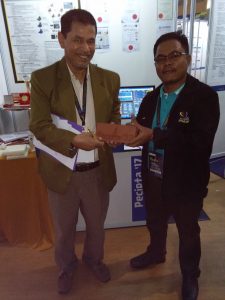
Malaysian engineer standing with a colleague

We are not aware of incentives given by large Malaysian private companies to motivate their engineers and scientists to be more innovative besides getting promotions.

As countries such as Japan, Germany and South Korea had shown motivating their scientists and engineers to discover new innovations can strengthen their innovative capacities.

Robots versus Conventional Vacuum Cleaners

Background

This article is one of a series of articles on how certain industries and products are upended by new entrants outside of the existing industries. This article will focus on vacuum cleaners which are now replaced by robots.

History of Vacuum Cleaners

Every house will have a vacuum cleaner which cleans dirt and dust from every corner and surface. Vacuuming a house is a major chore that my wife would like to avoid as we have seven cats living together with us.

Vacuum cleaners are electrical appliances that use an air pump to suck up dirt and dust from floors and other surfaces. The dust and dirt are collected in a bag that can be emptied later. As electrical appliances, vacuum cleaners are sold by well known companies such as Samsung, Philips, Panasonic and Electrolux.

The first technology that led to the development of vacuum cleaners occurred in Chicago in 1868 by Ives W. McGaffey. His first -hand held vacuum cleaner was manually-powered by cranking it while it was being pushed along. The first vacuum cleaner that resembled today’s vacuum cleaners was created in 1905 by Walter Griffiths. It was still a manual appliance. However, it was much smaller and portable, which made it easier for one person to operate it. The appliance consisted of a bellow that would suck dust into a removable pipe. The pipe would be cleaned for next use. It also had differently-shaped attachments so that a housewife could reach other areas of the house that needed cleaning.

In 1908, James Murray Sprangler was awarded a patent for his vacuum technology that involved a rotating brush coupled with an electric vacuuming machine. He sold his idea to the Hoover Harness and Leather Factory, a company based in North Canton, Ohio. It made several improvements and models on the idea.

The Story of Hoover Vacuum Cleaners

Like Colgate Palmolive in toothpaste, Hoover was synonymous with vacuum cleaners.The emerging car business was seriously threatening the future of horse collars. The owner of Hoover Harness and Leather Factory, William Henry Hoover, was looking to expand his company. On a hot summer day in 1908, Hoover met James Murray Sprangler on his front porch to discuss a cleaning contraption that Sprangler had sold to his cousin, who was also his wife.

Vacuum cleaners were a boon to sanitation and health in the early 1900s but they were cumbersome and required two people to operate. Sprangler was an aging, sometime inventor working as a janitor to clear his debts. He developed a portable cleaning device to minimize dust that rose from the carpets he cleaned every night.

Sprangler attached an electric fan motor atop a soap box and sealed the cracks with adhesive tape. A pillow case billowing out the back served as a dust bag. Hoover and his wife were both impressed with the new machine but not many homes then had electricity in 1908.

Hoover bought the patents anyway and started the Electric Suction Sweeper Company. He set aside a corner of his leather goods factory for the production of suction sweepers, turning six cleaners a day. James Sprangler, with his debts relieved, became Hoover’s superintendent of production.

The first Hoover advertisement appeared in the newspaper, The Saturday Evening Post, on 5th, December 1908. The ad described the simple premise of the suction sweeper: “A rapidly evolving brush loosens the dust which is sucked back into the dirt bag.” The ad went on to further state that “Repairs and adjustments are not necessary.” Finally, readers were offered a free ten-day trial at home.

Hundreds of housewives took Hoover up his offer. He shipped the suction sweepers through local dealers who received a commission if the cleaner was purchased. If not, the dealer could keep the vacuum cleaner for in-store demonstrations. Thus, he began the national network of loyal Hoover dealers in the US.

Hoover then organized an army of door-to-door demonstrators. The sales power of the skilled demonstration was Hoover’s secret weapon. No one could deny that his portable vacuum cleaner was effective and time-saving. Research and innovation followed. In 1926, Hoover patented an agitator bar which beat the carpet before brushing it. When he died in 1932, Hoover vacuum cleaners were established as the American Standard for cleaning. In 1952, the company introduced the “Hoover Constellation”. This model hovered above the floor as it cleaned the floor. This model is still found in many American.

Today this famous company is part of the appliance giant, Maytag Corporation.

The Entry of Robot into Household Cleaning

Cleaning a house of dirt and dust is such a chore that inventors are developing robots to replace housewives to operate vacuum cleaners. Enter the robotic vacuum cleaner, which was introduced in 2002. These robotic vacuum cleaners were small and roamed around the house, sucking up dust and dirt. Detectors helped these robotic vacuum cleaners avoid bumping into things. The most popular robotic vacuum cleaner is the Roomba, which is marketed by iRobot Corporation, a company based in Boston, USA. It was founded by three MIT graduates who designed robots for space exploration and military defense. The initial Roomba has been updated with new features to allow it to become an advanced robot that cleans the floor efficiently.

A robot cleaner

iRobot Corporation is late entrant to the vacuum cleaner industry, and it has overtaken the traditional appliance companies in the household cleaning sector. Although the robotic vacuum cleaners are more expensive than the conventional hand-held vacuum cleaners, they have innovative features that make floor cleaning a hassle-free activity. The robotic cleaners are expected to become cheaper and having more features as technical advances are made in mapping and navigation.

The robotic cleaning industry is upending a sector that has been dominated by the appliance industry. The traditional appliance companies are also introducing their own robotic cleaners. However, they need to acquire new know-how in advanced technologies such as navigation, mapping and artificial intelligence. At the same time, more robotic companies would be entering the household cleaning sector with more intelligent robots.

Acknowledgement:

We would like to thank my DBA students, Dr Tamil, Dr Pang and Dr Justin, for providing initial information for this blog. Continue reading “Robots versus Conventional Vacuum Cleaners”