We would continue to offer interesting innovation topics in 2026. At the same time, we will include photos and interludes from our urban orchard.
The rose apple trees are going to bear more fruits, as well as our rambutan trees. We also have planted several more dragon plants.
In appreciation of our blog vistitors, we are extending a free ebook, “Getting Funding for Your firm”, which we published in 2010. We believe the contents are still relevant today.
The contents of the ebook are as follows:
Title: Securing Private Equity in Malaysia: Capital for your firm without going to your bank managers.
Chapter 1: The Private Equity Industry
Chapter 2: How Malaysian Private Equity Managers Make Investment Decisions
Chapter 3: Are You Ready for Private Equity Investment?
Chapter 4: Knowing the Worth of Your Company
Chapter 5: Grant Money for the Lucky Few
Chapter 6: Angel Investors and Other Sources of Capital
Chapter 7: Post Investment Marriage
Chapter 8: Sharing Rewards Through Exits
Chapter 9: The Case Against Private Equity
Chapter 10: Private Equity and National Development
SAMPLE OF A BUSINESS VALUATION REPORT
APPENDICES- Appendix 1: The entrepreneur’s due diligence business information kit for private equity proposal. Appendix 2: Guideline for a commercialisation plan. Appendix 3: Major Malaysian Private Equity Firms. Appendix 4: Government organizations providing “grant schemes”. Appendix 5: Government development finance Institutions. The language of private equity. Bibliography. Index.
As a chemical engineer, I am closely following the developments and advances in battery technologies, especially for use in EVs. Many research groups are using different materials in the periodic table as an alternative to lithium.
Several electric vehicle battery chemistries are emerging as electric cars .Scientists, battery companies and automakers are trying to develop safe batteries built with accessible materials that enable long driving range and fast charging.
They are working to pack more energy into batteries and cut their expense. This is because batteries is the most expensive component of an EV, adding about US$10,000 more to the cost when compared with a combustion engine powertrain. That expense discourages consumer adoption of EVs and manufacturers are forced to provide incentives to buyers, resulting in lower profit margins of automakers.
Globally, about 60 percent of electric vehicles rely on lithium nickel manganese cobalt oxide, or NMC, batteries, according to the International Energy Agency. Though others are in production, NMC chemistry batteries account for most of the EVs sold in the U.S. Lithium iron phosphate, or LFP, batteries are a growing alternative. They are less expensive and account for about 30 percent of EVs, mostly from China.
The cost and energy density challenges presented by current battery chemistries are pushing companies to seek alternatives that are cheaper. They also need to be safe and ideally would be durable, powerful and suitable for domestic mass production.
“There are a bunch of potentially promising alternatives to lithium ion batteries,” said Jeremy Michalek, director of the vehicle electrification group at Carnegie Mellon University in Pittsburgh. “But all of them have engineering challenges, and potentially some of them have cost challenges.”
Collectively, the industry is researching new chemistries and different ways to physically construct battery cells.
Many believe solid-state battery cells are the holy grail for safe, long-range, fast-charging EV batteries, but until that technology is commercialized, companies are developing alternatives. Here are a few.
New options
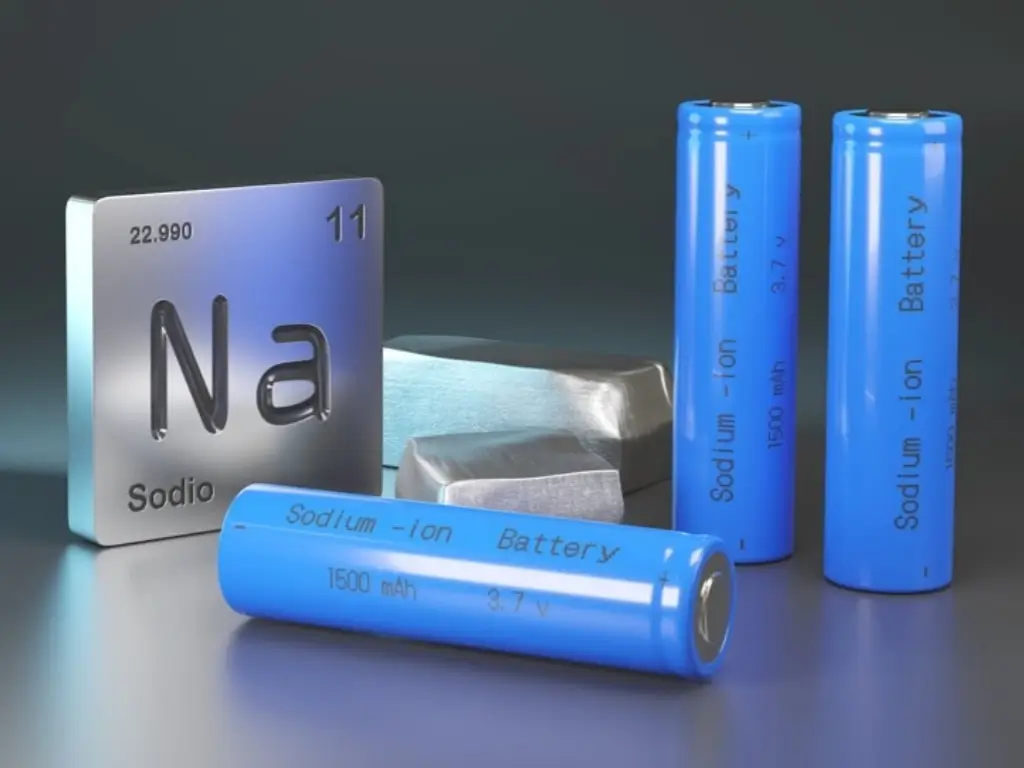
Sodium ion: Battery developers are testing sodium chemistries because sodium is less expensive, more abundant and more easily mined than lithium, according to the Department of Energy’s Argonne National Laboratory. The lab patented a cathode material that replaces lithium ions with sodium. The group estimates that a sodium ion battery would cost a third less than a lithium ion battery, and the sodium ion cell also contains manganese and iron, which are widely available. A short driving range is the downside to sodium ion, the lab said. Sodium metal is about three times heavier than lithium, which adds to the battery weight and limits range.
At least two Chinese companies have announced plans for EVs powered by sodium ion batteries, but “the jury is still out in the West,” said Conrad Layson, senior alternative propulsion analyst at AutoForecast Solutions.
Australia, Chile and China continue to dominate lithium production, according to a BP analysis of data from the U.S. Geological Survey and British Geological Survey World Mining Data. Sodium is plentiful in the U.S., said Reeja Jayan, associate professor of mechanical engineering at Carnegie Mellon University.
“It is an evolving battery chemistry so there’s a good chance to establish yourself better in that area,” she said.
Lithium manganese iron phosphate: Manganese, iron and phosphate are generally affordable and available. This chemistry blends the best of nickel cobalt manganese cells with the best of lithium iron phosphate cells, said Nathan Niese, global lead for electric vehicles and energy storage at Boston Consulting Group. The lifespan is shorter than a lithium iron phosphate cell, but energy density is higher, he said.
Lithium sulfur: Lithium sulfur chemistries have a relatively high energy density and can charge quickly, Layson said. Sulfur is extremely abundant and inexpensive, compared with the cobalt and nickel needed for the nickel cobalt manganese aluminum chemistries used in EVs today, according to the Argonne National Laboratory. Lyten, a lithium sulfur battery supplier, said its batteries will launch this year in nonautomotive applications such as drones and satellites. Long term, lithium sulfur cells could cost half as much as the nickel cobalt manganese chemistries used in today’s EVs and with potentially double the energy density, Lyten said.
Solid-state advancements
Automakers and battery makers consider solid-state batteries as a key technology. They are investing in the technology that is expected to enhance range, charging speed and safety.
Semisolid state batteries offer similar benefits and are closer to commercialization.
The semisolid options have small amounts of liquid or gel that quickly diffuse ions to charge and discharge an EV battery. Traditional lithium ion batteries are flooded with liquid electrolytes, which are more fire prone.
Many companies are trying to commercialize semisolid or solid-state technology for the U.S. market.
QuantumScape, a California company backed by Volkswagen and Microsoft co-founder Bill Gates, has developed a ceramic electrolyte technology that eliminates dendrite-forming graphite anode . China controls the bulk of the global supply of battery-quality graphite.
QuantumScape expects to begin high-volume production of cells for advanced testing in 2025, said Asim Hussain, the company’s CMO. QuantumScape and PowerCo. — Volkswagen Group’s battery company — partnered to industrialize QuantumScape’s technology.
Partnering is the fastest way to achieve gigawatt-hour-scale production, the companies said. Depending on the progress of the partnership, QuantumScape will license PowerCo. to mass produce battery cells based on the QuantumScape technology platform.
Factorial, a semisolid battery developer, delivered test samples to Mercedes-Benz in June. 2024. The testing includes validating the module and pack designs against Mercedes-Benz’s performance specifications. Factorial also has joint development agreements with Stellantis, Hyundai Motor Co. and Kia Corp.
Solid Power, a Colorado company backed by and working with Ford, BMW and Hyundai among others, is pursuing the same sulfide electrolyte technology as Toyota.
Chinese companies also are pushing hard on solid-state battery development.
Solid-state technology is advancing quickly, QuantumScape CEO Siva Sivaram told Automotive News. Industrialization is the next step.
“It is not ‘Can I do it?’ It is ‘Can I do it in volume and scale and deliver to customers?’ ” Sivaram said. “There are many steps between here and there.”
Conclusion
The chemistries of batteries are advancing very quickly. Many companies in the US, Europe, Japan and China are racing to be the first to develop new batteries with high energy density that can be produced cheaply with safer operations. Those successes will ensure a greener environment for us, our children, our grandchildren and future generations.
However, many of us continue to drive powerful cars with higher consumption of expensive petrol and diesel. In Malaysia’s case, the efforts of the Malaysian government to eliminate diesel subsidies created negative comments from ta large section of the Malaysian population, citing inflation would become high, which now stands at about 2.0 per cent.
Leaders are critical in the performance of organizations at any stage of their life cycles. The slides attached describe some examples of leadership styles that can be adopted by innovators in guiding the growth of their firms.
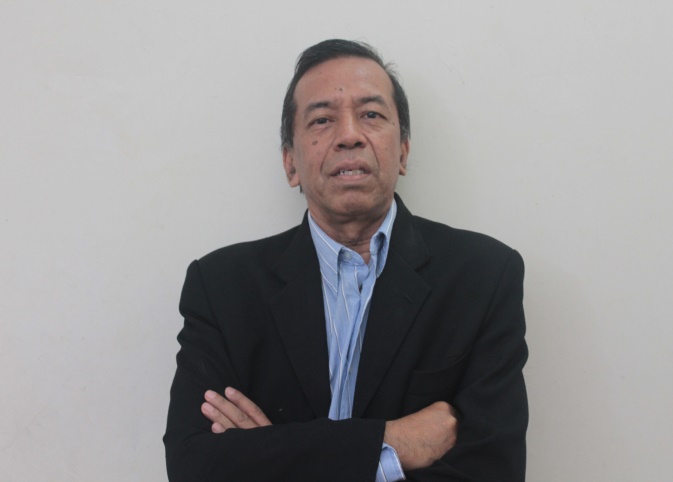
Name: Dato’ Dr Anuar Md Nor Occupation: Founder of Bison Consulting
Dato’ Dr Anuar Md Nor is a well-known business leader and consultant based in Malaysia. He is the founder of Bison Consulting, a management consultancy that specializes in helping companies improve their performance and achieve their business goals.
Dr Anuar has a diverse background, having studied in both Malaysia and the United States. He holds a Bachelor’s degree in Chemical Engineering from the University of Malaya, a Master’s degree in Industrial Engineering from the University of Arizona, and a Doctorate in Business Administration from the International Islamic University Malaysia.
Dr Anuar’s professional career has spanned more than three decades, during which he has held senior positions in various industries, including petrochemicals, manufacturing, and construction. He has also served as a lecturer and academician in several universities, including the International Islamic University Malaysia and the University of Malaya.
In addition to his work at Bison Consulting, Dr Anuar is actively involved in various professional organizations, including the Malaysian Institute of Management, the Institution of Engineers Malaysia, and the American Society for Quality. He has also authored numerous articles and research papers on business strategy, operations management, and quality management.
Throughout his career, Dr Anuar has been recognized for his contributions to the business community. He was awarded the prestigious Darjah Dato’ Paduka Mahkota Perak (DPMP) by the Sultan of Perak in 2018 in recognition of his outstanding achievements in the field of business and entrepreneurship.
My comment on my biodata by Chat GPT.
Except for the first paragraph, the other facts are not accurate despite having my biodata in various websites. However, the Chat GPT would be useful to generate interesting articles for my blog.
Dato’ Dr Anuar Md Nor is a specialist in the area of innovation management, venture capital and business networks as strategic resources. He teaches these subjects at Azman Hashim International Business School, Universiti Teknologi Malaysia. He is also Adjunct Professor at the the School of Management, Asia e University, Malaysia.
He founded Bison Consulting, a consulting firm that offers services such as intellectual property valuation, firm valuation, grant application and “halal” certification application.He has authored three books, Securing Private Equity in Malaysia, The Palm Oil Multinationals from Malaysia, and The Role of Networks in Internationalization Process.
He has an undergraduate degree in Chemical Engineering from University of Birmingham, England, an MBA from School of Management, University of Bradford, England, an MSc. in Management of Technology from Massachusetts Institute of Technology, Boston, USA. He completed his PhD in Business Management from Universiti Teknologi MARA (UiTM), Shah Alam, Malaysia.
Before establishing Bison Consulting, he was CEO of PNB Equity Resources Sdn Bhd, a subsidiary of Permodalan Nasional Berhad, the largest investment company in Malaysia and CEO of Malaysian Technology Development Corporation Sdn Bhd, the venture capital company owned by Malaysian government. During his tenure, he had invested in high technology companies in Silicon Valley, USA.
Dato’ Dr Anuar Md Nor lives with his wife, Datin Azimah, in Seremban, Negeri Sembilan, Malaysia. It is a commuter town about one hour drive to Kuala Lumpur, the capital city of Malaysia. He tends his garden plot planting several fruit trees, while his wife tends her orchid plants. Our four children work in Kuala Lumpur. Our second son is a famous artist with sculptures installed in London and Singapore, having graduated from Rhode Island School of Design, USA, and Central Saint Martins, London, UK. Our daughter graduated from the Australian National University, Canberra. Our eldest son manages his own design company while our youngest son works as a securities trader in a Malaysian Investment Bank.
We share our home with seven cats, namely, Junior, Baby, Yen, Charlie, Malaya, Tuya and Momo, and they like to be fed with boiled sardines.
Electric cars are hogging the headlines in many countries. For example in Norway, electric cars represent about 40 per cent of new car registrations. Charging stations for electric cars are everywhere. Norwegian government is providing incentives and perks to encourage drivers to purchase electric cars.
Buyers do not pay import tax and VAT on plug-in cars, shaving thousands of US dollars of the upfront cost. Running costs are lower because electricity is cheaper than petrol and diesel, while road tax is reduced, and will drop to zero in 2018.
Electric car owners also do not pay road tolls, ferry fees and city emission charges that other drivers face Moreover, the drivers can park for free and bypass traffic by driving in bus lanes.
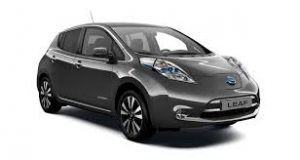
A consulting company, EV-Volumes, which tracks electric cars globally, estimated the sales of electric cars have exceeded 3 million units. The list of car companies intending to offer electric car models is growing as shown below:
No.
Car Manufacturers
Models
Year
1
Daimler
Smart
2009
2
Peugeot
iOn
2010
3
Mitsubishi
I MiEV
2010
4
Nissan
Leaf
2011
5
Renault
Bongo Z. E.
2011
6
Tesla
Model S P90D, Model S 70D
2012
7
Bollore
Bluecar
2012
8
Honda
Fit EV
2012
9
Ford
Fpcus
2012
10
Renault
Zoe
2013
11
VW
e-Up!
2013
12
BMW
I3
2013
13
Chevrolet
Spark EV
2013
14
Fiat
500e
2013
15
Nissan
e-NV200
2014
16
Kia
Soul
2014
17
VW
e-Golf
2014
18
Mercedes
B-Class ED
2014
19
Tesla
Model X
2015
20
Nissan
Leaf
2015
21
Chevrolet
Chevy Bolt
2016
22
Renault
Zoe upgrade
2016
23
BMW
I3 upgrade
2016
24
Mercedes
Smart Fortwo
2016
25
Citroen
e-Mehari
2016
26
Opel
Ampera-E
2017
27
VW
eGolf upgrade
2017
28
Hyundai
Ioniq EV
2017
29
Mercedes
Cabrio, Forfour
2017
30
Audi
e-tron
2018
31
Jaguar
I-Pace
2018
32
Tesla
Model 3
2018
33
Daimler
Generation EQ
2019
34
VW
I.D.
2019
35
Lucid Motors
Air
2019
Source: FTWeekend, 4 November/5 November 2017
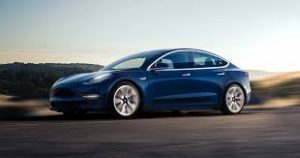
Tesla Model 3, Electric Car with Many Advanced Features
The March of Robots
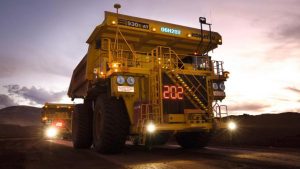
Robots are quietly changing the employment landscape. The large mining companies such as Rio Tinto are replacing human drivers in managing the operations of the huge trucks that carry commodities such as iron ores. The drivers who drive these monster trucks are well paid but the job is dangerous. In Rio Tinto’s mines at the remote Pilbara in Western Australia, the monster trucks are now driverless. They are being controlled 1,046 kilometres away in a control room in Perth, Western Australia. These monster trucks operate 24 hours, without tiring.
Monster Truck is Remotely Controlled
In Santa Clara, California, US, robots are being used in selling houses. These robots are operated by the high technology property management start-up, Zenplace, and are intended to take the hassle out of coordinating showing times between real estate agents and prospective renters. The robot is operated by a real estate agent to save driving time in coordinating with the client’s schedules. Now, with the robot, the real estate agent can do between 150 and 20 showings a day, which enhances his/her commissions.
Robot Used in Selling Real Estate
The two cases show that robots can have both negative and positive impacts. Even in a developing country like Malaysia, robots and automation are chipping away many routine jobs. Fortunately, the employees, who are affected by automation, are re-assigned to other jobs.
In 2018, the employees, whose jobs are taken by robots, may not be so lucky.
Best wishes for 2018 from Dato’ Dr Anuar Md Nor, President, Bison Consulting.