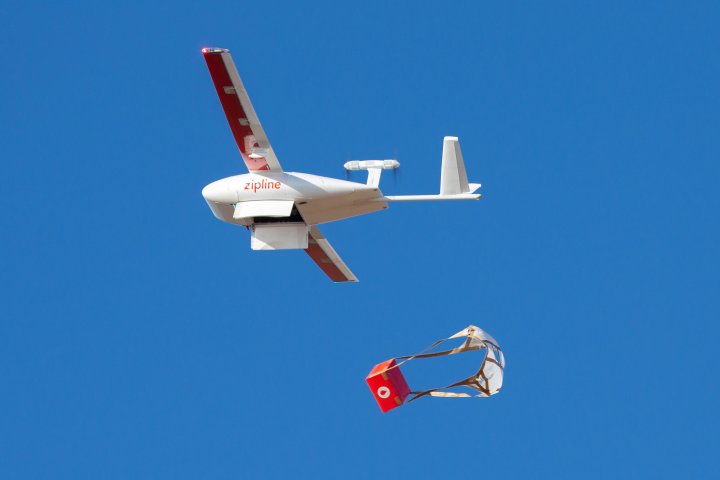
A drone used by Zipline to deliver medicines via a parachute
Usually you do not expect Africa to be a hot bed for innovation. A new revolutionary healthcare technology could change this perception. Neil Munshi, writing in Financial Times on April 25th, 2019, noted this technology will be applied in Africa as well as outside Africa.
The world’s largest drone delivery
network, ferrying 150 different medicines and vaccines, as well as blood, to
2,000 clinics in remote part of Ghana, was announced on April 24th,
2019. The network represents a major expansion for Silicon Valley start-up Zipline,
which began delivering blood in Rwanda in 2016, using pilotless, pre-programmed
aircraft.
The move along with a new agreement in
Rwanda signed in December 2018, takes the company beyond simple blood
distribution to more complicated vaccine and plasma deliveries.
“What this is going to show is that you
can reach every GPS coordinate, you can serve everybody, “ said Keller Rinaudo,
Zipline chief executive.
“Every human in that country or region
can be within a 15-25 minute delivery of any essential medical product; it is a
different way of thinking about universal coverage.”
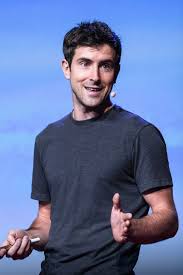
Keller Rinaudo, CEO of Zipline (Image captured from the company’s website, flyzipline.com)
Zipline will deliver vaccines for
yellow fever, polio, diphtheria and tetanus which are provided by the World Health
Organization’s (WHO) expanded project on immunization. WHO will also use the
company’s system for future mass immunization programmes in Ghana. Later this year,
Zipline has plans to start operations in North Carolina, US and Southeast Asia.
The company said it would be able to
serve 100 million people within a year, up from the 22 million that it projects
in Ghana and Rwanda will cover. In Ghana Zipline said healthcare workers would
receive deliveries via a parachute drop within about 30 minutes of placing
their orders by text message. Zipline’s drones will have a round-trip range of
160 km, travelling at 100 km an hour.
The drones are the least complicated
part of the business, Mr Rinaudo said, compared with designing a complex supply
chain where none exists, integrating into national healthcare systems and
working with regulators such as the civil aviation authorities in Rwanda who
touted Zipline to their Ghanaian counterparts. Ghana’s president, Nana Akufo-Addo,
has been known for his plan to take the country-a lower-middle-income nation
with about US$4,500 in per capital income in purchasing power parity terms-“beyond
aids”.
But his ambitious economic reforms
programme has been slow to progress and much remains underdeveloped.
Still the International Monetary Fund (IMF) earlier projected Ghana to be the fastest-growing economy in the world this year, at 8.8 per cent.
In a recent blog we highlighted meat from plants. The high-fashion industry is also embracing plant-based materials, as explained in an article written by Richard Grassie in the FT Weekend magazine on December 15th, 2018.
Leading this revolution is manwear brand, Brave GentleMen. Its founder, Joshua Katcher, created the company in 2008 with a passion for high-end clothing that does not use animal products- not just animal skins and fur, but also silk (which can involve boiling and gassing 6,600 silkworm larvae per kg of silk), down (which is often plucked from live geese and ducks) and wool (where processes can include anaesthetic-free castration, and mulesing-the removal of skin from the rear quarters of a merino sheep to prevent fly strike).
Joshua Katcher, a pioneer in animal-free high-fashion material
In 2015, Brave GentleMen opened its first store in Brooklyn,New York, US. For double-breasted coats, it used 100 per cent recycled polycotton blends diverted from plastic waste stream and spun into yarn. The coats are lined with vegan “future silk” produced from a variety of polyesters, including plastic bottles.
Joshua Hatcher reported that he is looking forward to a day that he can use laboratory-grown leather in his collections. He said he is in talks with some bio-fabrication start-ups, deciding with to work with. Materials grown in the laboratory would offer a big solution to a great many problems. Laboratory-grown as well as fungi- and plant-based d materials such as mushrooms and pineapple are the future.
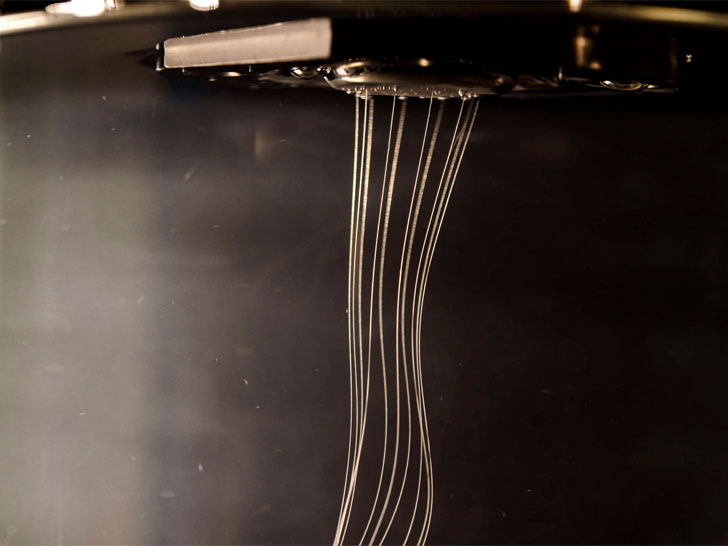
Californian technology company, Bolt Threads, is a leading innovator in laboratory-made leather and silk. After studying natural silk proteins, originally from spiders, it inserted genes into yeast and used fermentation process to produce an animal-free silk, which is spun into fibres. This method resulted in the company’s first commercial product in 2017, the limited edition Bolt spun tie.
Artificial silk produced by Bolt Thread Inc
The company has also produced the first consumer synthetic leather called Mylo, created by studying mycelium, the root structure of mushrooms, to give a mushroom-based leather-like material in a laboratory.
Pineapple leaf-based leather by Pinatex
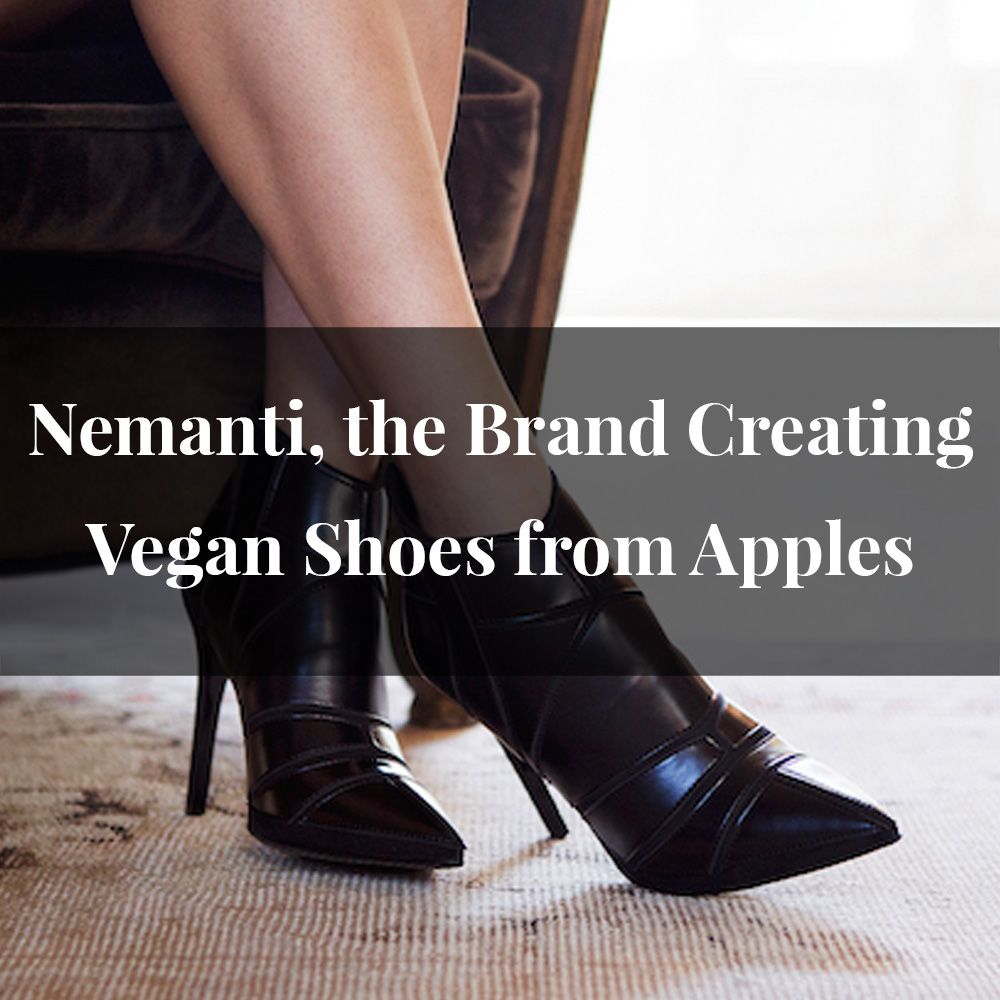
A number of other brands are also offering new alternatives to traditional animal products. Interesting innovations can be found among companies, many of them brands, using fibres from trees, fruits and fungi. One company, Pinatex, created a material from pineapple-leaf fibre. Apple cores, discarded by agribusiness industries, are used by Italian footwear company, Nemanti, for a range that includes a monkstrap weekend shoe.
Conclusion
Visionaries like Joshua Katcher and others have been leading the efforts to use plant-based materials for use in the high-fashion industry.According to the 2017 Pulse of the Fashion Industry report, leather, wool, silk and cotton are the top four materials whose production most damages the environment
We hope, as Joshua Katcher noted, one day all leather will be animal-free. For a long time, animals have been suffering to give us the high-fashion look and feel.
Note: We wish to thank the companies mentioned in the article for permission to use the images.
Tim Harford in his book, Fifty Things that Made the Modern History,listed the S-bend as one crucial invention . He noted that in 1800’s, as London’s population expanded in number, the city’s system for disposing of human waste became woefully inadequate. The main system used then was cesspits, which were prone to leaking, overflowing and generating significant odour. A number of inventors came out with solutions to address this human waste problem. One prominent inventor was Alexander Cummings, who was known for mastery of precision mechanics. However, his well-known invention was a pipe with a curve in it.
Cumming’s Invention
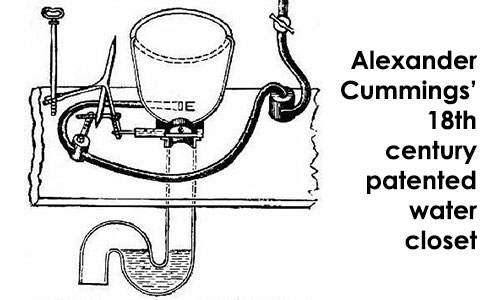
In 1775, Cummings patented the S-bend. This became the missing part to create the flushing toilet, which led to public sanitation as we know it today, according to Tim Harford. Previously, flushing toilet was a failure due to the problem of smell: the pipe that connected the toilet to the sewer,allowing urine and human waste to be flushed away, would also let sewer odours waft back-up, unless an airtight seal could be developed.
Cumming’s solution was simple: bend the pipe. Water settled in the “dip”, stopping smells coming up;flushing the toilet replenished the water. His design had a sliding valve in the outlet above the tap. The design is still used today.
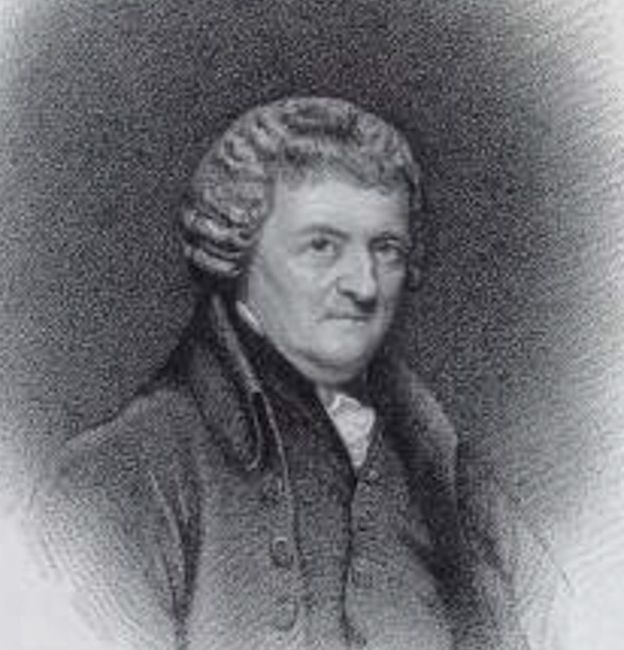
Alexander Cumming
We all should be thankful to Cummings for giving us the personal convenience in managing our daily needs. We noted the modern toilet only touched our live in the early 1970s. Before that we used rivers, small streams, small ponds and open space. Many times, especially in early mornings, there were many people lining up the river in our village. Personal convenience vastly improved when the Malaysian government provided subsidies to Malaysian families to build outdoor toilets using bucket of water to flush the toilet. What a total relief for all of us, especially for women folk.
Now, we have modern indoor toilet in our house. We spend a lot of time sitting on it while surfing the internet, read book or magazine and even answer emails.
A Lot of People Still Do Not Have Toilets
Yet, there are more than 2.3 billion of people still without basic sanitation according to Guy Hutton, a senior adviser for water, sanitation and hygiene with UNICEF, when he was quoted in the Staronline, a Malaysian newspaper on 6.11.2018.
In addition, according to WHO, more than half of the volume of human waste escapes into the environment untreated.
The “toilet” problem has attracted the attention of Bill Gates and his wife, Melinda. The Bill and Melinda Foundation spent US$200 million over seven years funding sanitation research, developing some 20 novel toilets and sludge processing designs and convert bodily waste into clean water and fertilizer.
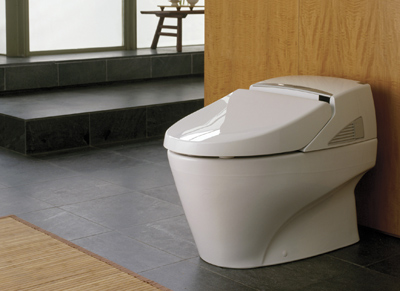
Modern toilet with many features from Toto
Conclusion
The S-bend and flushing toilet have improved the quality of lives of billion of people worldwide. However, a significant number of the world’s population is still inaccessible to basic sanitation. Thanks, we have philanthropists like Bill Gates and Melinda who saw the need to solve this basic human sanitation.We are afraid that one day, these people have no more open space to bury their waste!
Beyond Meat Inc., a company producing plant-based meat has submitted an application for an initial public offering (IPO) in the US. We have reviewed its prospectus and noted what makes Beyond Meat burger unique.
Plant-based burger produced by Beyond Meat Inc.
Overview
Beyond Meat is one the fastest growing food companies in the US, offering a portfolio of revolutionary plant-based meat. It builds meat directly from plant, an innovation that enables consumers to experience the taste, texture and other sensory attributes of popular animal-based products while enjoying the nutritional benefits of eating plant-based meat products.
Its products are designed to appeal to a broad range of customers, including those who typically eat animal-based meat, which is worth US$1.4 trillion globally. According to the company, it had developed three plant-based product platforms that align with the largest meat categories: beef, pork and poultry. It creates plant-based products using proprietary scientific processes that determine the architecture of the animal-based meat the company seeks to replicate and then assemble it using plant-derived amino acids, lipids, trace minerals and water. The company is focusing to improve its products so that they are, to the human sensory system, indistinguishable from their animal-based counterparts.
Its flagship product is The Beyond Burger, the world’s first 100 per cent plant –based burger merchandised in the meat case of US grocery stores. The Beyond Burger is designed to look, cook and taste like traditional ground beef. The products are currently available is about 28,000 points of distribution primarily in the US as well as several other countries.
Unique Approach to market its Products
Instead of marketing and merchandising The Beyond Burger to vegans and vegetarians (who represent less than 5 per cent of the US population), it requests that its products to be sold in the meat case at grocery stores where meat-loving customers are accustomed to shopping for their proteins. The marketing approach has helped drive greater brand awareness with its customers.
The Beyond Burger is now carried by approximately 11,000 grocery stores in the US. Its products are also now carried by 11,000 restaurants.
The Market for Meat
The company notes that the meat industry is large and global. This meat industry is comprised of fresh and packaged animal-based meat for human consumption. According to data from Fitch Solution Macro Research, the meat industry is the largest category in food and in 2017 generated estimated sales across retail and foodservice channels of about US$270 billion in the US and about US$1,400 million globally.
The company believes that consumer awareness of the perceived negative health, environmental and animal-welfare impacts of animal-based consumption has resulted in a surge in demand for viable plant-based protein alternatives. In the US, the current size of the non-dairy milk category is equivalent to approximately 13 per cent of the size of the milk category. According to Mintel report, the non-dairy milk category in the US was estimated to be US$2.0 million in 2017. The success of the plant-based dairy industry was based on a strategy of creating plant-based dairy products that tasted better than previous non-dairy substitutes, packaged and merchandised adjacent to their dairy equivalent.
The company is applying the same strategy to the plant-based meat category. It expects to grow to be at least the same proportion of the approximately US$ 270 billion meat category in the US, which over time would represent a category size of US$35 billion in the US.
Financials
The company reported that it had experienced net losses since its inception in 2009. In the years ended December 31st, 2016 and 2017, it incurred net losses of US$25.1 million and US$30.4 million, respectively. In the same period, the company recorded revenue of US$16.18 million in 2016 and US$32.58 million, respectively.
The company would be raising additional capital through an IPO.
Conclusion
We support the efforts of the company to develop plant-based meat that tastes better than the meat from animals. The new wealthy consumers in Malaysia, China and Indonesia (with the exception of India) are consuming more meat steaks and burgers, which are imported from Australia, Brazil and the US. This need to supply more animal meat is putting pressure on existing pastures and grasslands for rearing of cattle. Scientists have reported that the raising of cattle for meat and milk would lead to emission of methane to the atmosphere.
We hope in the near future, patrons in high-end restaurants in Asia would be eating plant-based meat without realizing it.
Quick Data on Cattle Inventory
Cattle in a pasture
Based on data published by http://beef2live.com, according to the FAO, the world has 1,468 million head of cattle. Brazil has the largest cattle inventory at 211. 76 million, followed by India with 189 million, China with 113.5 million, the US with 89.3 million, Ethiopia at 54 million, Argentina with 51.1 million and Sudan with 41.9 million. About 104 countries have a cattle inventory in excess of 1 million heads.
In early 2000, my son was accepted to study at Rhode Island School of Design (RISD) in the US. Being my wife’s boy, she wanted to talk to him regularly on the phone. We would call the local telephone operator and she got him connected to us. Then the magic word, do you accept reverse call? My wife’s conversation was short as it was expensive to have long distance call conversation. Telephone companies were making huge profits from long-distance calls.
Later, with the internet, making long distance call was a bit less expensive. However, we needed to go to a telecommunication shop called “wartel” to use internet telephony to make long-distance calls. The “wartel” was always full with Indonesians, Filipinos, Bangladeshis and locals who would talk to their friends for hours for a fixed hourly charge. Gradually, the “wartel” closed down for lack of business due to the introduction of Skype. People could make long distance call on their computers and notebooks for free.
My wife was one of the happiest mothers as she could talk regularly and freely with our daughter, who was studying at the Australian National University in Canberra, Australia.
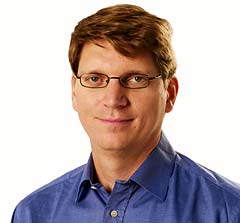
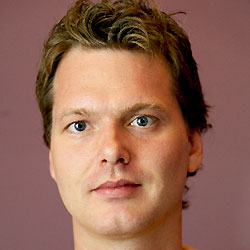
Thank You Niklas Zennstrom and Janus Friis for Skype
Niklas Zennstrom
Janus Friis-Co-Founder
Swedish Niklas Zenntrom and co-founder Dane Janus Friis are now billionaires who sold Skype to eBay Inc. for US$2.6 billion in 2005. Skype is a telecommunications application software product that specializes in providing video chat and voice calls between computers, tablets, mobile devices and others via the internet. Skype implements a freemium business model. Much of the service is free. Now Skype, part of Microsoft Corporation, has millions of users. Skype was first released in August 2003.
Quotes by Niklas Zennstrom:
“The telephone is a 100-year-old technology. It’s time for a change. Charging for phone calls is something you did last century
If you could utilize the resources of the end users’ computers, you could do things much more efficiently.”
In an interview with The Times of London on September 30th, 2018, Niklas Zennstrom outlined his current activities. Skype was considered as one of the most successful technology businesses that emerged from Europe. Since starting Skype in 2003, Niklas Zennstrom has been in a mission to prove world –beating technologies can be started in Europe.
In 2017, his venture fund, Atomico (atomico.com), raised a US$765 million technology fund. The technology fund’s successful investments include Rovio, the creator of the Angry Birds games franchise from Finland, Clash of Clans Supercell and The Climate Corporation.
We hope Niklas Zennstrom will invest in new technologies that would have similar benefits and simplify the lives of parents like Skype did for us.
Previously, we wrote an article on the development of cochlear implant. This article will cover the business of cochlear implantation.
Market research company, Grand View Research, estimated that the cochlear implantation market was worth US$1.1 billion in 2015. As a medical device, with cochlear implant, a person can achieve better sentence understanding as compared to hearing aids. At present, cochlear implants are the only effective means of allowing the social interactions of individuals suffering from hearing loss. The first cochlear implant was approved by FDA of the US in 1984, which was made by 3M Corporation, the then market leader.
Increasing incidence of neonates (new born child) born with hearing defects is driving the market for cochlear implant systems. According to World Health Organization (WHO) hearing loss statistics, each year, approximately, 134 million children are born, out of which approximately 1 to 3 newly- born per 1,000 are with learning loss, which is treatable only with cochlear implant. Thus, there is a need for a minimum of 134,000 cochlear implants annually. The number of cochlear implants is likely to increase to approximately 160,000 per year if the hearing loss is considered for both ears.
Apart from the rising number of patients suffering from hearing loss, technological advancements, strategic initiatives by industry players, and favourable government regulations are driving the growth of the global cochlear implant systems market in 2016. For instance, in 1979, the University of Melbourne and Nucleus Limited got approval from the Australian Department of Productivity to manufacture and market 22 cochlear implants. In another event, the National Institutes of Health (NIH) of the US, funded the first consensus conference to speed up the acceptance of multi-electrode cochlear implants. Market players are focused on the development of devices with reduced noise, quickly chargeable, long battery life, and waterproof. According to the World Health Organization (WHO), the current production of hearing loss aids is only 10 per cent of the actual need. Thus, there is a lucrative opportunity for new companies to enter the global cochlear implant systems market.
The global cochlear implant systems market has been segmented based on type of fitting, end-user, and region. Based on type of fitting, the market is segmented into unilateral implantation and bilateral implantation. The unilateral implantation segment dominates the global cochlear implant systems market owing to low cost. Unilateral implantation is common in adults. The bilateral implantation segment is expected to expand at a fast growth in future owing to rising demand for cochlear implants by pediatric patients suffering from hearing loss. Moreover, several countries are offering reimbursement only for bilateral implantation contributing to the growth of the segment. In terms of end-user, the market is segmented into hospitals, ENT clinics, and other end-users. The ENT clinics segment dominates the global cochlear implant systems market in 2016, owing to increasing patient population suffering from hearing loss, and growing patient preference towards treatment in ENT clinics in emerging countries. According to WHO estimates in 2012, out of the total worldwide population with hearing impairment, 91 per cent were adults and 9 per cent were children.
Geographically, the global cochlear implant systems market is distributed over North America, Europe, Latin America, Asia Pacific, and Middle East and Africa. Asia Pacific region is expected to dominate the global cochlear implant systems market owing to the high prevalence of hearing defects in the region. Middle East and Africa region is expected to account for the second largest share in 2016. This is attributable to the highest incidence of otitis media, ear infections owing to lack of proper hygiene practices, and increasing pregnancy and genetic complications leading to hearing loss in neonates. Europe is the next largest market for cochlear implants owing to increasing geriatric population.
Competitive Market Share
Cochlear implant systems industry is consolidated with presence of few players such as Cochlear Limited (Nucleus), Sonova, William Demant and MED-EL. According to market research company, Global Market Insights, Inc., the manufacturers are engaged in rigorous research and development activities aimed at improving hearing outcomes and expanding indications for these solutions. The industry participants employ strategies such as collaboration, acquisition, new product development and expansion of manufacturing capacity for increasing their market presence.
Cochlear Limited, the market leader
Early pioneer in implants
A key participant in cochlear implants
Business Performance of Key Participants
We have analysed the annual report of Cochlear Limited, which is the global leader in implantable hearing solutions with products including cochlear implant, bone conduction implants and acoustic implants. Cochlear Limited commenced its operation in 1981 as the Nucleus Group and in 1995 listed on the Australian Stock Exchange (ASX). It is based on the campus of Macquarie University in Melbourne, Australia. The company estimates that more than 450,000 recipients have been implanted with one of its implants.
The company invested more than A$150 million each year in research and development activities and currently participated in more than 100 collaborative research activities. Its 2017 financial performance is highlighted below:
Cochlear implants
32,552
Sales revenue
A$ million
Cochlear implants
767.781
Services (sound processor, upgrades and accessories)
An article in the London Times on August 28th, 2018, described a miracle moment of baby Max when a cochlear implant was switched on in May 2018, just after his first birthday, and Max turned to his mother, Rebecca, in wide-eyed, open-mouthed astonishment.
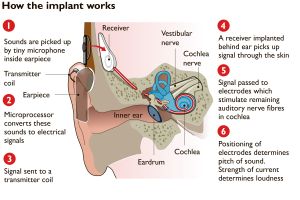
The cochlear implants, which cost about US$10,00 for each ear, are electronic devices that perform the same action as the inner ear, or cochlea, which is often damaged in people who are deaf.
A sound processor worn outside the ear captures sounds and turns them into digital signals that are picked up by an implant placed inside the head via surgery. It converts the signals into electrical impulses that it sends through the ear to stimulate the hearing nerve. This sends signals to the brain that are interpreted as sound.
The research efforts on cochlear implant had been long that started in the 1950s, thanks to the pioneering efforts of scientists such as Mr Djourno and Mr. Eyries in France, Dr James Doyle in USA, Dr Simmons in USA, and Dr Graem Clark in Australia.
An excellent 1993 paper by Andrew H. Van de Van and Raghu Garud, Innovation and Industry Development: The Case of Cochlear Implant, examined how the cochlear implant industry had emerged from 1960s to 1990s. They noted the existence of an industrial infrastructure that includes institutional arrangements, resource endowments, and technical economic activities.
It is found that this infrastructure of cochlear implants industry emerged through an accretion of numerous technical and institutional events involving many public and private sector actors over an extended period of time.
Moreover, this institutional arrangements and resource endowments that emerged to facilitate and provide momentum of the cochlear implant industry became the inertial forces that hindered subsequent technological developments by private firms. The findings emphasize that the management of innovation must be concerned not only with micro-developments of a proprietary technical device but also with the creation of an industrial system that embodies the social, economic, and political infrastructure that any technological community need to sustain its members.
Reference:
Andrew H. Van de Ven and Raghu Garud (1993). Innovation and Industry Development: The Case of Cochlear in Research on Technological Innovation, Management and Policy, Volume 5, page 1-46.