
Move over Saudi Arabia, Russia and Venezuela: New Energy Giants are going to be Australia, Chile and DRC

Background

We noted an interesting article by Roger Boyes in the London Times on November 14th, 2018. He predicted that the push to produce electric cars worldwide would alter the dynamic of the existing energy-producing countries. The International Energy Agency has forecast that oil use by cars will peak in seven years because of the increasing number of drivers in emerging markets and Asia mega-cities. Then, electric vehicles will start to make a significant impact:300 million electric cars on the road by 2040. This will alter the energy value chain. The source of energy will shift from fossil fuel (crude oil) to mineral-based, namely lithium and cobalt to make powerful rechargeable batteries.

The Applications of Lithium

Spodumene, the main source of lithium

According to US Geological Survey, Mineral Commodity Summaries, January 2018 (The Report), global end-use markets of lithium are estimated as follow :

  1. Batteries, 46 per cent
  2. Ceramics and glass, 27 per cent,
  3. Lubricating greases, 7 per cent,
  4. Polymer production, 5 per cent,
  5. Continuous casting mould flux powders, 4 per cent,
  6. Air treatment, 2 per cent, and
  7. Other uses, 9 per cent.


Prices of Lithium

The Report noted that spot lithium carbonate in China ranged from US$15,000 to US$24,000 per ton throughout 2017 owing to tight supply of spodumene from Australia. The rest of the world experienced more modest price increases owing to supplies available from more diversified sources of lithium. Spodumene is a pyroxene mineral consisting of lithium aluminium inosilicate, LiAl(SiO₃)₂, and is a source of lithium. It occurs as colourless to yellowish, purplish, or lilac kunzite, yellowish-green or emerald-green hiddenite, prismatic crystals, often of great size.

Three spodumene operations in Australia and two brine operations each in Argentina and Chile accounted for the majority of world lithium production. The table below shows mine production and reserves of lithium.


Countries

Mine production in 2017 (Tons)

Estimated reserves (Tons)

US

35,000

Argentina

5,500

2,000,000

Australia

18,700

2,700,000

Brazil

200

48,000

Chile

14,100

7,500,000

China

3,000

3,200,000

Portugal

400

60,000

Zimbabwe

1,000

23,000

World total (excluding US)

43,000

16,000,000

Source: The Report


Australia, the main supplier of spodumene


Chile, a major supplier of lithium from brine operations

Owing to continuing exploration, lithium resources have increased substantially worldwide and total more than 53 million tons.

Substitutes

Substitution for lithium compounds is possible in batteries, ceramics, greases, and manufactured glass.


The Applications of Cobalt

Cobalt mineral

According to The Report, Democratic Republic of Congo (DRC) is the leading source of mineral cobalt, supplying more than one-half of world cobalt mine production. With the exception of production in Morocco and artisanally mined cobalt in DRC, most cobalt is mined as a by-product of copper or nickel. In 2017, average annual cobalt prices more than doubled, owing to strong demand from consumers, limited availability of cobalt on the spot market, and an increase in metal purchases by investors.

China is the world’s leading producer of refined cobalt. Much of China’s production was from ore and partially-refined cobalt imported from DRC. China is the world’s leading consumer of cobalt, with nearly 80 per cent of its consumption being used by the rechargeable battery industry.

The table below shows mine production and reserves of cobalt.


Countries

Mine production in 2017 (Tons)

Estimated reserve (Tons)

US

650

23,000

Australia

5,000

1,200,000

Canada

4,300

250,000

DRC

64,000

3,500,000

Cuba

4,200

500,000

Madagascar

3,800

150,000

New Caledonia

2,800

Papua New Guinea

3,200

51,000

Philippines

4,000

280,000

Russia

5,600

250,000

South Africa

2,500

29,000

Zambia

2,900

270,000

Other countries

5,900

560,000

World total

110,000

7,100,000

Source: The Report


DRC is the biggest producer of cobalt and having the biggest reserves

The Report noted that terrestrial cobalt resources are about 25 million tons. In addition, more than 125 million tons of cobalt resources have been identified in manganese nodules and crusts on the floor of the Atlantic, Indian and Pacific Oceans.

Substitutes

In some applications, substitution for cobalt would result in a loss in product performance.


Conclusion

The electric car revolution would increase the consumption of cobalt and lithium, and the reduction in the consumption of petrol from crude oil. These mean countries such as Australia, Argentina, Chile and DRC would be the new energy giants in the next decades. What would the existing energy giants such as Saudi Arabia, Russia and Venezuela do with their plentiful reserves of crude oil?


Vehicle-to-Grid: Electric Vehicles Supply Power to the Grid

Meter reader of our electricity company

Introduction   

Every month, a meter reader, wearing light blue shirt, will be entering our house compound to read the electricity meter at our house. Then, he will drop the electric bill into our mailbox. This October’s bill reads RM294.

We dream of a day that we will receive a cheque from the meter reader instead of the monthly electricity bill. That day will be coming soon. On October 23rd, 2018, it was reported that an electric car Nissan Leaf, manufactured by Nissan, became the first electric vehicle (EV) to secure regulatory approval as an energy backstop for Germany’s electricity grid.

So-called vehicle-to-grid (V2G) technology is a connection between the EV and the electricity grid through which power (electricity) can flow from the grid to the vehicle and vice versa. That potentially enables car owners to sell electricity to the electricity network supplier. In addition, electricity network supplier companies could use EVs as a backstop if electricity demand rises.

The   International Energy Agency estimates that there would be 280 million EVs by 2040 compared with more than 3 million in 2017.

V2G system

Nissan is relying on the CHAdeMO charging standard, which had been jointly developed by several Japanese companies as a competitor to Tesla’s supercharger system and the European-backed combined charging system (CCS). That places Nissan at odds with European carmakers such as BMW and Volkswagen, which are promoting to have the CCS, which is capable of V2G services.

Nissan is ahead of its other competing technologies although Tesla’s supercharger can theoretically offer V2G services according to an industry expert.

Nissan has so far sold about 370,000 EVs and, along with top shareholder Renault, has been very active in exploring how car batteries can be integrated into the electricity supply system.

How Does V2G Technology Benefit Us?

According to ovoenergy.com, we are moving towards a situation where “two-way” chargers can enable homeowners with EVs to sell their power (electricity) back to the electricity network. It is a smart idea when over 90 per cent of cars are parked at any one time—which is a lot of energy just sitting there doing nothing.

Battery Degradation

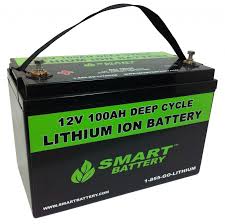
Lithium ion battery used in EV

Batteries have a finite number of charging cycles, as well as a shelf-life. Therefore, using an EV as grid storage can impact battery longevity. However, studies have shown that battery capacity is a complex function of factors, such as battery chemistry, charging and discharging rate, temperature, state of charge and age.

Most studies with slower discharge rates show only a few per cent of additional degradation.

Conclusion

We believe, with rapid progress in EV and V2G technology, our wish to have the meter reader drops a cheque into my mailbox for supplying power to the national electricity grid would be realized soon. First, we need to book a Nissan Leaf from our local Nissan dealer.

Electric Cars and Robots: Their Negatives and Positives

Background

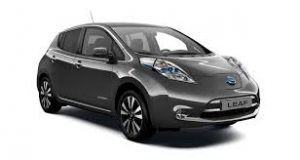
Nissan Leaf, Leading Electric Car in the Market

Electric cars are hogging the headlines in many countries. For example in Norway, electric cars represent about 40 per cent of new car registrations. Charging stations for electric cars are everywhere. Norwegian government is providing incentives and perks to encourage drivers to purchase electric cars.

Buyers do not pay import tax and VAT on plug-in cars, shaving thousands of US dollars of the upfront cost. Running costs are lower because electricity is cheaper than petrol and diesel, while road tax is reduced, and will drop to zero in 2018.

Electric car owners also do not pay road tolls, ferry fees and city emission charges that other drivers face Moreover, the drivers can park for free and bypass traffic by driving in bus lanes.

A consulting company, EV-Volumes, which tracks electric cars globally, estimated the sales of electric cars have exceeded 3 million units. The list of car companies intending to offer electric car models is growing as shown below:

No. Car Manufacturers Models Year
1 Daimler Smart 2009
2 Peugeot iOn 2010
3 Mitsubishi I MiEV 2010
4 Nissan Leaf 2011
5 Renault Bongo Z. E. 2011
6 Tesla Model S P90D, Model S 70D 2012
7 Bollore Bluecar 2012
8 Honda Fit EV 2012
9 Ford Fpcus 2012
10 Renault Zoe 2013
11 VW e-Up! 2013
12 BMW I3 2013
13 Chevrolet Spark EV 2013
14 Fiat 500e 2013
15 Nissan e-NV200 2014
16 Kia Soul 2014
17 VW e-Golf 2014
18 Mercedes B-Class ED 2014
19 Tesla Model  X 2015
20 Nissan Leaf 2015
21 Chevrolet Chevy Bolt 2016
22 Renault Zoe upgrade 2016
23 BMW I3 upgrade 2016
24 Mercedes Smart Fortwo 2016
25 Citroen e-Mehari 2016
26 Opel Ampera-E 2017
27 VW eGolf upgrade 2017
28 Hyundai Ioniq EV 2017
29 Mercedes Cabrio, Forfour 2017
30 Audi e-tron 2018
31 Jaguar I-Pace 2018
32 Tesla Model 3 2018
33 Daimler Generation EQ 2019
34 VW I.D. 2019
35 Lucid Motors Air 2019

Source: FTWeekend, 4 November/5 November 2017


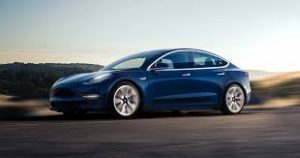
Tesla Model 3, Electric Car with Many Advanced Features

The March of Robots

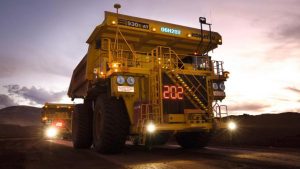
Robots are quietly changing the employment landscape.  The large mining companies such as Rio Tinto are replacing human drivers in managing the operations of the huge trucks that carry commodities such as iron ores. The drivers who drive these monster trucks are well paid but the job is dangerous. In Rio Tinto’s mines at the remote Pilbara in Western Australia, the monster trucks are now driverless. They are being controlled 1,046 kilometres away in a control room in Perth, Western Australia.  These monster trucks operate 24 hours, without tiring.

Monster Truck is Remotely Controlled

In Santa Clara, California, US, robots are being used in selling houses. These robots are operated by the high technology property management start-up, Zenplace, and are intended to take the hassle out of coordinating showing times between real estate agents and prospective renters. The robot is operated by a real estate agent to save driving time in coordinating with the client’s schedules. Now, with the robot, the real estate agent can do between 150 and 20 showings a day, which enhances his/her  commissions.

Robot Used in Selling Real Estate

The two cases show that robots can have both negative and positive impacts. Even in a developing country like Malaysia, robots and automation are chipping away many routine jobs. Fortunately, the employees, who are affected by automation, are re-assigned to other jobs.

In 2018, the employees, whose jobs are taken by robots, may not be so lucky.

Best wishes for 2018 from Dato’ Dr Anuar Md Nor, President, Bison Consulting.

The Unintended Benefits of Driverless Car Technology

Introduction

Buy brewers. Buy distillers. Buy restaurant companies. This was the conclusion the other day from stock market analysts at Morgan Stanley, who predicted that the arrival of the era of driverless cars would trigger a significant pick-up in alcohol consumption.

Autonomous vehicles and ride-sharing technology will enable us to glug more than ever, the American investment bank’s analysts argued. There would be “more opportunities to drink before getting into the car” and “more opportunities to drink while in the car”.

For drivers, the hours of down time spent staying dry because of the tiresome business of twiddling the steering wheel would soon be over. That would free up another 600 billion hours of potential drinking opportunity a year, they calculated, perhaps a bit too enthusiastically.

Past crackdowns on drink-driving from Scotland to China to Colombia had all led to slowing demand, Morgan Stanley said. Ergo, we should expect a boost to demand once people are liberated from that constraint. Within ten years, consumers would buy $125 billion a year more alcohol than otherwise, they concluded, lurching from not unreasonable guesswork about future behaviour to over-precise forecasting (the second gin and tonic often has that effect). Average global alcohol consumption growth would accelerate from 2.2 per cent a year to 3 per cent.

We can question the many assumptions. Who’s to say we won’t use the freed-up time to read novels or do in-car yoga? We can laugh at the focus on boozing rather than the important prizes of cleaner air, less congestion, a reduction in the 3,500 per day toll of road deaths and a more slowly warming planet. And we can shake our heads at the bogus precision.

Yet financial markets are having to grapple with what automotive innovation will mean, not only for the car industry but also for the way we live our lives and spend our money.

Technology Shifts Facing the Car Industry  

Legal & General said last week that the twin technology shifts facing the car industry — electric cars and autonomous vehicles — represented the biggest change since Henry Ford pioneered assembly line working in 1913, slashing production costs and dramatically widening car ownership. Until now, the motor industry has not faced the existential shocks that have forced other sectors such as retailing, the music industry and newspapers, for example, to rethink strategy. It has made phenomenal strides since the Model T, but they have always been incremental. Now it is facing its own Kodak moment.

“Cars have the potential to become the next technology super-cycle,” according to L&G, changing behaviour in the next 20 years in the same, profound way that the smartphone has in the past ten.

For investors this kind of breathless prognostification raises as many concerns as opportunities, alongside considerable scepticism. The last “super-cycle” they were encouraged to buy into — an era of higher commodity and energy prices driven by insatiable Chinese demand — went bust in 2014. Many lost heavily backing oil explorers and miners.

Investment booms based on the promise of new technology are especially difficult to read. Some may rave about Google, Facebook and Apple. Others will recall the wreckage of crashed dotcom and telecom stocks in 2000-03.

To judge by the intensity of chatter in the equity markets, we are now getting close to peak automotive industry investing greed/fear/paranoia. Virtually every recent forecast for electric vehicle sales has been higher than the last. UBS has upped its prediction for 2025 output from nine million to 13 million to 15 million in the space of 18 months. The break-even date for when electric cars are expected to be produced as cheaply as those running on fossil fuels is constantly being brought forward as battery costs fall.

An eye-opening milestone was passed in April, when Tesla, Elon Musk’s lossmaking upstart, overtook General Motors as America’s biggest auto-maker by market value. Another symbolic moment came in July, when the British government proposed a ban on new sales of petrol and diesel cars from 2040.

There’s barely a week when regulators somewhere in the world aren’t announcing new rules to speed the push to electric, though these days this is driven more by worries about air quality than global warming. This weekend China said that it was conducting research into a ban on the internal combustion engine. This was significant because of paranoia among traditional carmakers that China, the biggest car market in the world, will leapfrog the west to auto-making dominance.

There’s barely been a week when the industry isn’t announcing a new electric model or boasting of some new breakthrough on the long, long journey to fully driverless vehicles. BMW last week announced 25 new electric models by 2025, while the Daimler-owned Mercedes Benz has promised ten by 2020. Jaguar Land Rover has said that all of its vehicles will be part-electrified from 2020.

For investors, this is not just about the choice between owning, say, newcomers like Tesla and Alphabet, the Google owner investing heavily in self-driving technology, or traditional carmakers, such as Volkswagen and Ford. The traditional incumbents are starting to look rather good value on conventional metrics. According to L&G, they now typically trade on only seven times’ profits, compared with a long-term average price/earnings ratio closer to 14.

It’s also about identifying second-order and third-order effects. Just as shovelmakers and brothels made more money than the prospectors in the 19th century gold rushes, so this seismic modern-day phenomenon is going to produce many surprise winners and losers. Morgan Stanley’s focus on drink may not be so potty after all.

Petrol Stations Would Wither Due to Car Electric Revolution

Background

It was reported recently that Shell, the oil giant, had bought a company, New Motion, a Dutch firm with 30,000 private charging points at home and offices in Europe. This is an interesting development, and it indicates that the oil giants are contemplating a business life after oil.

             Profitable business selling petrol

The downstream sector, especially the retailing of petroleum products such as gasoline (petrol) and diesel, contributes a major proportion of the oil giants’ revenue. A small developing country like Malaysia has a large petroleum products retail market. The local oil giants such as Petronas, Petron and Shell enjoyed billions of RM from sales of petroleum products. The size of the petroleum products market was worth more than RM60 billion in 2014, based on the annual reports of the three companies. If sales of other smaller players like BP Petroleum and Caltex are included, the total market would be more than RM65 billion.

According to Petroleum Dealers Association of Malaysia, there are more than 3,500 petrol stations in Malaysia. As petroleum products such as gasoline and diesel are volatile and are subject to stringent safety requirements, dedicated petrol outlets are required. The first modern petrol station was established in 1913  in US.

Over the years, petrol stations have added products such as foods and drinks, and some bigger petrol stations have attached fast-food restaurants. The sales of petroleum products still make up the biggest proportion of sales of the oil giants, which result in enormous profit for them.

The Expected Withering of the Petrol Stations  

The entry of Shell into the electric car charging business shows that the oil giants are facing a major disruption to its retailing of petroleum products business sector. These petrol stations have made the oil giants into well-known brands and corporate power.

The electric car revolution would have a major impact on the long-term viability of the petrol stations as a business. Electric cars will be embraced by consumers, first in the developed countries, followed by developing countries. Car manufacturers and other companies are racing each other to develop electric cars with longer range. Many countries such as Netherlands are encouraging cities and electricity generating companies to install charging stations at housing estates, homes, hypermarkets car parks and elsewhere.

Impact of the Oil Giants’ Revenue in Malaysia

Although the penetration of electric cars in Malaysia is still small, the Malaysian government is committed by international treaties to reduce toxic emission from fossil fuels. In addition, the price of electric cars will continue to decline as innovative companies such as Tesla and Nissan are developing denser batteries at cheaper prices.

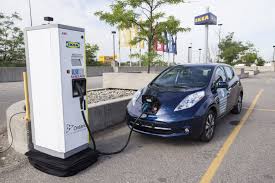
                Electric car being charged

The adoption of electric cars in Malaysia will be patchy initially. We foresee tax incentives may spur consumers to purchase electric cars due to various reasons, such as convenience of recharging and advanced features of electric cars such as self-driving.  We foresee there would be no turning back to the adoption of electric cars in Malaysia.

The impact to the oil giants’ revenue would also be significant. At the market worth of petroleum products of more than RM65 billion per annum, a tenth reduction of consumption of petrol would amount to RM6.5 billion of lost revenue per year. The amount of lost revenue would be serious with higher adoption of electric cars. Tax revenue to the Malaysian government will also reduce as tax forms a major component of the price of petrol.

Shell believes that consumers will patronize its petrol stations to charge their electric cars. Currently, consumers have no choice but to go to petrol stations to fill-up petrol into their cars.

We expect that charging stations will be available in all sorts of locations as long as there is supply of electricity. Why should consumers go to a Shell petrol station to charge their electric cars when they can do it at homes?

Could we see the slow death of the ubiquitous petrol stations with the large logos of the oil giants standing high and can be seen from far?

Investors Bet Big on Lithium’s Electric Car Future


World’s biggest producer of lithium

Introduction

The recent Frankfurt Motor Show in September 2917 saw major car companies exhibited several models of electric cars. Subsequently, investors are piling-up their bets on mining companies that are involved in lithium, the key component for making batteries for electric cars. BlackRock, one of the largest fund managers in the world, has emerged as a investor of lithium start-ups.

The BlackRock World Mining  Trust, which has more than £800 million in assets and is co-managed by Evy Hambro, has become the largest shareholder in a handful of small mining companies aiming to produce lithium for use in batteries.

Demand for lithium has surged as the first mass market electric vehicles (EVs) such as the Tesla Model 3, Nissan Leaf and Chevrolet attract buyers. Growing demand for EVs has sparked a scramble to locate new supplies of lithium and prices have jumped about 26 per cent this year, making it one of the best performing commodities this year.

“Today the energy space is evolving towards a low carbon footprint and the combustion engine is going to be replaced with an alternative, “ Mr. Hambro said. “We want to be invested in companies that will be producing the raw materials that will be needed to meet this growth.”

Mr. Hambro is one of the world’s most influential mining investors, and his views are closely followed by the industry.

BlacRock’s investment parallels a growing investor interest in lithium as regulators push a transition to electric cars and battery costs continue to delcine. For example, assets in the Global X Lithium & Battery Tech exchange traded fund have quadrupled during  this year from US$114 million to $484 million, while the Solactive Global Lithium index, made up of 26 miners and battery makers, had delivered a total return of 51 per cent this year.

Lithium production is currently dominated by four large firms, Chile’s SQM, FMC, Albermarle and Tianqi Lithium. A number of smaller companies are racing to bring supply to market and get their materials  approved for use in batteries.

Over the past year around US$1.0 billion has been raised by lithium developers and explorers, but the funding will need to be increased to US$6.0 billion in 2025 to meet demand, according to Simon Moors of Benchmark Mineral Intelligence  in London, which tracks lithium prices.

A Boon for Sensor Makers   

Lithium producers are not only enjoying from electric car revolution. Sensor makers are also experiencing a boon. As electric cars become a reality, carmakers and their suppliers are confronting challenges that appeared less tangible when the dream of electric cars was a more  distant vision.

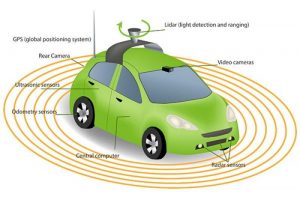
A self-driving car of the future will be quipped with at least 20 sensors using cameras, radar and lidar to “see” its surroundings.

Some of the data must be transmitted to the “cloud” so the car cam communicate with its surrounding, but programming the software to send only the relevant data is a central challenge, says Elmar Degenhart, chief executive of the parts supplier Continental.

He says a self-driving car collects raw data at a rate of up to 15 gigabytes per second. By comparison, a person watching Netflix in high definition at home would consume three gigabytes  of data per hour. “We need  a different kind of electronic architecture to handle these volumes of gigabytes, “ he says.

The energy just required to power these self-driving systems is so great that a prototype electric car with a 400 km range can drive only 200 km autonomously, notes Scott Gallett, vice-president of marketing for BorgWarner, a maker of propulsion systems.

Sensors in an autonomous car

“One of the things people don’t talk about is just how much energy is really required by by the computers, the sensors, the radars, “he says. “Some of the prototypes out right now require just as much as energy as it does to propel the vehicle.”

Mr. Gallett believes that hybrid vehicles—often considered as a stop-gap measure to full electric cars— will experience a lengthier phase  than many assume, because if autonomous technologies become popular  then cars driven solely by batteries might not have enough energy to power bith the car and the computing system.

“Don’t think autonomous  equals elecytric,” he adds.

Reference: FTWeekend 16 September/17 September 2017