

Snails offer path to the perfect glue

Garden snails moving; note the mucus behind

At our small fruit garden at the back of our house in Seremban, Negeri Sembilan, Malaysia, snails are a menace, eating young papaya leaves through the night. These slow-moving snails can be found in the morning before they manage to hide under the stones and small logs or run across my neighbour’s fence. We will crush them with our feet, producing a crushing sound when their protective shells are broken. But some scientists are interested to study these menacing garden snails.    

We noted an interesting article on snails, which was written by Tom Whipple in The Times on June 19, 2019.  

According to him, scientists have long envied snails. When a snail wants to travel up a wall, it secretes a sticky mucus that holds it securely but still allows it to move. When it stops, the mucus hardens and fastens it even to rough surfaces with ten times that force. When it thinks it is time to move again, it releases more mucus and heads on up the wall.

Scientists struggle to do that: the glues they make are either strong and irreversible, such as superglue, or weak and reusable. A rare exception is Velcro, which can be extremely strong and can also be reused, but it requires a strip on each of the objects being joined.

Now, inspired by the remarkable mucus of snails, a team of researchers think they have cracked a glue that is both strong and able to be reversed: a Velcro in gel form. When wet the glue is wobbly like a snail’s slime. When dry it holds tight, then when rehydrated it returns to its mucus-like state.

The glue, described in the journal Proceedings of the National Academy of Sciences, was made from a “hydrogel”, a network of chemical chains that absorbs and swells in water. In experiments its creators showed that it was strong enough to hold up the weight of a human, who dangled off a support held by two square centimetres of the dried adhesive. He did not stay long enough for it to rain: when you add water the strength decreases tenfold.

The key, said Anand Jagota, from Lehigh University in Pennsylvania, US, was to make a gel that became strong only after it had shrunk. “Most of the time, in the process of drying, something shrinks,” he said. “When a gel shrinks, if it also stiffens it develops stresses that break the bonds.” This means that even if it stuck down before, the shrunken version releases the bond.

Professor Jagota, who worked with Shu Yang from the University of Pennsylvania, US, said that their gel did not do this. “The secret is to shrink when you’re soft then stiffen when you’re not shrinking. That’s the trick, otherwise any old gel would work. That’s what we think the snail does.”

Then when you add water, “it has a memory, the material remembers its original state. Everything becomes soft and it comes off easily. To a great extent it goes back to its original shape.”

He said they thought that the glue could be used in a range of applications. “You can imagine many cases where you want a bond you can release. Bandages, for instance. You could well want something strong that you could unglue easily by pouring water on it.”

Our Comments

Given the scientific secrets of the common garden snails, now, we feel we should not crush them but release them to a place that they can enjoy eating other leaves rather than our young papaya leaves.

US-China Trade War Affects Materials for New Energy Technologies

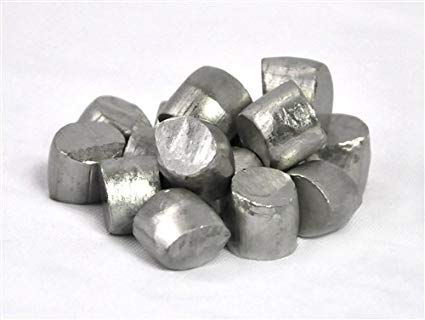
Tin metal-Malaysia used to be the largest producer of tin in the world

New energy technologies require mineral resources such as copper, cobalt and lithium. A shift in the global energy system from fossil fuels- driven by cost reductions that are making new technologies  are increasingly competitive and by government policies to fight global warming and local pollution-is expected to result in steep increases in demand for some metals and other materials.

Demand for copper, for example, could rise by 275 to 350 per cent by 2050, according to research by Yale University in the US. The World Bank estimated in 2017 that action to limit the rise in global temperature to 2OC from pre-industrial levels could a seven-fold increase in demand for cobalt and an eleven-fold increase in demand for lithium by 2050.

 Chinese companies have been investing to secure supplies of these minerals, buying up mines in countries from Australia to South America.

Simon Moores of Benchmark Mineral Intelligence, a research firm, said the importance of technologies such as electric vehicles and battery storage meant “whoever controls these supply chains controls industrial power in the 21st century”.

Concern about mineral supplies has been growing in the US administration and Congress and has been heightened by China’s warnings of plans to curb export of rare earths. China accounts for mote than 80 per cent of world rare earths production.

The US commerce department has published a report in 2018 looking at 35 critical minerals, which found that imports accounted for more than 50 per cent of US domestic demand for 29 of them, and 100 per cent for 14 of them.

The list of the 35 critical minerals include the following:

  1. Aluminum (bauxite), used in almost all sectors of the economy.
  2. Antimony, used in batteries and flame retardants.
  3. Arsenic, used in lumber preservatives, pesticides and semiconductors.
  4. Barite, used in cement and petroleum industries.
  5. Beryllium, used as alloying agent in aerospace and defense industries.
  6. Bismuth, used in medical and atomic research.
  7. Cesium, used in R&D.
  8. Chromium, used primarily in stainless steel and other alloys.
  9. Cobalt, used in rechargeable batteries and superalloys.
  10. Fluorspar, used in the manufacture of aluminum, gasoline and uranium fuel.
  11. Gallium, used in integrated circuits and optical devices like LEDs.
  12. Germanium, used fir fiber optics and night vision applications.
  13. Graphite (natural), used for lubricants, batteries and fuel cells.
  14. Hafnium, used for nuclear control rods, alloys, and high-temperature ceramics.
  15. Helium, used fir MRIs, lifting agent, and research.
  16. Indium, used mostly in LCD screens.
  17. Lithium, used primarily for batteries.
  18. Magnesium, used in furnace linings for manufacturing steel and ceramics.
  19. Manganese, used in steelmaking.
  20. Niobium, used mainly in steel alloys.
  21. Platinum group metals, used for catalytic agents.
  22. Potash, mainly used as fertilizers.
  23. Rare earth elements group, primarily used in batteries and electronics.
  24. Rhenium, used for lead-free gasoline and superalloys.
  25. Rubidium, used for R&D in electronics.
  26. Scandium, used for alloys and fuel cells.
  27. Strontium, used for pyrotechnics and ceramic magnets.
  28. Tantalum, used in electronic components, mostly capacitors.
  29. Tellurium, used in steelmaking and solar cells.
  30. Tin, used as protective coatings and alloys for steel.
  31. Titanium, used as a white pigment or metal alloys.
  32. Tungsten, used to make wear-resistant metals.
  33. Uranium, mostly used for nuclear fuel.
  34. Vanadium, mostly used for titanium alloys.
  35. Zirconium, used in high-temperature ceramic industries.

Source: www.usgs.gov.

Reference for article: Ed Crook Financial Times, June 12th, 2019.

Sand: Under-The-Radar Key Global Commodity

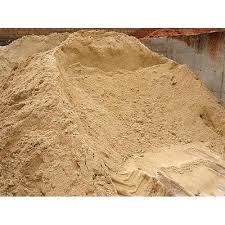
Sand is an important construction material

In late 2008 I was tasked by the then Chief Minister of the industrial state of Selangor of Malaysia, in which Kuala Lumpur, the capital of Malaysia is also located, to re-organize the state’s sand industry. The sand industry has been rife with illegal sand extraction and corrupt officials. The state collected only a small amount of royalty from its sand resources.  

The demand for sand was huge as it is an important material for building and road construction.  Anjana Ahuja  wrote in Financial Times on 23rd, May 2019, that, according to a UN report, sand is being mined, dredged and even stolen to satisfy the global demand for infrastructure. Strikingly, sand comes second only to water in terms  of the volume of material resources that are extracted and traded globally.

While it is being poured into much-needed urban development, particularly in China and India, sand is not a limitless gift of nature. The world has a “sand budget” and we are spending it faster than it can be replenished.

The environmental consequences of sand extraction are becoming plainer by the day. The plunder of lakes, rivers and coastal areas reduce biodiversity, destroying fishing communities, causes pollution, lowers water table and, by ferrying away natural deposits increases flood risk.

It can also threaten  tourism in countries like Morocco with illegal extraction providing half of the annual sand needs, beaches are in danger of being stripped back to rock.

“It is a challenge to the paradigm of infinite sand resources,” concludes the UN report.

We tend to think sand as the powdery stuff that slips between our toes. In fact, sand falls into two categories. The first is mineral sand, which contains such minerals as zircon and is used to make ceramics and as pigments. It comes mainly from river beds and coastal areas like beaches. In inland and non-tropical areas, sand is mostly made of silica, or silicon dioxide. The second class is aggregates, a generic term  for crushed rock, sand and gravel. This easier-to-bind coarse variety of sand is coveted by the construction industry. Up to 50 million tonnes are removed from rivers, pits, quarries, coast lines and marine areas each year.

Illegal or unregulated sand extraction flourishes in countries where, variously, rules are lacking, enforcement is lax or corruption thrives. Because transporting sand is expensive, generally the material is generally used near to its source. Tracking where infrastructure is springing up can yield clues about which ecosystems might be targeted. According to Dr Latham of the Imperial College in London, UK, the great sand drain presents a technical challenge: how to come up with alternative materials, perhaps using desert sand. “It is a huge reserve that is already on land, so removing it arguably less of an environmental  problem. The industry needs to look at this.”

An Imperial College student start-up is trying to develop a building material out of smooth –grained sand; the re-usable, biodegradable composite is currently only suitable for temporary structures.

Sand is becoming a geopolitical irritant too. Singapore’s expansion via land reclamation has been linked to the loss of 24 sand islands from neighbouring Indonesia. China’s territorial expansion in the South China Sea depends on imported sand.

My Own Experience

There is a veracious demand for sand in our state of Selangor and in Kuala Lumpur for construction of roads and infrastructure. Sand extraction from agricultural lands, ex-mining lands and river turned them into large water bodies with few alternative uses. Declining supply of sand from the state of Selangor requires sand to be transported from other states such as Perak in the north. Large trucks are used to transport sand, which often cause busy traffic on the highways. Illegal sand activities have been vastly reduced, and the income from the sand royalties for the state of Selangor had increased substantially.

But everyone must know that sand is a limited resource and may not be available where it is needed for urban development. Society needs to prepare to pay a higher price for this take-for-granted natural resource.

Beyond Meat Inc. sizzled on its NASDAQ market debut

Beyond Meat Inc., covered in our blog, went  where no company in the US had gone in more than a decade as its shares nearly tripled on their first day of listing on NASDAQ last Thursday.

The pre-IPO price of US$25 per share opened at US$46 per share, closing the day at US$67.75 per share. This closing price values the company at US$3.82 billion from its pre-IPO valuation of US$1.5 billion.

According to Bloomberg News, the 163 per cent surge was the best debut session on any US listing since at least 2008, among IPOs that raised at least US$200 million.

The spectacular listing of Beyond Meat shows that investors are keen to invest in companies that develop plant-based meat alternatives. The proceeds of US$200 million will be used by the company to expand its existing facilities and to establish new ones.

We are sure Impossible Foods Inc, Beyond Meat Inc.’s competitor, will be considering listing as well, while the stock market is sizzling hot.

Big oil and utility companies collide to supply energy to consumers

Petronas, Malaysia’s national oil company

We were drawn to an article by Ed Crooks and Anjli Raval in the on-line Financial Times on 26th, March 2019. There used to be a hierarchy where oil companies sold fuel, while utility companies supplied electricity and gas to consumers. 

Today, these lines of demarcation of business activities are no longer applied. Utility companies are now filling-up your car and oil companies want to supply electricity to light-up homes.

Technological progress and the threat of climate change are forcing both oil companies and utility companies to re-think their business strategies, and are pushing them into each other’s business area. The result is set to a period of intensified competition and instability as companies that were previously able to largely forget about each other are now forced to battle for dominance.

Recently Royal Dutch Shell, one of the world’s largest oil and gas company, announced that its First Utility power business would be re-branded as Shell Energy with 700,000 households switched to renewable energy.  Customers will be offered not only cleaner electricity but discounts  on fast-charging for their electric vehicles as well as broadband internet and smart-home technology. Royal Dutch Shell had floated the idea that by 2030’s it could be the largest power company in the world.

Meanwhile, Enel, the Italian electricity group that by some measures holds the title today, last week highlighted the rapid growth of its network of electric-car  charging networks. By end of 2018, it had installed 49,000 worldwide.

The competition to provide the best  offerings is given an additional edge by a clash of cultures  Employees of the high-stakes world of oil and gas companies have traditionally looked down on the monotonous plodders of the electricity sector.

Tenaga Nasional, Malaysia’s electricity company

The next decade will reveal whether that confidence is justified.

On the oil side of the energy industry, pressure from investors is forcing companies to look at ways to curb greenhouse gas emissions while the rise of electric vehicles  is threatening to slow the growth of demand for crude oil.

Royal Dutch Shell and Total, the French oil company, have been acquiring companies along the electricity supply chain, from renewable generation to battery storage to electric-car charging to domestic power.

The falling costs of renewable energy and batteries and improvement in electricity grid management, are breaking down the standard model of electricity supply. Households and businesses now can have access to their own local power resources, such as rooftop solar panels, battery storage and demand-responsive  technology, reducing energy consumption when there is a strain on the electricity grid.

Returns on capital have traditionally been lower in power generation than in the oil and gas sector, and industry analysts have questioned whether traditional oil-focused companies would be able to make the same level of profits from their new cleaner energy as in their dirtier business.

Royal Dutch Shell and other new entrants see their future in providing energy services from smart meters to batteries that can generate returns.

In Malaysia, both Royal Dutch Shell and ExxonMobli have divested their petrol operations to Asian investors. The oil and gas sector is controlled by Petronas, which also owns a vast network of petrol outlets. The electricity sector is controlled bt Tenaga National, which also runs the distribution networks and access to households. Both are owned by the Malaysian government.

While the penetration of electric-car is still low in Malaysia, car manufacturers are expected to introduce electric vehicles at the high-end segments and middle-end segments. We know more friends are switching to electric vehicles or hybrids. Petronas knows that their retail operation will be affected when drivers no longer need to fill-up at Petronas stations.  Today, petrol stations along the Malaysian north and south highway are congested with vehicles to fill-up petrol.

New battery technologies and aggressive new car companies such as Tesla will introduce newer electric vehicles with longer power life. Thus, consumers are enticed to switch to electric vehicles.

We are keenly observing how Petronas is going to meet the challenge of lower demand for petrol used in transportation. In 1980, when we worked in the Esso Refinery in Port Dickson, Negeri Sembilan, as a refinery planner we projected a consistent demand for petrol annually. There was no falling demand!

The New Health Drink: Non-Alcoholic Beer

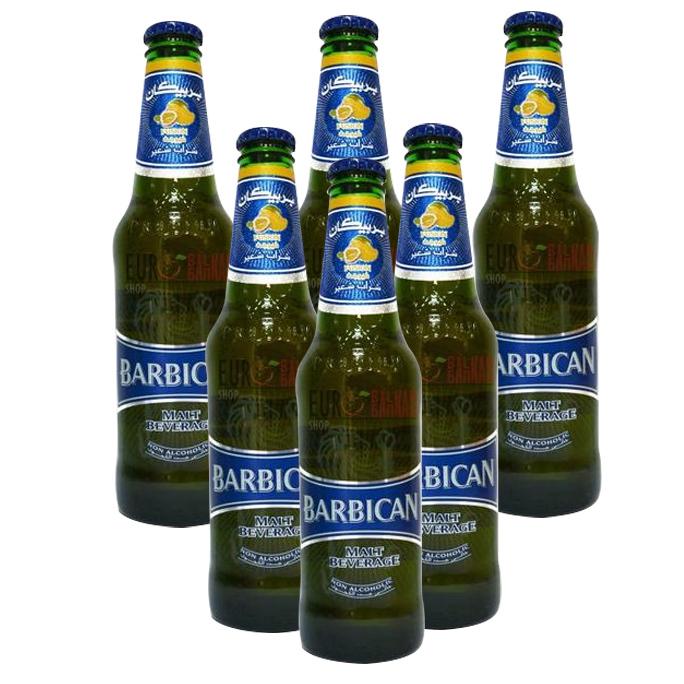
Barbican, a popular brand of non-alcoholic beer in Malaysia and Middle East

We noted a new health drink in a recent article in The Times of London on December 29th, 2018. Non-alcoholic beer has become a health drink for fitness enthusiasts in Germany.

The health benefits of beer are derived from the use of hops (hop flower) in making beer. The hops are what make beer taste like beer. Hops have been known to inhibit bacteria growth as the beer brew ferments. Acids in the hops , called humulones and lupulones, have been shown to kill cancer cells and block leukemia cells from clinging to bone in petri dish experiments. The acid may also act as anti-inflammatory agents.

Hop flower is used in making beer

Remove the alcohol in beer and it will become non-alcoholic beer and a health drink!

Today, non-alcoholic beer is made by filtering out the alcohol and water through a membrane and then distilling the mixture to remove the alcohol before returning the flavoured water. In order to remove the very last of the alcohol, brewers either heat the uncarbonated beer until the ethanol boils off or lower the pressure of the liquid until the alcohol evaporates at room temperature.

Markets for Non-alcoholic Beer

The markets for non-alcoholic beer are in developed countries as well as developing countries. Non-alcoholic beer is now a health drink in Germany and other European countries. In Muslim countries, alcoholic beer is not permitted and consumers, who like beer, drink non-alcoholic beer. We are one of them. A non-alcoholic beer brand, Babican, is popular in Middle East and Malaysia.

Another major market is India, according to the on-line newspaper, The Economic Times India, posted on November 10th, 2018. In Indian states such as Gujarat and Bihar, selling and drinking alcohol has been banned since 1960. Major brewing companies are competing in India to market non-alcoholic beer. They believe the market for non-alcoholic beer in India is substantial due to high level of abstinence for various reasons.

While alcoholic beer contains 1.2 to 8 per cent alcohol by volume (ABV), non-alcoholic beer mostly have 0.05 per cent ABV or below. Some companies are offering zero alcohol beer.

Non-alcoholic beer may find it difficult to penetrate Muslim markets such as Malaysia. This is due to the view of Muslim conservatives that non-alcoholic beer is not “halal” (not permitted to be consumed) as it is derived initially from alcoholic beer.   

Technology obsolescence: some technologies are reluctant to die

The year is almost over. Old technologies can take longer to die and the timing is unpredictable, according to an article in the Lex column of FTWeekend 15/16 December 2018.

Sony announced that it was stopping production of Betamax tapes in 2015, for example, more than 50 years after it lost a format war with VHS.

Most investors and business academics expect technologies to decline steeply. CDs are good examples. Sales have dropped by 92 per cent since a 2000 peak in the US, though they still dominate in Japan, where streaming has been slow to take off. In the UK only two out of five people regularly buy new ones. In Malaysia CD stores are closing down, given that Spotfiy is free for listeners of songs., including my wife.

But old formats put up a better fight than expected. This creates opportunities and pitfalls for investors. Sales of ebooks, once predicted to overtake printed books, have fallen since 2014. Now the small but fast-growing audio download is worrying publishers.

New technology -cloud services-threatens to make game consoles redundant. But sales of console games are still growing strongly and 5G may support them. Even retro consoles are in vogue. Sony has followed Nntendo in bringing back a 24-year-old machine in miniature.

Affection for timeworn technology can be dismal. A YouGov poll found many British CD listeners felt left out as new song releases bypassed the medium. However, the auditory and tactile pleasures of vinyl have sparked a revival. LP sales in the US more than quadrupled to nearly US$400 million in the seven years to 2017, according to trade body RIAA. Unlike old soldiers, some old technologies neither die nor fade away.