

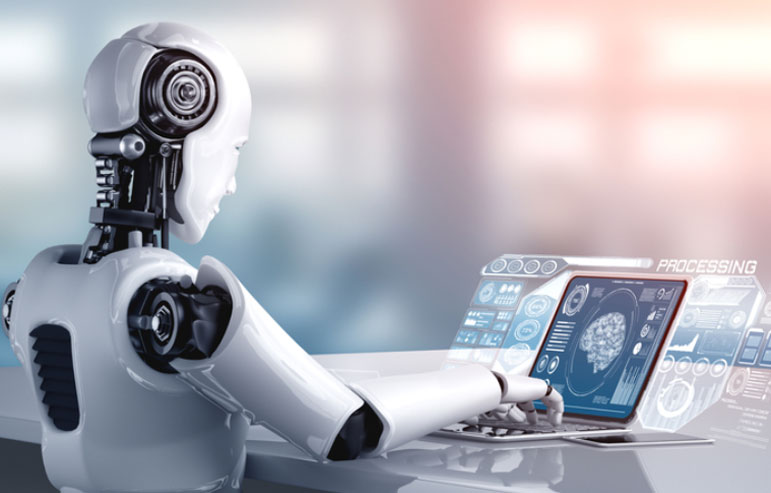
More impacts of AI in 2024

Since last semester, I have asked my MBA students to write essays on a certain management topic using the ChatGPT. Several essays were excellent while most others were not interesting readings. Many students were able to submit excellent essays, despite their lack of proficiency in English.  ChatGPT was obviously helping students to write business reports and analysis despite English being a second language.

I have met many entrepreneurs in 2023 who would apply AI models in various business applications for sales and marketing, and stock investment decisions.

Many articles and analysis are predicting that AI will have more impacts in many areas and would upend specific sectors in developed economies and developing countries in Asia and Africa.  

The London Telegraph on December 28th, 2023, in an article written by James Titcomb, noted that employees at OpenAI did not expect much on November 30 2022 when the company unveiled a “low-key research preview” called ChatGPT.

Greg Brockman, OpenAI’s president, told staff that it wouldn’t have much of an impact on day-to-day business, confidently forecasting that it would only get noticed in a few nerdy corners of Twitter.

It quickly became obvious that this was a wild underestimate. Millions of users signed up within days and ChatGPT was dubbed the most important technology in a decade, leading to a worldwide fervor about artificial intelligence.

Employees could be forgiven for failing to predict its popularity, though. ChatGPT, with its ability to conjure up essays and arguments, may have astonished its early users, but to its developers, it was positively medieval. 

The underlying AI system it was based on, known as GPT-3.5, was almost a year old. The company had already developed its successor, GPT-4, and was preparing to release it to the public.

OpenAI described it as being 10 times more advanced, saying it could understand not only text but images; and could pass legal examinations.

Now, just over a year later, the company is taking its first steps toward a vastly more powerful system.

ChatGPT founder Sam Altman has warned over AI’s existential risk to humanity. Those who worry that AI is an existential risk to humanity fret that new systems are being developed before we have got our heads around the existing ones.

Either way, the release of GPT-5 is expected to be the AI event of 2024.

Developing computer software is typically a case of tweaking previous versions to eke out small improvements.

Creating new AI systems – known as large language models – is often a case of starting again. An unprecedentedly vast amount of data is thrown at an unprecedentedly powerful system of next generation microchips, resulting in a model several times more powerful than what came before.

GPT-1, the primordial model created in 2018, was trained on 117 million data points known as parameters. GPT-3 required more than one thousand times that, at 175 billion, and GPT-4 was another 10-fold increase, at 1.7 trillion.

The computing requirements have increased too. GPT-4 reportedly required 16,000 high-end Nvidia A100 chips, against 1,024 for the previous generation. Little is known about the next wave of models, but they are certain to be trained on Nvidia’s new H100 chips, a vastly more powerful successor that is the first to be specifically designed for training AI models.

“The history of computer science and AI has been that increased scale results in substantial improvements,” says Oren Etzioni, the former chief executive of the Allen Institute for AI.

“The step up from GPT-3 to GPT-4 was so dramatic, that you would be a fool not to try it again.”

Google, which unveiled its new model Gemini in December, is preparing to release the more powerful Gemini Ultra in the new year. Anthropic, the Amazon-backed AI lab, may also launch a new system.

Scientists are divided, though, on exactly what more powerful will mean. Today’s large language models are approaching the upper limits on certain tasks. Google’s Gemini already outperforms humans on a widely used language comprehension test and on computer programming exams.  

That does not make it any less prone to common criticisms of today’s AI models: that they lack creativity, only regurgitating what they have been fed; and that they have a poor understanding of truth, making them prone to “hallucinating” facts.

Experts such as Nathan Benaich, the founder of investment firm Air Street Capital and the co-author of the annual State of AI report, says the next generation of systems will be “multimodal” – capable of understanding text, images, videos and audio. That, he says, will bring them closer to understanding the world.

Demis Hassabis, the head of Google’s Deepmind lab, has said this could come to include sensations such as touch, which could lead to the systems being embedded in robots that can understand the world.

The next wave of models could display capabilities akin to reasoning and planning – qualities that we might associate with human intelligence.

AI that can switch from one task to another would be a step towards autonomous “agents” – systems that can carry out tasks on people’s behalf, such as booking a holiday or reading and answering emails.

The consequences of that could be profound. While today’s AI systems have threatened to take jobs in areas like copywriting and design, they must typically be chaperoned through the writing or illustrating process. Those that can turn their words into action – a customer service bot that can book flights, for example – would be more threatening.

These predictions are largely guesses, however. And even today’s AI models are too complex to completely understand.

This is one of the reasons the next wave of models will face increasing government scrutiny. Nine companies – Amazon, Anthropic, Google, Inflection, Meta, Microsoft, Mistral, OpenAI and Elon Musk’s x.ai – have agreed to have their systems tested by the UK government’s AI Safety Institute before they are released.

Companies have signed up to similar commitments with the White House in the US.  The most advanced version of Google’s Gemini model is believed to be going through screening by officials before its upcoming release.

Equally, the next wave of AI systems could prove to be a bust. Sceptics believe that most of the low-hanging fruits have already picked, and that improvements from this point will be marginal no matter how much computer power is deployed.

But if the capabilities of next year’s models remain unknown for now, it seems certain that existing AI technologies will become more widely used.

In 2023, AI may have captured the popular imagination, but it might not be until 2024 that its impact really starts to be felt.

Ai models are likely to provide  solutions to problems that typically small- and medium-sized companies face every day: high staff turnover, lack of skills and available manpower, sales staff, accounting, and compliance.  

In 2024, my company, Bison Consulting, will be working with AI partners to offer services using AI models.

We could learn from my wife’s “steno moment”. In 1980’s many young girls in small town learned short-hand writing to become stenographer. When the Wang word-processor was introduced, the demand for stenographers disappeared, and many short-hand writing schools closed. Today, there is no position called stenographer in firms.   

Are you at risk of being replaced by artificial intelligence?

The rise of advanced AI tools such as ChatGPT and Stable Diffusion, which generates images based on text prompts, has generated fears that jobs would be substituted by the technology.

One of first studies into the impact of AI on the jobs market in the UK, carried out by the Department for Education (DfE), has concluded that consultants, accountants and psychologists are most exposed to the rise of AI.

Sports players, roofers and construction workers were among those least likely to be affected by the technology.

People with higher levels of education are more likely to be impacted than those with lower level qualifications.

The research refers to “exposure” to AI systems, meaning jobs may be aided or replaced by AI. However, careers that are aided by AI may also generate fewer jobs if it means technology can accomplish key tasks.

Official statistics divide professions in the UK into 365 categories, such as solicitors, librarians and nurses, although some jobs are categorised more widely, such as financial managers.

The DfE’s provided an “AI occupational exposure (AIOE) ” score to each job based on AI’s ability to replicate the skills required.

The scores range from around -2 to 1.5, with a higher score indicating a profession is more likely to be affected.

The DfE said it was generally believed that between 10pc and 30pc of existing jobs will be affected by AI, although new jobs will also be created to take advantage of the technology.

A study from US researchers earlier this year found that AI tools like ChatGPT were already taking freelance work away from copywriters and graphic designers.

The DfE said: “The report illustrates how the education system and employers will need to adapt to ensure the workforce has the skills necessary to benefit from this emerging technology.”

Men of the cloth have persevered for millennia, surviving the separation of church and state, the industrial revolution and multiple world wars.

Yet vicars and priests are now under threat from a very modern scourge: chatbots.

Jobs in the clergy are among the most exposed to the rise of artificial intelligence (AI), according to a government report.

Clergy members were ranked as the 13th most exposed to “large language model” systems out of the 365 categories of occupation studied.

They were deemed slightly less likely to be affected than local government administrators, but slightly more vulnerable than university lecturers.

The figures were based on what key skills are used in each profession, such as written comprehension and inductive reasoning, and how easily they could be replicated by AI.

The study may have missed unique aspects of individual professions and the research does not speculate how precisely the technology could influence each job.

Concerns about AI’s impact have increased in the last year as a result of advances in systems such as ChatGPT, which is already being widely used in the workplace.

Generative AI systems, which are capable of rapidly processing and generating text and images, are already disrupting the job market by leading to fewer opportunities for freelance copywriters and illustrators.

The DfE said its report showed that the education system and employers alike would have to adapt to provide more training as existing jobs are disrupted.

The report said it did not distinguish between jobs that were likely to be aided by AI and those that were likely to be replaced, and that it was based on a “number of uncertain assumptions”.

Economists had expected educated, white-collar workers to be the least exposed to the rise of AI before the arrival of ChatGPT, which has reversed assumptions about what jobs are vulnerable.

AIOE (AI Occupational Exposure and AI applications)

Felten et al (2021) have developed the AIOE measure based on Ai applications of AI that are likely to have implications for the workforce that cover the most likely andmost common uses of AI. Below is the list of AI applications.

Ai applicationDefinition
Abstract strategy gameThe ability to play abstract games involving sometimes complex  strategy and reasoning ability, such as chess, go or checkers, at a high level
Real-time video gamesThe ability to play a variety of real-time video games of increasing complexity at a high level.
Image recognitionThe determination of what objects  are present in a  still image.
Visual question answeringThe recognition of events, relationships , and context from a  still image
Image generationThe creation of complex images.
Reading comprehensionThe ability to answer  simple reasoning questions based on an understanding of text.
Language modellingThe ability to model, predict , or mimic human language.
TranslationThe translation of words  or text from one language into another.
Speech recognitionThe recognition of spoken language into text
Instrumental track recognitionThe recognition of instrumental musical tracks

Readers who are interested on the AIOE measure should read the following:

  1. Occupational, industry and geographic exposure to artificial intelligence: A novel dataset and its potential use. Strategic Management Journal, 42 (12).
  • E. Felten, M. Raj, and R. Seamans (2023). How will Language Modeller like ChatGPT  affect occupations  and industries?
  • DfE. The impact of AI on UK jobs and training. November 2023.

McKinsey: Women more likely to be replaced by AI than men

Can AI and robot make this mushroom haircut?

12 million jobs to be automated in the US alone over next seven years, McKinsey says

Women are 50pc more likely than men to lose their jobs in the artificial intelligence (AI) race, according to a new study that predicts millions more roles will be automated by 2030.

McKinsey said around 12 million jobs will be replaced by AI in the US alone over the next seven years.

The management consultancy said women will be more affected by companies replacing staff with chatbots because they are more likely to hold “lower-wage jobs”.

Other jobs heavily represented by women, including customer service roles and secretaries are also in the firing line, according to McKinsey.

McKinsey’s study, published this week, said women are “heavily represented” in those two sectors, with potentially 5.7m jobs being lost in those areas alone by 2030.

McKinsey said: “Workers in lower-wage jobs are up to 14 times more likely to need to change occupations than those in highest-wage positions, and most will need additional skills to do so successfully.”

Women are 1.5 times more likely overall to be forced to change jobs as a result of AI-powered automation changing how companies recruit and use human workers.

Those without university degrees, as well as the youngest and oldest workers are also at higher risk of losing their jobs to technology such as AI-powered chatbots.

Others in professional roles such as management, healthcare and the legal profession are least likely to be impacted, McKinsey said.

Not all professional roles are immune. Figures from jobs board Adzuna suggest that graphic designers, software engineers and advertising specialists are at greatest risk from AI.

Traditionally, technological advancements result in jobs being created in other sectors instead of being destroyed altogether.

Public availability of AI tools such as ChatGPT have accelerated the trend for job automation, with McKinsey revising its job loss predictions upwards by a quarter from estimates it made in 2021.

My MBA students also have pointed out that their companies are also applying AI to replace humans in many activities. One example is the automation of travel plans. However, their bosses still have the luxuries of secretaries and personal assistants to plan their travels!!!

Some jobs will be safe like a barber, unless you want to have the hairstyles of Lauren and Hardy, a mushroom cut.